English




































Diplomatic dispute erupts at the United Nations
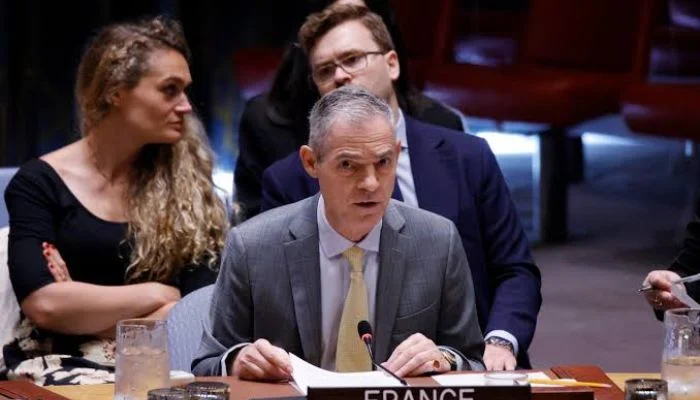
The US France UN Walkout highlighted growing tensions between Washington and Paris during a United Nations Security Council meeting on Ukraine. American diplomats left the chamber as France addressed the council. The move followed sharp French criticism of the Trump administration’s human rights record. As a result, the incident exposed widening disagreements between two long-standing allies.
The dispute also followed overwhelming international support for extending U.N. High Commissioner for Human Rights Volker Türk’s mandate. The United States opposed the appointment, while France strongly supported another four-year term.
French criticism fuels American response
The immediate dispute began after France’s U.N. Mission in Geneva criticized Washington’s opposition to Türk’s reappointment. In a social media post, the French mission argued that the United States had become isolated on human rights issues.
The post stated that America once represented human rights leadership but now stood alongside countries including North Korea, Russia, Nicaragua, and Mali. Consequently, senior American officials strongly rejected the criticism.
U.S. Ambassador to the United Nations Mike Waltz accused France of defending governments with poor human rights records. He also criticized Türk for what he described as unfair treatment of democratic nations while overlooking authoritarian regimes.
“Don’t miss any major story—stay connected with PhoenixQ.”
Walkout reflects broader transatlantic tensions
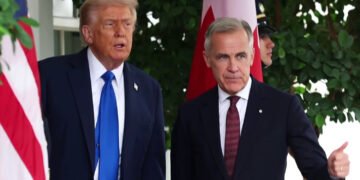
The US France UN Walkout extends beyond disagreements over human rights. Instead, it reflects deeper political divisions between President Donald Trump and French President Emmanuel Macron.
Relations have become increasingly strained over several major issues. These include NATO’s future, American troop deployments in Europe, Greenland, and differing approaches toward global security.
Trump has also criticized European allies for their limited role during the recent conflict involving Iran. Meanwhile, Macron has encouraged stronger European military cooperation and greater strategic independence.
Sharp exchanges continue inside the council
After returning to the chamber, Deputy U.S. Ambassador Dan Negrea sharply criticized France. He accused Paris of displaying selective outrage while attempting to lecture other nations about human rights.
Negrea argued that the United States had consistently supported France during previous international conflicts. However, he declared that Washington would no longer tolerate what he described as disrespectful rhetoric from its ally.
He also insisted that the United States remains “the beacon of liberty” despite France’s criticism. His remarks further intensified an already tense diplomatic atmosphere.
France avoids escalating the confrontation
French Ambassador Jérôme Bonnafont chose a different approach. Rather than responding directly to the American walkout, he emphasized cooperation and shared democratic values.
Bonnafont recalled France’s historic support for American independence and highlighted both countries’ longstanding partnership. He also reaffirmed France’s commitment to the United Nations Charter, international peace, human rights, and multilateral cooperation.
Although neither side signaled an immediate effort to ease tensions, the exchange illustrated growing policy differences between the United States and several European allies. As international challenges continue to multiply, those disagreements could increasingly shape debates within the United Nations and other global institutions.