English















































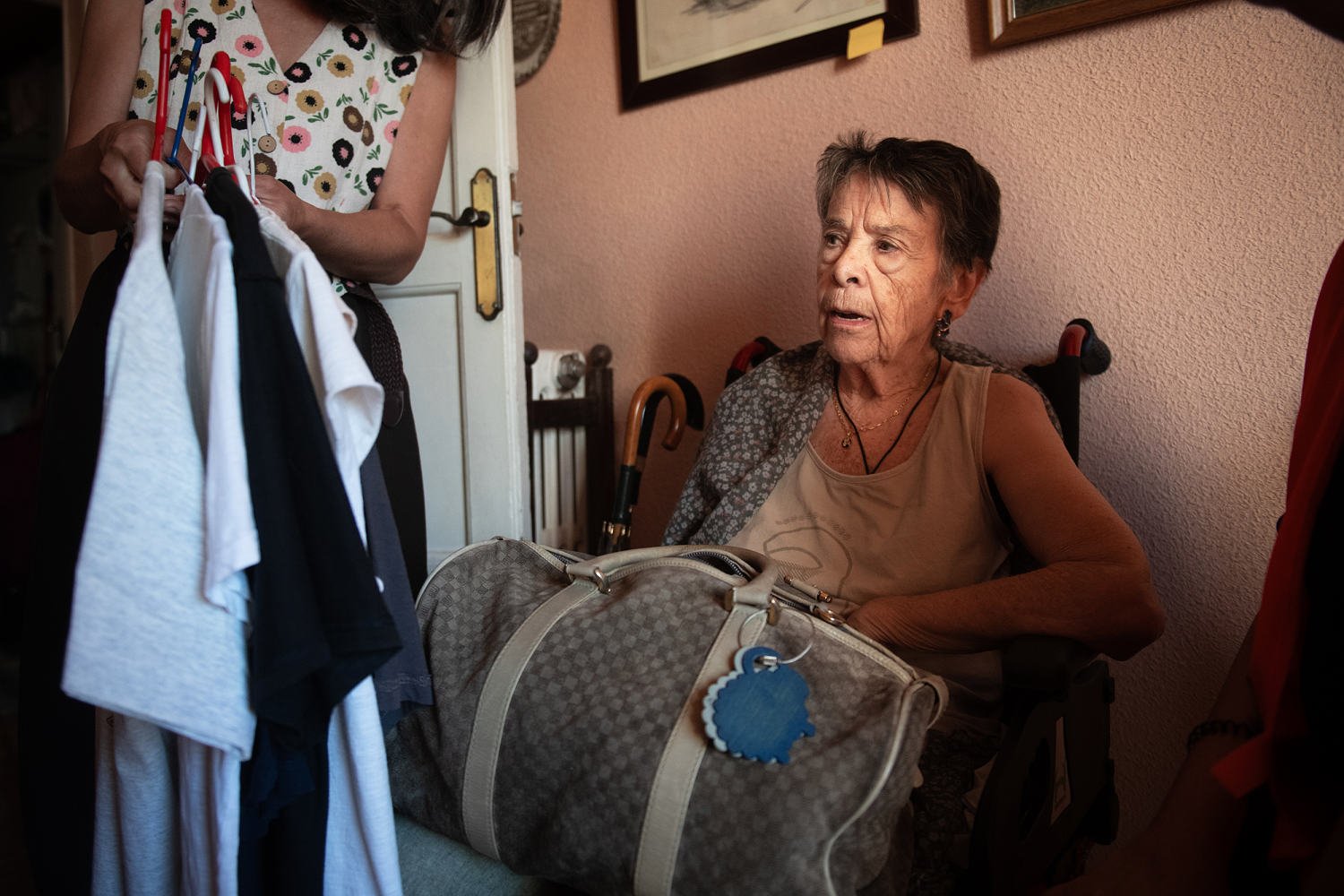
An 87-year-old woman was forcibly removed from her Madrid apartment on Wednesday after living there for more than 70 years, sparking widespread public anger and reigniting debate over Spain’s deepening housing crisis. The eviction of Maricarmen Abascal, a wheelchair user, drew hundreds of protesters to the streets and prompted condemnation from politicians, housing advocates and ordinary residents across the country.
Video footage showed Abascal carried out of her building in the Retiro neighborhood on a stretcher and taken away by ambulance. Dozens of police officers held back crowds of supporters who had gathered overnight in an attempt to prevent the eviction from going ahead. In a social media video posted Friday by the Madrid tenants union, Abascal thanked those who had shown their support.
Stay connected to every major update — subscribe and follow us on the PhoenixQ website and across our social media platforms.
Five Years of Fighting Eviction
An investment fund acquired Abascal’s building in 2018 and sought a steep rent increase. According to the Madrid tenants union, she had been fighting the eviction for more than five years. The fund, Urbagestión, did not respond to a request for comment.
Her lawyer, Beatriz Duro, described the force used during the eviction as “completely disproportionate and unnecessary.” Duro said court officials and representatives of Urbagestión refused to suspend the eviction despite a pending court filing, humanitarian appeals and evidence that public authorities were working to find alternative accommodation. She also revealed that an anonymous individual had offered to cover the rent payments, but the landlord declined to sign a new lease.
“We’ve been trying to negotiate with the landlords right up until the last moment, and they’ve flatly refused everything,” Duro said. She condemned what she called “a lack of humanity” and criticized the public resources directed toward enabling the eviction.
The day before her removal, Abascal described her ordeal in a Spanish television interview. “It’s as if I’m living with a machete at the back of my neck, ready to be chopped off at any moment,” she said.
Protests Spread Across Spain
The case triggered immediate protests beyond Madrid. On Thursday, housing groups and tenants unions held rallies in 16 cities, including Granada, Logroño and Zaragoza. The Madrid tenants union also planned a major protest in the capital for Saturday evening.
Spanish Prime Minister Pedro Sánchez called the eviction “a social tragedy that we cannot accept either as a country or, of course, from the perspective of public institutions.” Speaking at the United Nations General Assembly in New York on Wednesday, Sánchez accused Madrid’s conservative regional government of prioritizing luxury penthouses while ignoring demand for social housing.
The Maricarmen Abascal eviction comes amid years of growing frustration over housing costs in Spain. Gentrification has pushed rents sharply higher in major cities, while the supply of affordable housing has shrunk. The situation mirrors wider tensions seen in Barcelona, where activists say a surge in short-term vacation rentals has worsened the housing shortage. Earlier this month, the European Union announced new rules aimed at addressing the housing pressures caused by short-term rentals in popular tourist destinations.
Residents and Experts Warn of a Wider Crisis
For many Madrid residents, Abascal’s case reflects a broader reality they already face. Irene Hernández López, a 31-year-old test engineer renting in the Chamberí district, said the eviction was “outrageous.” She also expressed concern that similar situations were already affecting other tenants across the city.
“Housing has become a product that people do business with,” she told NBC News. “It no longer matters that it’s your personal world, where you live and where you do your life.”
Hernández López pays 500 euros ($570) per month for a room in a shared apartment. She said she was looking to move because the property needed repairs, but described the rental market as “terrible,” with prices “rising extremely quickly” and very little available. “I do think prices should be regulated, because wages aren’t going up while housing prices keep increasing,” she said.
Dan Nicander, secretary-general of the International Union of Tenants, said Spain’s situation reflected a pattern his organization had observed across Europe. “It’s a part of the financialization problem, seeing housing as an asset more than a home to people,” he told NBC News. He added that the responsibility to act rested with politicians, who needed to regulate markets so that buying property as a pure investment became more difficult. “Housing is a right,” he said. “It’s a fundamental right, first and foremost. It shouldn’t be a commodity.”