English








































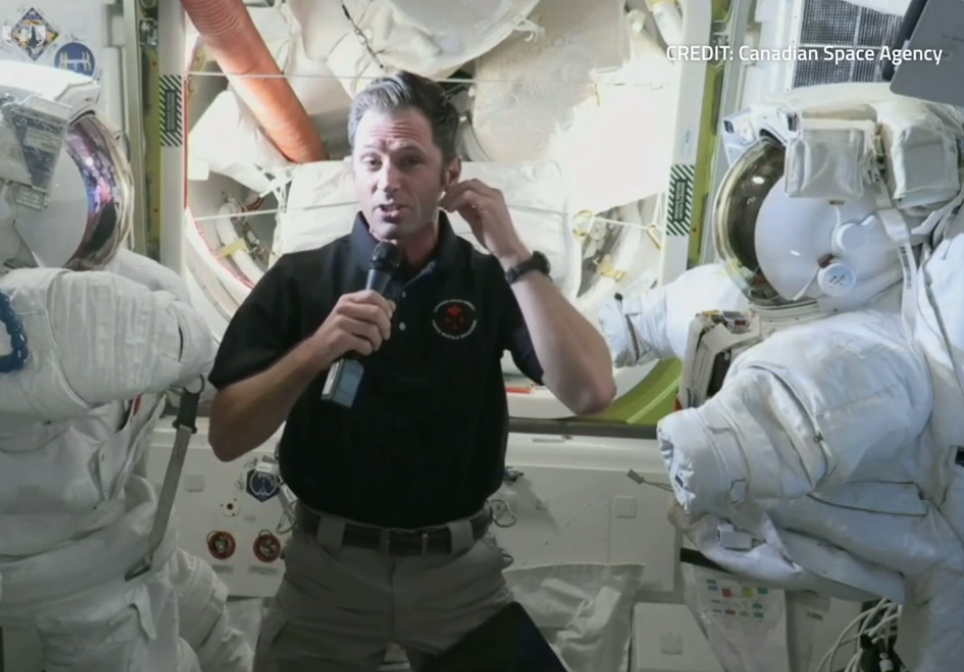
Canadian astronaut Joshua Kutryk says his first two weeks aboard the International Space Station have been among the most remarkable experiences of his life. Kutryk, 44, launched on October 1 as part of NASA’s four-person Crew 13 mission and arrived at the station in just under eight hours. Now settling into life in microgravity, he has begun conducting research into the effects of long-term space travel on the human body.
A View Like No Other
Growing up in northern Alberta, Kutryk was no stranger to the northern lights. However, seeing them from above Earth offered something entirely different. “To see the whole Earth, the curvature of the Earth, just embraced by this blanket of dancing fluorescent oranges and yellows and pinks — magical,” he said.
Stay connected to every major update — subscribe and follow us on the PhoenixQ website and across our social media platforms.
Kutryk described looking back at the planet as one of the most extraordinary things he has ever witnessed. “It’s just one world,” he said. “It’s one thing hanging in the blackness of space and you don’t see all the countries and the problems and all the challenges. You just see this little bit of perfection that we should really, really be trying to protect.”
The former CF-18 fighter pilot serves as a mission specialist during the six-month mission. His work includes scientific experiments, health research and critical maintenance tasks aboard the station.
Adapting to Life in Space
Despite years of training, Kutryk said nothing fully prepared him for the reality of living in microgravity. Even basic daily tasks require relearning from scratch. “You have to sort of learn to do everything again, almost like you’re a child,” he said. “How you eat, how you move around, how you sleep, how you fall asleep, what do you do with your neck when you’re sleeping, what do you do with your hands.”
He added that everything about his first two weeks felt special. “You just feel so lucky and fortunate to be living this experience,” he said.
Kutryk also noted that he has already lost five pounds since arriving at the station. Long-duration spaceflight causes significant physical changes. “Humans on a six-month mission lose a lot of bone, a lot of muscle and come back to Earth, frankly, a lot older physiologically and not very healthy,” he said. “So it’s a big concern of ours.”
Canadian Research at the Forefront
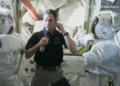
The mission includes several Canadian-led studies focused on human health in space. During a press conference with Canadian journalists in Longueuil, Quebec on Tuesday, Kutryk wore monitoring equipment for the AstroFit research project. The project tracks his health data and aims to find ways for humans to spend longer periods safely in space.
Kutryk stressed the broader importance of Canada’s involvement in space exploration. “It is important for Canada to be here,” he said. “We take a lot of benefits from these missions and it’s something that we hope we can continue.” He also encouraged Canadian industry, universities and commercial partners to engage more deeply with space exploration. “That’s how we innovate, that’s how we develop new technologies, that’s what we want to be doing,” he said.
A Family Heirloom Travels to Orbit
Kutryk brought a meaningful personal item with him to the station. A pocket watch, carried by his relatives when they immigrated to Canada from Ukraine four generations ago, now sits near where he sleeps aboard the ISS.
He said holding the watch makes him reflect on how dramatically technology has changed over the past century. His ancestors, he noted, could never have imagined the journey he is now taking.
Kutryk’s mission also follows a landmark year for Canadian spaceflight. Earlier in 2026, astronaut Jeremy Hansen travelled aboard the Artemis II mission in April. That 10-day lunar fly-around marked humanity’s first journey to the vicinity of the moon in more than 50 years. Together, both missions highlight Canada’s growing role in human space exploration beyond low Earth orbit.