English














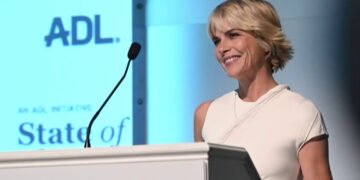

































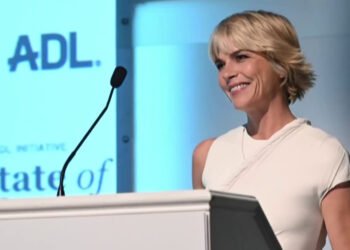
South Carolina’s U.S. Senate race turned sharply competitive Sunday night as Republican Sen. Darline Graham and Democratic challenger Annie Andrews faced off in what may be their only general election debate. The two candidates clashed on a wide range of issues, including President Donald Trump’s sweeping legislative package, rising fuel costs, the ongoing war with Iran, and the rapid expansion of artificial intelligence data centers.
South Carolina is a deeply Republican state, and Trump remains popular there. However, the race has tightened considerably in recent weeks. Democrats believe they have a genuine chance of defeating Graham, who joined the Senate after her brother, former Sen. Lindsey Graham, died suddenly in July at age 71. The top Senate Republican super PAC has committed $5 million to defend her seat. At the start of the debate, hosted by South Carolina ETV in Columbia, Darline Graham noted that Sunday marked exactly three months since her brother’s unexpected death.
Stay connected to every major update — subscribe and follow us on the PhoenixQ website and across our social media platforms.
Candidates Trade Sharp Personal Attacks
Andrews, a pediatrician, wasted no time going on offense. She portrayed Graham as inexperienced and unwilling to challenge Trump or his administration’s policies. She mockingly called Graham “the White House’s ambassador to South Carolina.” Graham, in turn, labeled Andrews “the most radical liberal” to seek office in the state and accused her of being aligned with the Democratic Socialist Party.
Andrews pushed back firmly. “Graham has been told to come out here and call me Bernie, Ocasio, Mamdani — that’s what’s in her script,” Andrews said. “But the truth is my name is Annie Andrews.” She added that she supports the Second Amendment, favors a secure border, and backs deporting immigrants who break the law. “The real difference between me and Sen. Graham is that I will stand up to my own party, and I will always put South Carolina first,” she said.
Both candidates are competing for a full six-year Senate term. The winner will make history as the first woman elected to the Senate from South Carolina. Libertarian candidate Kasie Whitener also participated in the debate.
Social Security, Gas Prices and the Iran War
The candidates also clashed over Social Security. Andrews said she would raise income caps so wealthier Americans pay more into the system. She ruled out increasing the retirement age. She also accused Republicans of wanting to privatize Social Security to benefit Washington insiders.
Graham responded with a personal note. She said Social Security benefits helped support her and her brother after their parents died young. She also defended Trump’s “one big, beautiful bill,” arguing it reduced taxes on tips and Social Security income. “You called it the one big, ugly bill, so here you are deceiving the people of South Carolina,” Graham told Andrews.
On the cost of living, Graham acknowledged that gas prices are high and said she feels the financial pressure too. She supports suspending the federal gas tax and easing drilling regulations as long-term solutions. Andrews, however, blamed Graham directly for the high prices. She pointed out that Graham voted three times against a war powers resolution that would have restricted Trump’s military campaign against Iran. “The war is the exact reason we now have record-high gas and diesel prices,” Andrews said. “Farmers are getting crushed, and everything costs more.”
Andrews also revisited a moment from a previous debate in which Graham admitted that “national security is not my thing.” Andrews used a sharp analogy to drive the point home. “If your surgeon said that appendectomies aren’t really his thing, would you still hand him a scalpel?” she asked. “So why would we hand Darline Graham a full term in the U.S. Senate?”
Graham responded that she wants the war to end and believes in “peace through strength.” She then turned the attack back on Andrews, accusing her of dishonesty and flip-flopping on key issues. “At least I’m honest. If I don’t know something, I am glad to say it,” Graham said. “But you are deceiving the people of South Carolina. Shame on you.”
AI Data Centers Emerge as a Key Flashpoint
One of the debate’s most pointed exchanges centered on the rapid growth of AI data centers, which have become a significant issue in this year’s midterm elections. Andrews coined the nickname “Data Center Darline” for her opponent. She called for a two-year construction moratorium, rate protections for consumers, and a return of decision-making power to local communities.
Graham strongly opposed the moratorium. She argued that halting data center construction would allow China to surpass the United States in artificial intelligence development. She said she voted for the Ratepayer Protection Act, which shifts higher energy costs from data centers onto AI companies rather than consumers. “Under her Bernie Sanders plan, a two-year moratorium, that is dangerous to the national security of our country,” Graham said. “In two years, China is going to be so far ahead we are going to be in so much trouble.”
Graham added that local communities should decide whether data centers are built in their areas. Andrews countered that her plan also prioritizes local control. The exchange highlighted a growing national debate over how to balance technological development with energy costs and community concerns.