English








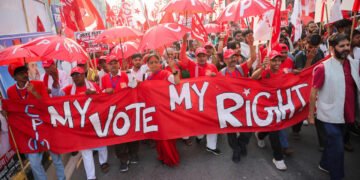




































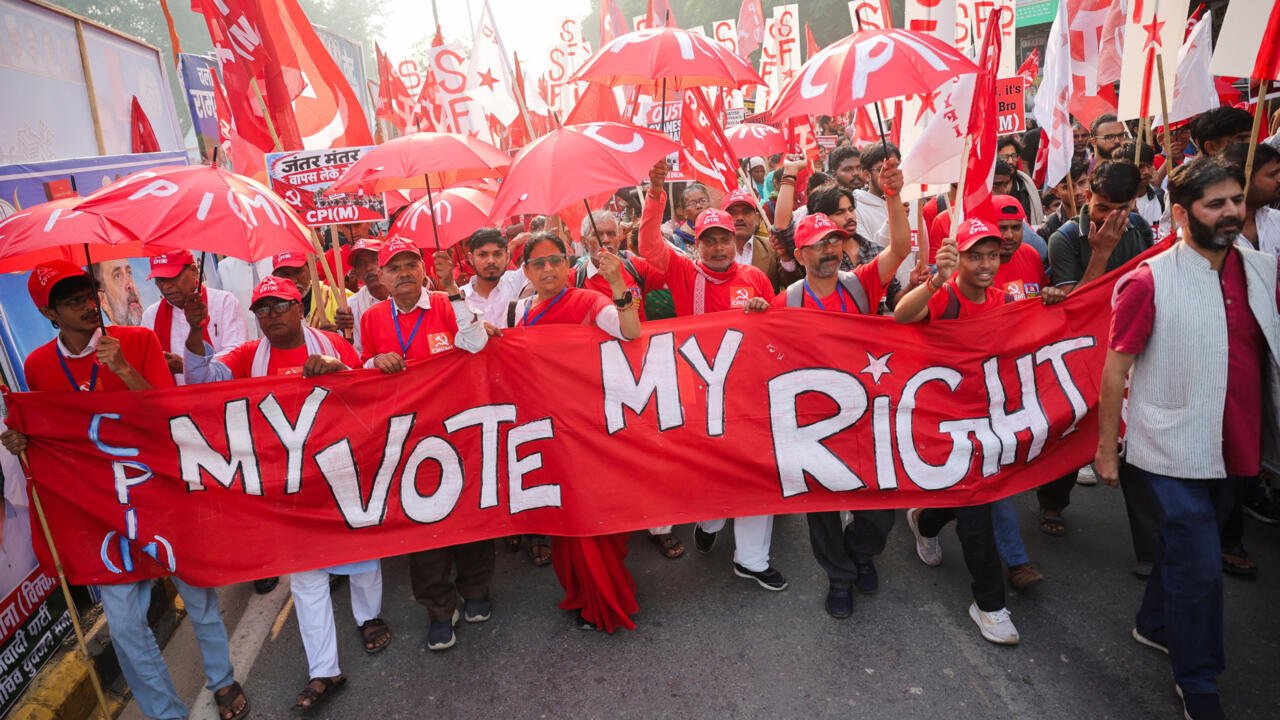
Hundreds of thousands of opposition supporters gathered in New Delhi on Sunday to demand the resignation of India’s Chief Election Commissioner, Gyanesh Kumar. The protest, led by Congress party leader Rahul Gandhi, marked one of the most significant challenges to Prime Minister Narendra Modi’s government since he first came to power in 2014.
Security Deployed Across Delhi
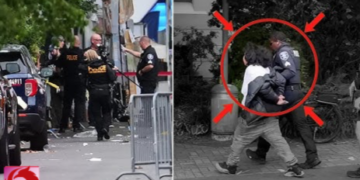
Authorities deployed large numbers of security personnel around the protest site ahead of the event. Officers armed with batons and shields, along with riot control vehicles, surrounded the area near Ramlila Maidan in central Delhi. Delhi Traffic Police warned the public that diversions would be put in place as required, citing expectations of a very large crowd.
Stay connected to every major update — subscribe and follow us on the PhoenixQ website and across our social media platforms.
Senior police officer Rohit Rajbir told news agency ANI that preparations were well underway. “People have started coming to participate in this rally,” he said. “We have ensured proper arrangements at the venue, and arrangements are also planned on the route of the march.”
Opposition Demands Election Chief Steps Down
The protest march covered approximately 1.5 kilometres, starting in central Delhi and ending at Ramlila Maidan. Opposition parties, student organisations, and the youth-led Cockroach Janta Party organised the event. Together, they have held near-daily demonstrations since last month calling for Kumar’s removal.
The controversy centres on a major revision of India’s voter lists. The change, which began last year, removed more than 130 million names from electoral rolls. According to available data, 28 million of those removed had died, 63 million had relocated, and authorities could not trace 30 million others.
Opposition parties allege the deletions disproportionately targeted Muslim voters and other minorities. These groups are considered unlikely supporters of Modi’s Hindu nationalist Bharatiya Janata Party. However, both the BJP and the Election Commission have firmly rejected those allegations.
Background and Political Stakes
The protests gained momentum after The Indian Express reported in September that two senior Election Commission deputies had raised internal concerns. Their concerns covered voter list revisions, registration procedures, and digital systems used in the process.
The Election Commission denied favouring any political party. It also stated that voters wrongly removed from the lists could re-enrol. Meanwhile, the BJP accused opposition parties of attempting to undermine democracy by questioning legitimate electoral processes.
Political analysts describe the youth-led protests and growing opposition support as the most serious crisis Modi has faced since taking office. Nevertheless, his government remains stable. The next general election is not scheduled until 2029, giving the ruling party considerable time to manage the political pressure.
The scale of Sunday’s rally reflected deepening public frustration over the voter list issue. As a result, the coming weeks are likely to determine whether the opposition can sustain this momentum or whether the movement loses steam before the next electoral cycle.