English












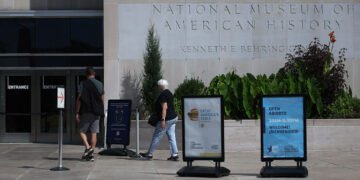

















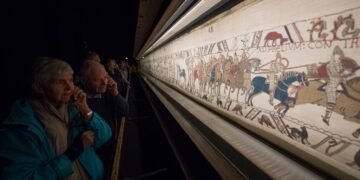
















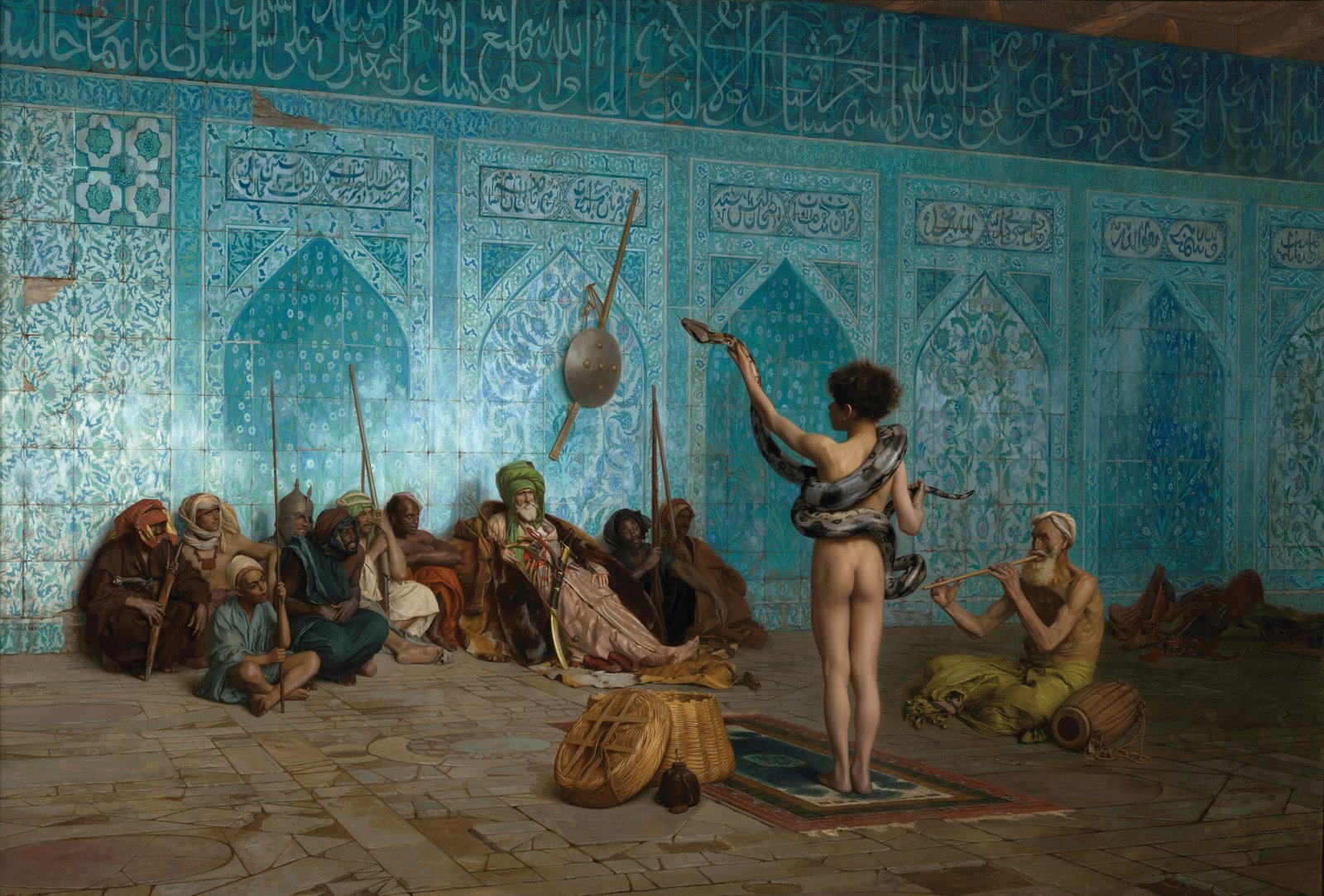
A major exhibition currently on display at the Metropolitan Museum of Art in New York is drawing sharp criticism for sidestepping decades of scholarly debate about Orientalism. Titled “Orientalism: Between Fact and Fantasy,” the show runs until February 28 and focuses primarily on 19th-century Orientalist painting. However, critics argue it largely ignores Edward Said’s foundational 1978 critique, which defined Orientalism as a Western system for dominating and reshaping the East.
A Celebrated Critique Left Behind Glass
The exhibition does display a first-edition hardcover copy of Said’s landmark book Orientalism. It sits inside a glass case alongside three Turkish helmets. Yet the show’s wall texts incorporate none of Said’s arguments. The book appears more as a decorative artifact than an intellectual reference point.
Stay connected to every major update — subscribe and follow us on the PhoenixQ website and across our social media platforms.
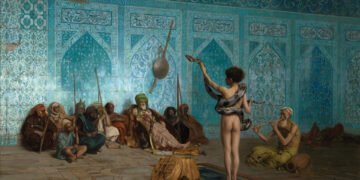
The exhibition centers heavily on two painters: Jean-Léon Gérôme (1824–1904) and Osman Hamdi Bey (1842–1910). Gérôme’s famous work The Snake Charmer (1879) even appears on Said’s book cover. However, the show devotes considerable space to analyzing Gérôme’s visual sources rather than examining the ideological implications of his work.
At the entrance connecting the Met’s Islamic galleries to the Orientalist exhibition, two glass cases flank the doorway. One holds a copy of Pascal Coste’s Architecture arabe (1837–39). The other displays a volume from the Description de l’Égypte, the encyclopedic survey produced by scholars who accompanied Napoleon’s invasion of Egypt between 1798 and 1801. Together, they suggest that 19th-century Orientalism produced knowledge. Yet the exhibition never engages with Said’s argument, drawn from Michel Foucault, that knowledge and power are inseparable.
Napoleon’s Legacy and Missing Historical Context
Above those cases hang two Gérôme paintings depicting Napoleon in Egypt. One shows Bonaparte on horseback surveying Cairo from the Citadel. The other portrays him confronting the Sphinx. Both paintings date from more than 60 years after Napoleon’s failed Egyptian campaign. Gérôme painted them during a period when France was renegotiating its financial grip over Egypt through the Suez Canal Company, led by Ferdinand de Lesseps (1805–94). Those negotiations ended in a settlement widely considered unfair to Egypt. The exhibition mentions none of this context.
Similarly, the show includes a photographic portrait of Algerian resistance leader Emir Abd al-Qadir, taken in 1860 by the Parisian firm Mayer & Pierson. The caption describes him as a military leader who surrendered in 1847 to end his people’s suffering. It does not explain that French forces had attacked his mobile encampment in 1843, killing noncombatants and seizing his possessions and library. The caption transforms a brutal colonial struggle into a vague sequence of personal misfortune.
Osman Hamdi Bey and the Question of Modernity
The exhibition praises Osman Hamdi Bey as an anti-Orientalist Orientalist. Born in Constantinople and educated in France, Hamdi served as director of the Imperial Ottoman Museum. Some scholars celebrate his paintings for reversing familiar Orientalist stereotypes. For example, his depictions of figures absorbed in books challenge the idea of the ignorant or indolent Oriental.
However, his painting At the Mosque Door (1891) raises questions the exhibition does not address. The work shows elegantly dressed women approaching the Muradiye Mosque in Bursa. The exhibition labels this scene as evidence of authenticity and modernity. Critics argue the women appear staged and disconnected from their surroundings. Furthermore, reducing modernity to fashionable female dress echoes a long-standing and reductive Western assumption about Eastern societies.
Overall, the exhibition appears to rehabilitate Orientalist aesthetics without seriously confronting their ideological roots. At a moment when many of the peoples once depicted through an Orientalist lens face ongoing conflict and dehumanization, that omission carries considerable weight.