English











































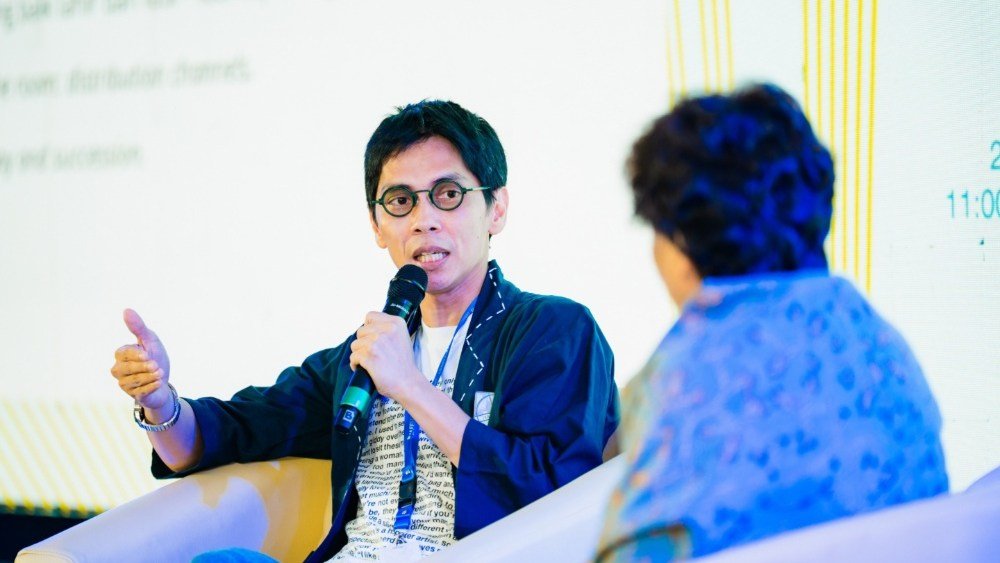
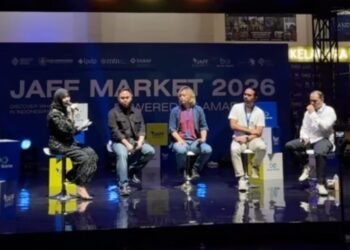
Angga Dwimas Sasongko, founder of Visinema and the director behind animated hit Jumbo, has issued a stark warning about the state of Indonesia’s film industry. Speaking at the JAFF Market in Yogyakarta, he pointed to falling stock values and shrinking cinema audiences as signs of serious trouble ahead.
Stock Decline Raises Industry Alarm
Indonesia’s Jakarta Composite Index has dropped 38% year-to-date. Most listed film companies have fallen even further. Sasongko said this trend raises deep questions about the sector’s underlying business model.
Stay connected to every major update — subscribe and follow us on the PhoenixQ website and across our social media platforms.
“It’s a bad, very bad signal for the industry in the next couple years,” he told the panel. He acknowledged weak purchasing power as an external factor but urged the industry to focus inward first. “We risk blaming others before examining our own shortcomings,” he said.
Sasongko also challenged the assumption that Indonesian cinema tickets are affordable. Although the average ticket costs around IDR46,000 ($2.80), he argued that adjusted for local purchasing power, Indonesian moviegoers effectively pay the equivalent of $9 per ticket. That figure is close to the US average of $11.
Screen Distribution and Structural Weaknesses
Currently, 70% of Indonesia’s cinema screens sit on Java, which holds just 55% of the national population. Sasongko said this imbalance limits the industry’s reach. He also noted that expanding to 10,000 screens would achieve little without stronger audience purchasing power and more resonant films. “There is no silver bullet,” he said.
Beyond infrastructure, he identified a deeper institutional problem. The industry, he argued, has spent decades focused on making better films and chasing international recognition while neglecting the foundations needed to sustain growth. He pointed to Badan Perfilman Indonesia, the Indonesian Film Board, as an example of an institution weakened by its own legal framework. Meanwhile, the film sector must navigate at least four separate government bodies.
He also noted that many Indonesian production companies are built around individuals rather than systems. As a result, they move from one project to the next without long-term stability.
Resilience, Regional Growth and the Road Ahead
Despite these challenges, Sasongko expressed measured optimism. He noted that Indonesia’s film industry survived the 2008 financial crisis and the pandemic. However, he said the current combination of global uncertainty, conflict and shifting domestic policy makes this moment more complex. “We need to think unconventionally,” he said.
He also expressed strong support for building film industries outside Java, including in Kalimantan and Sumatra. He described himself as a “hyper-local believer” and said regional filmmaking could serve as an entry point for new talent. Such growth, however, requires patient capital from investors willing to wait five to eight years for returns.
Looking ahead, Sasongko said he hopes JAFF can become a yearly platform for structured industry collaboration. “A sustainable industry is one that can provide a livelihood for the people working within it,” he said. The JAFF Market runs November 28–30 at the Jogja Expo Center, with the festival’s 21st edition continuing through December 5.