English












































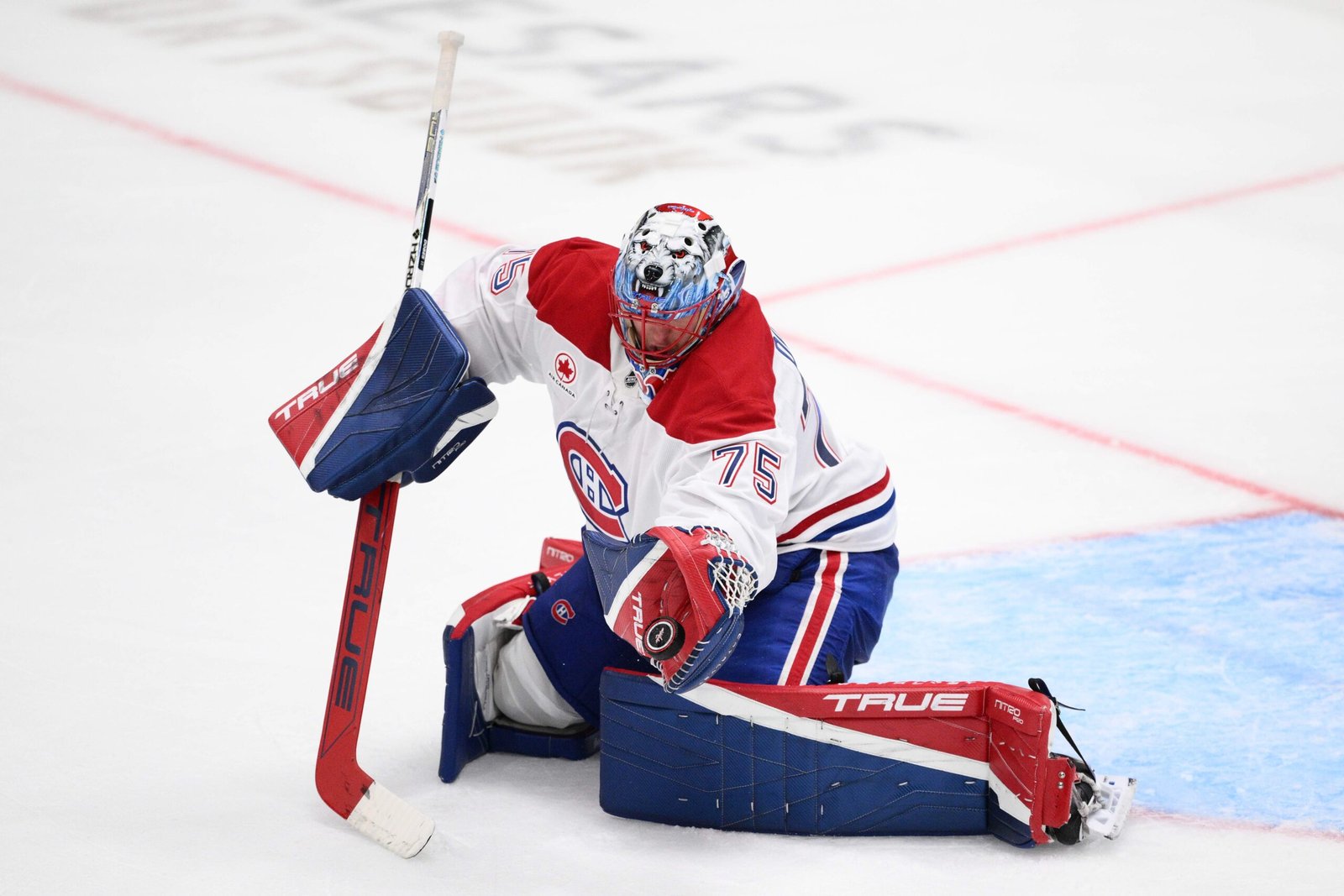
The Montreal Canadiens dropped a 5-4 decision to the Washington Capitals on Wednesday night, with goaltender Jakub Dobes struggling significantly in what proved to be a difficult outing. Both teams entered the game on the second night of back-to-back fixtures. The Capitals had lost to the Carolina Hurricanes the previous night, while the Canadiens edged the Buffalo Sabres in a shootout.
Dobes Continues to Struggle in Net
Jakub Dobes is having a rough start to the season. After standing out as one of the best goaltenders in last year’s playoffs, some regression was expected. However, his early-season difficulties have gone well beyond what anyone anticipated.
Stay connected to every major update — subscribe and follow us on the PhoenixQ website and across our social media platforms.
The core problem appears to be overanxiousness. Dobes is trying too hard. He cannot keep his body still, and as a result, he frequently overplays shots. When sliding across the crease, he often moves past his target and ends up out of position for a second attempt.
The Capitals scored a shorthanded goal when defenseman Lane Hutson handled a two-on-one well and forced the shot. However, Dobes failed to stop an off-angle effort from Alex Tuch. The winning goal was a 55-foot shot that appeared to find the net without any significant deflection. Dobes made himself small on the play, tucking his shoulders in rather than spreading out to use his size.
That is a key issue. Dobes is a physically imposing goaltender. His size alone should be an asset, but he is not letting it work for him. Head Coach Martin St. Louis had spoken after the Buffalo game about players not boxing out, but on the winning goal in Washington, the problem was simply poor goaltending technique.
The numbers tell a grim story. Before Wednesday’s game, Dobes ranked 59th among 64 goaltenders in Goals Saved Above Expected. After the loss, he added a negative value of 1.86, dropping to 62nd with a total of minus 5.86. His save percentage on the night was .792, and his season save percentage sits at .842. Given his performances so far, backup Jacob Fowler may be the better option until Dobes finds his footing.
Third Line Emerges as a Bright Spot
Despite the loss, the Canadiens showed encouraging signs elsewhere. The third line of Alex Newhook, Josh Anderson and Chris Kreider was particularly impressive.
Anderson scored two goals on nearly identical plays. Both times, Newhook set him up for tap-ins from close range while Kreider did the physical work to win the puck. Anderson looked rejuvenated throughout the game. Kreider also contributed to the fourth goal by executing a well-timed screen on a Nick Suzuki shot.
Hutson added an assist to go with an earlier goal, giving him another two-point night. He is currently scoring at better than a point-per-game pace. Meanwhile, the Newhook-Anderson-Kreider combination looks like a line worth keeping together. Finding a productive role for Kreider this early in the season is a positive development for the team.
The Canadiens also showed some backbone after Juraj Slafkovsky took a hit late in the second period. Kaiden Guhle and Alexandre Carrier immediately responded, and Arber Xhekaj also stepped in shortly after. The team sent a clear message that it will not be intimidated.
Owen Beck Makes an Early Impression
Forward Owen Beck has seen limited ice time in his first two games with the Canadiens this season. However, he has made a positive impression within those minutes. Beck is unlikely to develop into an offensive contributor at the NHL level. Instead, his future likely lies as a fourth-line centre.
Even so, he could become a very effective one. He plays smart, defensive-minded hockey. When uncertain, he consistently chooses the defensive side of the puck. A fourth-line centre who competes hard, makes good decisions and plays physically can hold real value on an NHL roster. Beck appears to have those qualities.
Blue Line Hierarchy Shifting in Montreal
A quiet but significant change appears to be taking shape on the Canadiens’ defensive corps. Last season, Mike Matheson regularly logged 28 to 30 minutes per game alongside Noah Dobson on the top pairing. Lane Hutson played big minutes on the second pair, at times even shifting to his off-side to accommodate the existing hierarchy.
This season, St. Louis has moved Dobson and Hutson to the first pairing. That change makes sense. Dobson is the team’s best right-side defender, and Hutson is its best on the left.
Furthermore, Guhle is emerging as a legitimate top-four defender. At 24, he still has room to grow. He logged 25 minutes and 25 seconds against the Sabres and was strong on the penalty kill. Pairing him with Carrier on the second pair looks like a natural and durable combination.
As a result, Matheson appears headed toward a third-pair role. At 32, with his contract running until 2031, reducing his minutes from around 28 to approximately 16 per night would benefit both the player and the team. A pairing with Xhekaj could work well in that role. In time, a pairing alongside prospect David Reinbacher could also be worth exploring. Reinbacher joined the team in Washington on Wednesday but did not play.
The Canadiens lost the game, but the broader picture shows a team still developing its identity. Some areas are clearly improving. Others, particularly in goal, need to stabilize quickly.