English







































European governments are urging citizens to prepare for extended power and infrastructure outages, with France, the United Kingdom and Ireland all launching emergency readiness campaigns focused on 72-hour self-sufficiency. The push reflects growing concern among security experts about the vulnerability of modern societies to cyberattacks, physical sabotage and cascading system failures.
A Continent Getting Ready
France’s Interior Ministry has long recommended that households keep a basic emergency kit. It includes six litres of water per person, non-perishable food, a wind-up radio, cash, a torch and identity documents. However, a broader national preparedness guide called “Tous Responsables” formalised the 72-hour self-sufficiency standard in November 2025.
Stay connected to every major update — subscribe and follow us on the PhoenixQ website and across our social media platforms.
In October, the UK Cabinet Office launched its “Be Ready” campaign. It urged households in England and Wales to prepare to manage without power, water or internet for three days. Shortly before that, Ireland posted its “Be Emergency Ready” booklets to 2.2 million homes. Both initiatives echoed the European Commission’s earlier Preparedness Union Strategy.
François Mattens, a lecturer in defence and security strategies at Sorbonne University and Sciences Po, said the threat driving these campaigns is real. “There are legitimate reasons for concern,” he said. “We are seeing increasingly concrete examples, whether through cyberattacks or physical acts of sabotage targeting critical infrastructure.”
Recent Outages Sharpen the Debate
A series of high-profile failures has brought the issue into sharp public focus. A global Microsoft outage recently disrupted businesses, schools and public bodies worldwide. Japan’s government fell back on telephone communication. The UK’s National Health Service reverted to paper records to maintain essential care.
Meanwhile, a separate failure in US aviation triggered a nationwide ground stop — only the second in American history and the first prolonged air-traffic shutdown since the September 11 attacks. JP Morgan Chase also reported a disruption to transaction processing, which the bank attributed to a hardware bug rather than a cyberattack.
Rafe Pilling, senior director of Threat Intelligence at cybersecurity firm Sophos, cautioned against linking these events to “imminent Armageddon.” However, he noted the incidents highlight a growing cross-border vulnerability. He pointed to the 2024 CrowdStrike incident, where a faulty software update disrupted banks and media organisations globally.
Mattens added that social media can amplify fear in ways that serve hostile actors. “Fear, outrage and strong emotions generate engagement, which in turn generates revenue,” he said.
France’s Digital Exposure
France’s digital dependence makes it particularly exposed. Health reimbursements, railway ticketing and smart electricity meters all rely on continuous connectivity. In 2025, France’s national cybersecurity agency ANSSI recorded 1,366 confirmed malicious incidents from 3,586 treated security events.
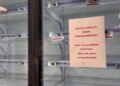
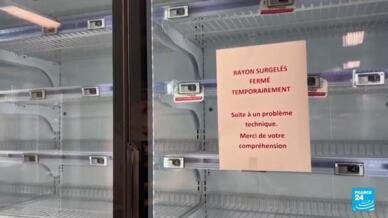
Last month, French authorities linked an attack on supermarket refrigeration systems to an Iranian cyber operation. Hackers allegedly raised storage temperatures from -1°C to over 50°C, affecting nearly 700 food distribution sites and destroying large quantities of perishable goods. At least 11 other European countries reported similar attacks.
Kyle Chan, a fellow at the Brookings Institution, said the incident demonstrated how cyber threats translate directly into real-world consequences. Bernard Benhamou, Secretary General at the Institute for Digital Sovereignty in Paris, added that a subsequent attack on a French blood bank exposed the dangers of over-reliance on single system providers.
Building Resilience for the Future
France does have strong institutional foundations. Its ORSEC civil protection framework activates departmental responses when local capacity is overwhelmed. After Storm Ciarán in November 2023 left 1.2 million households without power and killed five people, grid operator Enedis restored electricity to 95 percent of affected customers within five days.
Still, Mattens believes more work is needed. “Resilience is not just about infrastructure or government capabilities,” he said. “It’s also a question of mindset.” He wants preparedness embedded into schools, workplaces and local communities.
Gaël Musquet, a Paris-based meteorologist and ethical hacker involved in UN tsunami preparedness exercises, agreed. He stressed that recent events are not reasons for panic but clear reminders. “We must be prepared for any occurrence that can shut down the networks coordinating our food, water, safety and healthcare,” he said.
Musquet also sees a political dimension. He noted that France Unbowed leader Jean-Luc Mélenchon has included national resilience proposals in his 2027 presidential campaign. Cannes Mayor David Lisnard has similarly prepared his city for tsunami threats. The overall message from experts, however, remains practical. A modest level of household preparation could make three days without power significantly easier to manage.