English











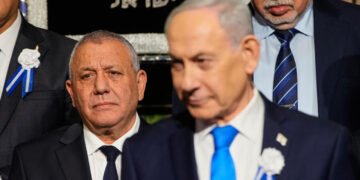
































Israeli opposition leader Gadi Eisenkot has demanded that caretaker Prime Minister Benjamin Netanyahu step down immediately, following reports that a senior Netanyahu aide allegedly interfered in last month’s national election.
Eisenkot Calls for Immediate Investigation
Eisenkot made the sharp remarks on Sunday, just hours after representatives from both camps met to explore the possibility of forming a national unity government. The former army chief did not hold back. “The behaviour of the outgoing prime minister, Benjamin Netanyahu, and his entourage constitutes a concrete, direct and immediate threat to Israeli democracy,” he said in a statement from his party.
Stay connected to every major update — subscribe and follow us on the PhoenixQ website and across our social media platforms.
Eisenkot also called for an immediate investigation into the matter. His comments followed a report by Israel’s Channel 12, which alleged that Netanyahu’s chief of staff, Ido Norden, phoned the police commissioner’s office on the eve of the election. During that call, Norden reportedly directed officers to a purported intelligence source — a former employee of Netanyahu’s office.
Three Arab Party Members Arrested and Released
Based on information from that source, police arrested three members of the Arab-Israeli Raam party. Netanyahu then launched a public offensive against Arab-Israeli parties, accusing them of electoral fraud after they won a record number of seats. However, authorities later released the three men after determining that the source’s information was unfounded.
Netanyahu’s office rejected Channel 12’s account, calling the report “false” and insisting that Norden had simply “fulfilled his civic duty.” Meanwhile, Netanyahu’s Likud party accused Eisenkot of “outrageous incitement.” In a statement, Likud said: “While the prime minister is extending a hand in the spirit of unity, Eisenkot and his associates issue daily statements filled with venomous, inflammatory attacks.”
No Clear Path to Government Formation
The political dispute comes as both sides struggle to build a governing coalition. Neither Netanyahu’s bloc nor Eisenkot’s opposition secured the 61 seats needed to form a government after last month’s election. Eisenkot received a mandate to form a government last week, and the two main Arab parties — the Joint List and Raam — have indicated their support for him.
On Saturday, Netanyahu appealed to Eisenkot to join a unity government. Eisenkot rejected the offer, accusing Netanyahu of playing “tricks” and deliberately stoking tensions. The opposition has also accused Netanyahu of trying to delegitimise Arab parties and the election results in order to hold onto power. As a result, prospects for any unity deal between the two leaders appear increasingly unlikely.