English











































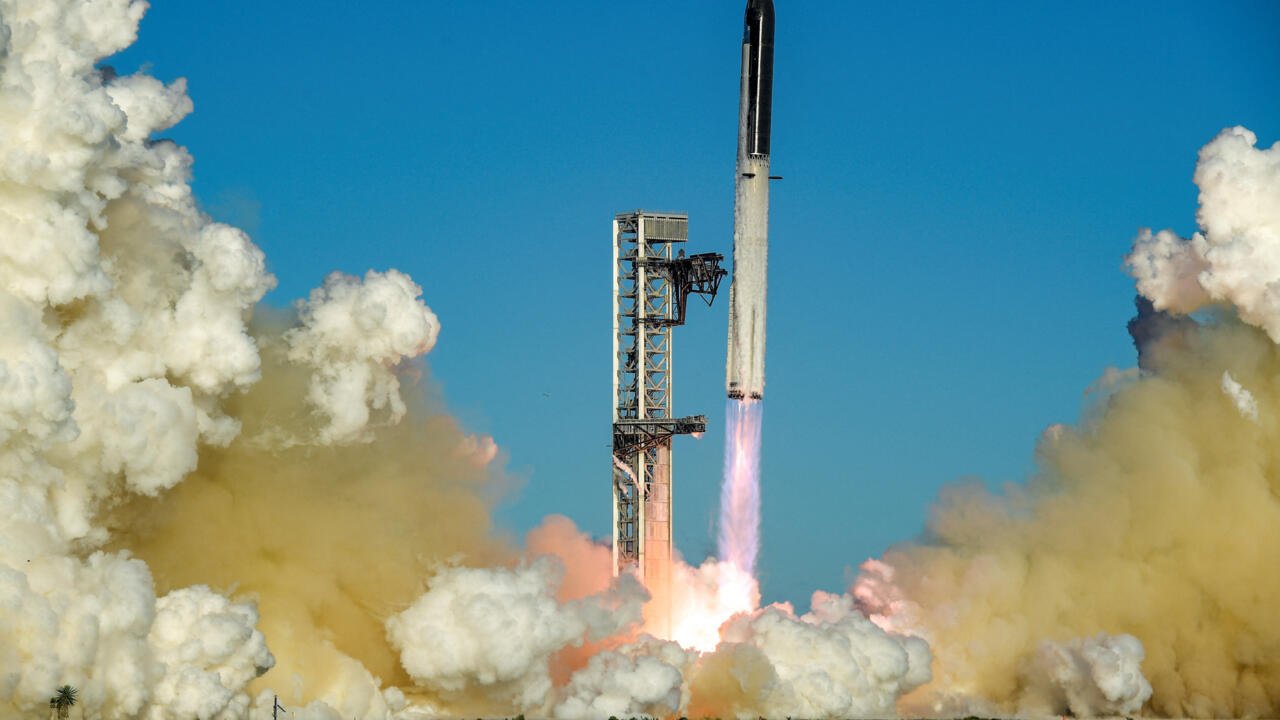
SpaceX’s Starship completed a lengthy orbital mission Saturday, returning to its Texas launch site after nearly 22 hours in space. However, the flight fell short of its most ambitious goal after the Super Heavy booster failed to complete a mid-air catch for the first time in four attempts.
Booster Catch Fails During Descent
The 15th test flight of Starship lifted off Friday from Starbase in Texas. The 124-meter rocket carried high expectations, as SpaceX planned to catch both the Super Heavy booster and the Starship spacecraft simultaneously — a feat never attempted before.
Stay connected to every major update — subscribe and follow us on the PhoenixQ website and across our social media platforms.
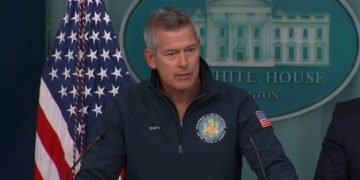
Minutes after launch, the two stages separated as planned. However, the Super Heavy booster’s guidance, navigation and control system aborted the catch attempt during its descent. SpaceX spokesman Dan Huot explained the situation clearly. “The booster was not in the place that it was supposed to be to proceed with the catch,” he said, adding that engineers were still investigating the root cause.
Instead of returning to the launch site, the booster diverted to the Gulf of Mexico. It automatically self-destructed before reaching the water, producing a visible fireball. SpaceX had successfully caught the Super Heavy booster three times previously.
Starship Continues Orbital Mission
Meanwhile, the Starship spacecraft continued its mission without issue. Shortly after reaching orbit Friday, it successfully deployed 26 Starlink satellites into Elon Musk’s satellite internet constellation. The vehicle then completed 14 orbits before beginning its return journey.
On Saturday, Huot confirmed the spacecraft remained on track. “Overall the ship’s still looking healthy, and we are still on track for a catch attempt here at Starbase,” he said. Flight controllers planned to make a final decision on the catch attempt roughly two hours before the scheduled 3:18 pm local time return.
Senior SpaceX engineer Lars Blackmore described the return path as carefully planned. The spacecraft flew over lightly populated desert areas, passed near several towns, and performed what Blackmore called a “giant swoosh maneuver.” This final approach looped around cities in Texas’s Rio Grande Valley before approaching the landing site from the east. Blackmore noted that operators face a tense 21-minute window while Starship passes over land, during which they cannot intervene.
Starship’s Broader Role in Space Exploration
Catching the Starship spacecraft presents far greater technical challenges than recovering the booster. The vehicle descends from a much higher altitude and at significantly greater speed. Like the booster, it aims to land vertically between two mechanical “chopstick arms” at the launch site.
NASA is counting on Starship to serve as a lunar lander for its Artemis program. NASA administrator Jared Isaacman congratulated SpaceX on Friday for “another spectacular launch,” though he did not address the booster setback directly.
SpaceX also faces an unresolved engineering challenge critical to deep-space missions — transferring fuel to Starship while in orbit. This capability is essential for any crewed journey to the Moon or Mars. Despite the delays, SpaceX told journalists Friday that its Starbase factory can now produce one Starship every two weeks and one booster every four weeks.