English





















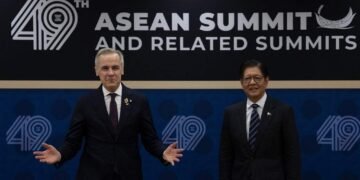






















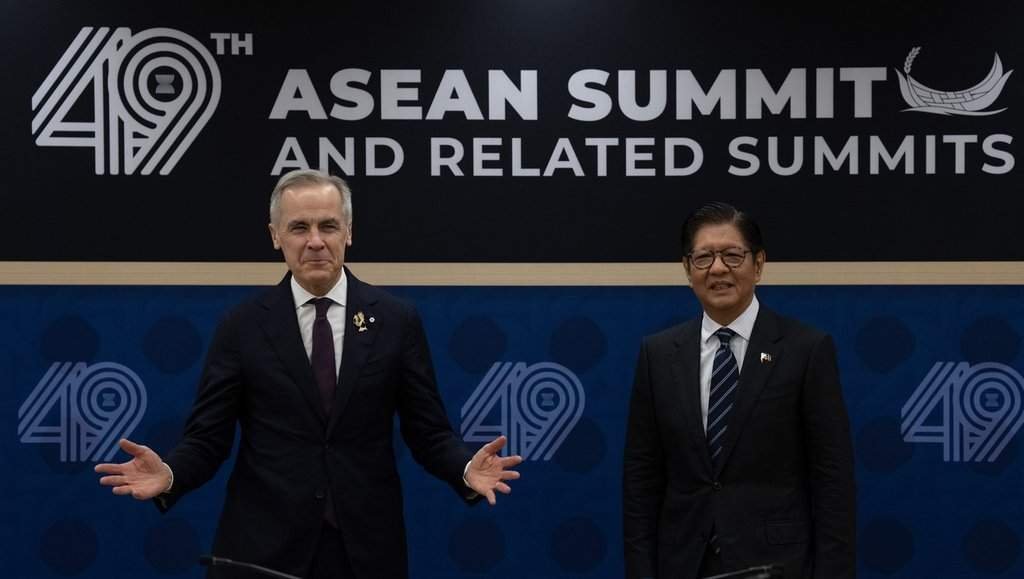
Canadian Prime Minister Mark Carney and Philippine President Ferdinand Marcos Jr. have concluded negotiations for a bilateral free trade agreement, with the formal signing expected in 2027. The two leaders met on the sidelines of the Association of Southeast Asian Nations summit in Manila and signed a document officially closing talks on the Philippines-Canada Free Trade Agreement.
A Deal Years in the Making
Canada and the Philippines first began discussing a bilateral trade deal in 2015. However, those efforts stalled before Carney and Marcos relaunched them approximately one year ago. In 2025, merchandise trade between the two countries reached $3.4 billion. Canada exported mineral ores, meat, cereals, fertilizers and aircraft, while importing cooking oils, leather and rubber products from the Philippines.
Stay connected to every major update — subscribe and follow us on the PhoenixQ website and across our social media platforms.
During the consultation process, corporations broadly supported the agreement. However, civil society groups raised concerns about the Philippines’ record on the environment, labour rights and human rights. Despite those concerns, both governments pushed forward to finalize the deal’s framework.
Carney used the occasion to praise Marcos for his leadership. “A ship that stays in the harbour is safe, but that’s not what a ship is for,” Carney said. “It takes a leader to take the ship out of the harbour into choppy waters and reach a destination.”
Canada’s Broader Push Into Southeast Asia
The Philippines agreement fits into a wider Canadian trade strategy for the region. Ottawa also seeks a broader deal with the full ASEAN bloc, which includes ten other countries such as Thailand. Trade between Canada and ASEAN nations totalled $52.3 billion last year, up roughly 20 percent from the year before.
Carney has set a goal of doubling Canadian exports to non-U.S. markets by 2035. Earlier this year, he signed a strategic partnership with the Philippines covering labour mobility and climate resilience. Last autumn, he also signed a separate trade deal with Indonesia.
Vina Nadjibulla, co-founder of the Centre for Strategic Statecraft, said the ASEAN summit gives Carney an important opportunity. “So much of his diplomacy over the last few months has been focused on Europe, understandably so,” she said. “But we also need to remind everyone that Canada is a Pacific nation, we have an Indo-Pacific strategy, and the region is really critical to Canada’s prosperity.”
Geopolitical Context
The summit also takes place against a backdrop of rising competition between the United States and China. That rivalry has shaped ASEAN discussions in recent years, particularly around semiconductors, critical minerals and tariffs. Nadjibulla noted that Canada wants to position itself as an alternative partner, similar to Japan and Australia, giving ASEAN nations more options.
Meanwhile, Carney is also working to strengthen trade ties between Pacific Rim countries and the European Union. He aims to position Canada as a bridge between major markets that support the rules-based international trading system. The ASEAN summit this weekend drew 20 heads of government, including U.S. President Donald Trump and Brazilian President Luiz Inácio Lula da Silva.