English
















































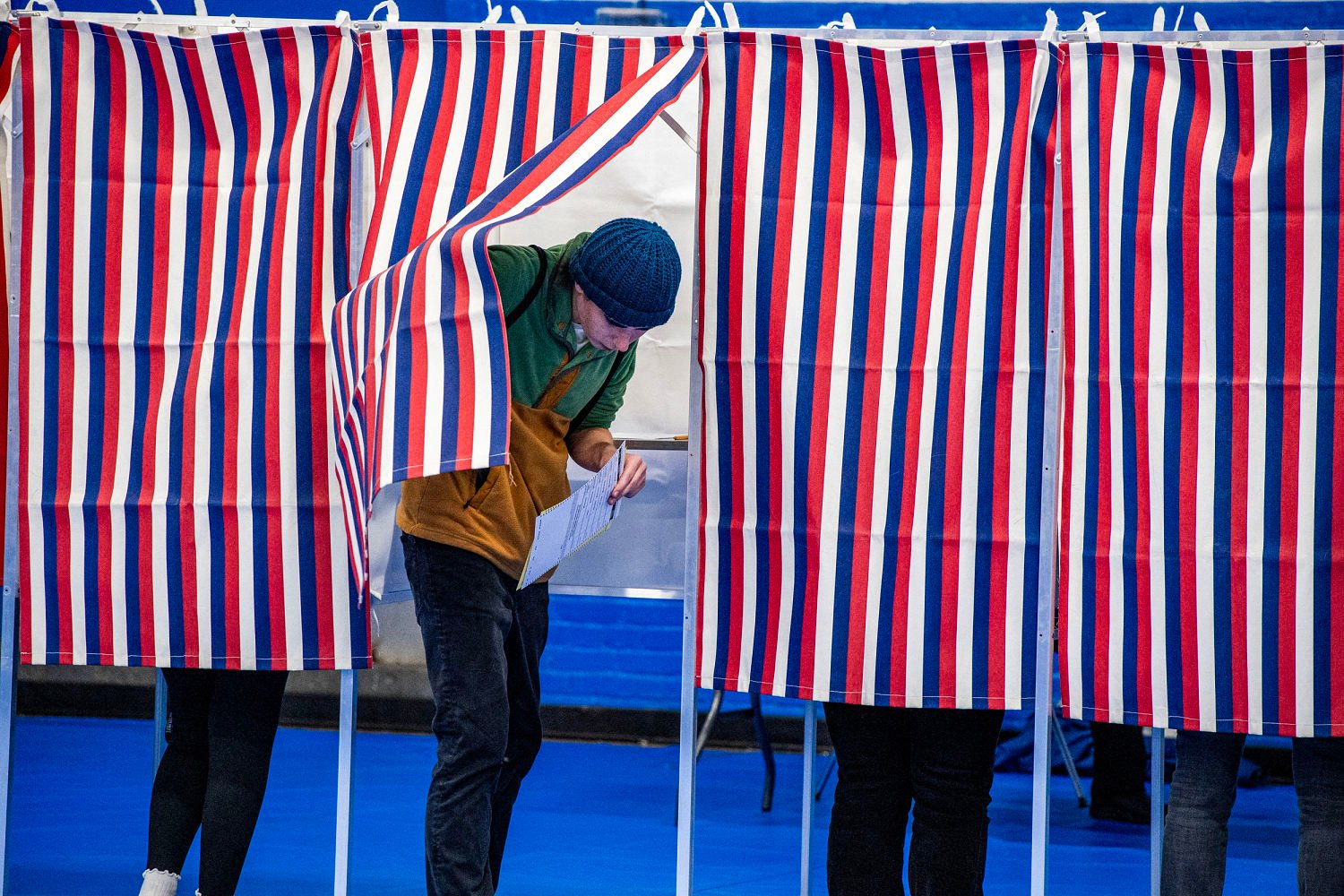
The U.S. Supreme Court ruled Thursday that student IDs cannot be used as a form of identification during New Hampshire’s upcoming midterm elections. The decision hands a significant victory to Republicans, who had backed the state’s emergency request to the court.
The justices granted New Hampshire’s emergency appeal, which also carried the support of the Republican National Committee. The ruling arrives just weeks before the November election, with New Hampshire hosting a closely watched Senate race that could influence which party controls the chamber.
Stay connected to every major update — subscribe and follow us on the PhoenixQ website and across our social media platforms.
Republican former Senator John E. Sununu faces Democratic Representative Chris Pappas for the seat currently held by retiring Democratic Senator Jeanne Shaheen. That contest has drawn national attention as a potential tipping point in the Senate balance of power.
What the Supreme Court Decided
The court’s unsigned order focused on a well-established legal principle. It stated that federal judges should not order changes to voting rules so close to an election. The order noted that the district court “did not point to anything that would justify deviating from that principle.”
Justice Ketanji Brown Jackson was the only dissenter. She wrote that she would not disturb a federal court order that she described as clearly justifiable. In her view, the lower court acted appropriately to ensure voters received accurate information about the state’s electoral process.
Background on the New Hampshire Voter ID Law
New Hampshire enacted a law in April that removed student IDs from the list of accepted identification documents at the polls. A nonprofit organization called the Coalition for Open Democracy challenged the law. The group argued it unlawfully burdened the right to vote and discriminated against young voters.
U.S. District Judge Joseph Laplante initially declined to block the law. However, on October 2, he placed guidance issued by New Hampshire Secretary of State David Scanlan, a Republican, on hold. Laplante found that Scanlan’s guidance went further than the law itself required.
Specifically, Scanlan’s guidance stated that student IDs could not be used for any purpose when requesting a ballot. Laplante concluded the law only barred student IDs as a primary form of identification. A separate state provision still allowed voters to establish their identity using unofficial documents, including “any other evidence that reasonably establishes that it is more likely than not that the person is who they claim to be.”
How the Case Reached the Supreme Court
Under Laplante’s ruling, election officials retained some ability to consider student IDs when assessing whether someone was a valid voter. The Boston-based First U.S. Circuit Court of Appeals declined to pause that ruling. As a result, New Hampshire took the matter directly to the Supreme Court.
The Supreme Court’s decision to intervene means student IDs now cannot serve any identification purpose at the polls, not even as a supplementary document. Therefore, students who rely on campus-issued identification as their primary form of ID will need to present alternative documentation to vote in November.
The ruling effectively restores the full scope of Scanlan’s original guidance, which the lower court had placed on hold. Critics argue the decision could suppress turnout among younger voters, while supporters say it upholds the state’s authority to set its own election rules.