English
































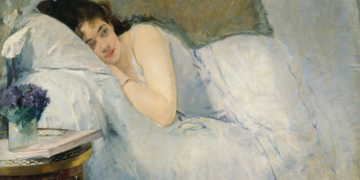








A new experimental project combining artificial intelligence with traditional art history research is offering fresh possibilities for identifying the subjects of centuries-old portraits. The initiative, known as INTERART, has produced its first public results through an exhibition that opened this month at Geneva’s Musée d’art et d’histoire (MAH). The show, titled Liotard & Marie-Antoinette: Faces Under Investigation, centres on a series of chalk drawings created in 1762 by Swiss-French artist Jean-Étienne Liotard, depicting the children of Austrian Empress Maria Theresa.
A Mistaken Identity That Sparked a Research Project
The project has its origins in a simple but revealing error. About twenty years ago, Catriona Seth, a professor of French literature at All Souls College, University of Oxford, chose a Liotard chalk portrait for the cover of her book about Marie-Antoinette. She believed, as many had long assumed, that the portrait showed the young French queen.
Stay connected to every major update — subscribe and follow us on the PhoenixQ website and across our social media platforms.
Years later, however, Seth noticed something was wrong. The girl in the drawing wears the chivalric medal of the Order of the Starry Cross. Marie-Antoinette did receive that honour, but not until after 1762, when Liotard completed the portrait series in Vienna. Further research confirmed that the drawing was not of Marie-Antoinette at all. It was, in fact, a portrait of her sister Marie-Caroline.
“I love being able to say that to people, because it just shows that research is a continuous process and that we also learn by our mistakes,” Seth said. “There are things that can be discovered, even about great portraits, great texts. We have to think about them and question things.”
Proving the misidentification was one thing. However, confirming the reverse — that a portrait previously labelled as Marie-Caroline was actually Marie-Antoinette — proved more difficult. Seth experimented with a face-ageing app, uploading the portrait and comparing the aged result to a known adult likeness of the French queen. The result was not particularly useful, she admits. Still, the experience gave her an idea.
Building an Interdisciplinary Team
Seth brought the concept to Marie-Eve Celio-Scheurer, senior curator and head of the graphic arts department at MAH. The museum holds the world’s largest collection of Liotard portraits, including the two drawings at the centre of the dispute. Celio-Scheurer then contacted David-Olivier Jacquet-Chiffelle, a professor of forensic science and identification at the University of Lausanne, which is home to the world’s oldest school of forensic science. He in turn connected the group with Sébastien Marcel, a specialist in biometrics and facial recognition.
Together, the team formed INTERART, a collaborative research project involving MAH, the University of Oxford, the Idiap Research Institute, and the University of Lausanne’s School of Criminal Justice. Their central question was straightforward: can modern AI and biometric technology reliably identify individuals in centuries-old painted portraits?
Identifying a portrait sitter is already a complex task for art historians. It typically involves studying provenance, inscriptions, archival records, iconographic comparisons, collection history, and details of costume and jewellery. The INTERART team wanted to explore whether AI tools could become another instrument in that process.
The Challenges of Applying AI to Historical Art
Current facial recognition systems were built to analyse photographs. They can compare faces across differences in pose, lighting, expression, age, and image quality. Applying these tools to paintings, however, introduces new complications. Two portraits of the same person may differ dramatically in artistic style and technique. As a result, the team must develop models capable of identifying consistent facial features regardless of how an artist has interpreted them.
There is also an important limitation. For biometric analysis to work effectively, a painting must have been created directly from life, making it a true likeness of the sitter rather than a copy of an earlier work.
Even under ideal conditions, the technology can only generate probability thresholds, not definitive answers. “There is never a 100 percent correct answer, and this is what also keeps the project interesting,” Celio-Scheurer said. “It gives you a potential.”
Seth described the approach as similar in principle to a criminal fingerprint database. If museums build verified collections of portraits where the sitter’s identity, age, and sitting conditions are confirmed, an unidentified portrait could be entered into the system and the algorithm might suggest possible matches. “It might give us leads,” she said.
A Tool to Support, Not Replace, Art Historical Research
Both Seth and Celio-Scheurer are clear that AI portrait identification will not replace traditional scholarship. Instead, they see it as a supplementary resource. “It’s not that AI will replace research in art history; it’s more of a support or tool that can give indications,” Celio-Scheurer noted. “At the moment it’s a support, but who knows how far this tool can be developed?”
The exhibition at MAH runs through February 7, 2027. It presents all eleven Liotard drawings of Maria Theresa’s children, along with a recently acquired portrait of their father, François-Étienne de Lorraine. Importantly, the portraits of Marie-Antoinette and Marie-Caroline now carry updated titles that reflect their corrected identities.
For now, the INTERART project remains at an early stage. Nevertheless, its findings are already drawing interest from art historians who see genuine value in combining computational tools with traditional methods of portrait research.