English





























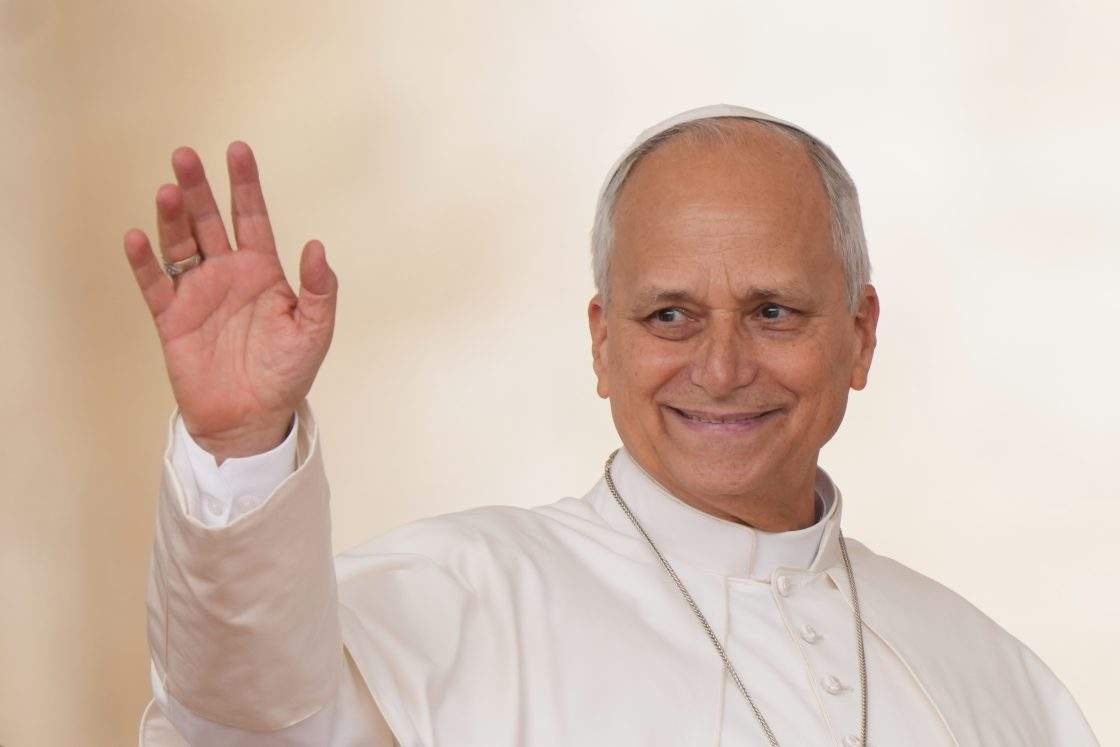
Pope Leo XIV will undergo surgery this week to remove a small lung nodule detected at a very early stage, the Vatican announced. The procedure marks the first significant medical event of his papacy, which began 17 months ago. Doctors say the early detection is encouraging and that the outlook for a full recovery is positive.
Early Detection and What the Nodule Means
A lung nodule is a small abnormal growth measuring less than three centimeters across. Doctors sometimes find nodules during CT scans performed for unrelated reasons, such as a lung infection or injury, according to the American Cancer Society.
Stay connected to every major update — subscribe and follow us on the PhoenixQ website and across our social media platforms.
Nodules can be either benign or malignant. However, early detection significantly improves outcomes. Dr. Stephen Liu, a lung cancer specialist at Georgetown’s Lombardi Comprehensive Cancer Center, said that if the nodule is cancerous and removed at an early stage, the prognosis is “excellent” and surgery alone may be enough.
Leo, 71, discovered the nodule during what the Vatican described as routine medical tests. Officials said no specific health concern prompted the check-up. The pope is otherwise considered healthy and physically fit, both of which are positive factors for recovery.
Hospital Admission and Surgery Timeline
The Vatican confirmed that Leo will enter Rome’s Gemelli hospital on Tuesday morning. Surgery is expected to take place in the first days of this week, though officials did not release an exact date. The Vatican predicted a recovery period of approximately one week.
Oncologists not involved in his care noted that patients often leave hospital after just a few days and continue recovering at home. Before his admission, Leo carried out a full schedule of audiences and appointments on Monday.
Gemelli hospital, formally known as the Agostino Gemelli Polyclinic, is a non-profit Catholic teaching hospital affiliated with the Catholic Sacred Heart University. The facility maintains a dedicated apartment on its tenth floor for popes, complete with a private chapel. Leo’s predecessor, Pope Francis, received treatment there before his death in May 2025 following a respiratory crisis. St. John Paul II spent so much time at the hospital that he famously called it “Vatican III.”
Scheduled Events and Upcoming Travel
Leo had several commitments planned for this week. He was due to celebrate a public Mass on Wednesday to close a weeklong conference on family ministry. It remains unclear whether another official will lead the Mass in his absence.
More significantly, Leo has a major international trip scheduled from November 6 to 17, covering Uruguay, Argentina and Peru. The ambitious itinerary includes a dozen flights, two helicopter rides and notable altitude changes in Peru. Despite the surgery, Leo said on Sunday that he still intends to make the journey. However, it remains uncertain whether his recovery will affect those plans.
Papal Authority and a Key Appointment
The Vatican has no formal rules governing what happens if a pope becomes fully incapacitated. Even while unconscious during surgery, Leo remains pope and retains full authority over the Church. Pope Francis and St. John Paul II both continued to govern during lengthy hospital stays, issuing appointments, laws and statements from their hospital rooms. A team of senior officials already manages the Vatican’s day-to-day operations.
Nevertheless, advances in medicine and longer papal lifespans have exposed a gap in Church law. Experts and Church observers have increasingly called on the Vatican to establish clearer guidelines for situations where a pope may be too ill to govern.
Two days before announcing his surgery, Leo made a notable appointment. On Friday, he approved Filipino Cardinal Luis Antonio Tagle, 69, as the new dean of the College of Cardinals. Tagle replaces Cardinal Giovanni Battista Re, 92, whose term Pope Francis had extended in the weeks before his death.
The role of dean carries considerable importance during papal transitions. The dean presides over a deceased pope’s funeral and leads the cardinals’ closed-door discussions before a conclave. If the dean is under 80 when a conclave begins, he also presides over the secret election of a new pope in the Sistine Chapel.
On Sunday, the Vatican released a letter Leo wrote to Cardinal Re, thanking him for his decades of service. Leo specifically acknowledged Re’s role in the recent transition following Francis’ death. “I do not think I am mistaken in saying that you, Your Eminence, have been and remain one of the Holy See’s best-known and most esteemed servants,” Leo wrote.