English
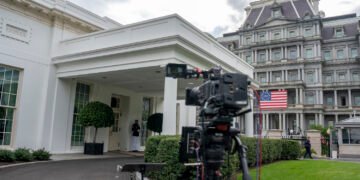






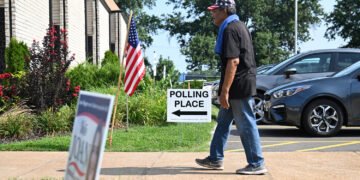

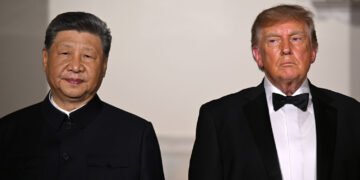






















The U.S. Supreme Court handed the Trump administration a significant legal victory on Friday, ruling 6-3 to allow the federal government to use an expanded voter database that contains citizenship information. The decision overturned lower court rulings that had blocked the administration’s changes to the database, which critics argue is unreliable and could wrongly remove American citizens from voter rolls.
The court divided along ideological lines, with conservative justices in the majority. The unsigned ruling granted an emergency request from the government after two lower courts found the administration’s expansion of the database likely violated federal law.
Stay connected to every major update — subscribe and follow us on the PhoenixQ website and across our social media platforms.
What the Ruling Allows
The Supreme Court’s decision permits the administration to use the expanded Systematic Alien Verification for Entitlements program, known as SAVE. Congress established SAVE in 1986 to help government agencies quickly verify immigration status when individuals applied for federal benefits such as Social Security.
President Donald Trump signed an executive order in March 2025 directing agencies to take steps to ensure only U.S. citizens vote in elections. Following that order, the administration expanded SAVE by adding data from the Social Security Administration. The expansion allowed officials to search records using Social Security numbers and to conduct bulk searches of voter rolls.
However, the court noted that the National Voter Registration Act prohibits broad voter roll purges in the weeks before an election. The ruling acknowledged this restriction “limits the potential impact” of the decision in the current election cycle. States may still submit individual queries about specific voters.
On the wider legal questions, the court said federal law requires the government to respond to state requests for citizenship information. The lower court’s injunction, the majority said, “prevents the federal government from using the program it believes is best suited to the task.”
Dissent and Criticism
Liberal Justice Ketanji Brown Jackson wrote in dissent that the government had not demonstrated sufficient grounds to block the lower court ruling. She argued that “the harm caused by burdening or disenfranchising even a few lawful voters outweighs the nonexistent harm that the Government experiences when it is prevented from taking an action that it likely lacks the authority to take.”
Several advocacy groups, led by the League of Women Voters, challenged the administration’s plan in court. They argued it violates multiple federal laws, including the Social Security Act and the Privacy Act. In response to the ruling, the groups said the decision “puts millions of Americans at risk for being unlawfully targeted by the administration’s unreliable voter purge database.”
Meanwhile, supporters of the ruling welcomed the outcome. Jason Snead, executive director of the Honest Elections Project, said the decision “just makes it easier for states to get federal citizenship data to help them clean up voter rolls.”
Errors and Limited Evidence of Illegal Voting
After states began running their voter rolls through the expanded SAVE system, local officials identified errors. According to reporting by ProPublica and The Texas Tribune, many of the flagged registrants were newly naturalized citizens.
Texas was among the first states to use the expanded database. The state ran more than 18 million voter registrations through SAVE. So far, only three people have faced charges for voting illegally as a noncitizen.
Opponents of the expanded database warn it could place unnecessary bureaucratic burdens on newly naturalized citizens. Those flagged by the system may be required to prove their citizenship, even when they are legally entitled to vote.
Noncitizen voting remains extremely rare across the United States. Federal law already requires all states to maintain their voter rolls, and existing processes allow states to identify any noncitizens who mistakenly appear on those rolls. Solicitor General D. John Sauer had argued in court filings that blocking the program “threatens the integrity of upcoming elections” by preventing the government from verifying voter citizenship at states’ request.