English






























“Editor-in-Chief: SHAPOUR-T”
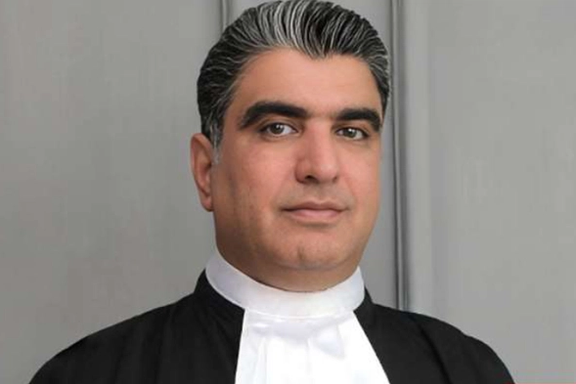
The sudden and ambiguous death of Khosro Alikourdi, a defense lawyer, marks a profound political signal. His name closely tied him to the cases of political prisoners, 2022 uprising protesters, and families seeking justice. Official sources attempt to reduce the incident to a “heart attack.” However, the legal community and international bodies present a different analysis. They view the event within the framework of The Elimination of the Voice of Advocacy and the targeted removal of independent lawyers and civil activists.
1. The Advocate: A Strategic Target for Repression
As previously noted, Alikourdi was not merely a protester. He acted as a key figure working to undermine the government’s judicial legitimacy. He used the instrument of the law to fight lawlessness. Alikourdi’s targeting demonstrates that the dictatorship, in its final stages, is terrified. This terror stems from any legal tool that could ensure its survival. The regime prefers to eliminate the problem physically. This action replaces confrontation with lawyers in court. Such a strategy aims to create fear and passivity within the body of courageous lawyers. This action represents the government’s last attempt to block legal avenues for seeking justice.
2. The Silence of Official Bodies Versus the Cry of Independent Jurists
The Iranian legal community’s reaction to this event reflects the systemic pressure and division within civil society institutions:
The Silence of Official Bodies (The Bar Association): One of the bitterest aspects of this affair is the silence or conservative reactions from official legal institutions. Bar associations, which hold responsibility for defending the lawyer’s independence and guaranteeing their safety, failed to issue an explicit condemnation or conduct an independent investigation of the case. State institutions caused this inability through intense pressure. Consequently, this passivity calls the independence and professional identity of the Bar Association into question. This situation clearly shows the extent to which political power overshadows the official structure of the legal profession in Iran.
The Cry of Independent Lawyers: In contrast to the official silence, a large number of jurists, lawyers, and civil activists explicitly called the death a “government killing” and the result of systematic elimination. Risking their safety, they demanded the publication of the surveillance footage security forces had seized. This group also emphasized the necessity of forming an independent investigative committee. Thus, independent lawyers showcased their courage as the last bastion for defending citizens’ rights and the independence of the legal profession.
3. Global Condemnation and Pressure on Iran’s Human Rights Record
The death of a human rights lawyer who pursued sensitive cases immediately drew the attention of the international community:
Human Rights Organizations: Organizations like Amnesty International and Human Rights Watch issued statements. They expressed deep concern over Alikourdi’s fate and demanded an independent and transparent international investigation. These bodies cited Alikourdi’s case as evidence that the Islamic Republic continuously disregards its human rights obligations and maintains an ongoing trend of eliminating opponents.
Testing Judicial Independence: In international forums, commentators raised this incident as a serious test for Iran’s judicial independence. The lack of transparency and the security agencies’ seizure of evidence practically undermine any claim the Islamic Republic makes to uphold the law. This raises pressure on international mechanisms, such as the UN Special Rapporteurs on human rights in Iran.
4. The Strategy of Elimination on the Verge of Collapse: Political Self-Sabotage
The fundamental question is why the government resorts to such costly actions in what many consider its final phase. This action demonstrates an existential fear of the re-organization of protests. At this juncture, instead of restoring its legitimacy, the Islamic Republic is eliminating the “lights of hope” in society. This approach constitutes a major miscalculation; physically eliminating one individual plants the seeds of hundreds of other Alikourdis in society. It clearly tells the people that the only path is the struggle for fundamental structural change, not attempts at internal reform.
5. Concluding Remarks: From the Elimination of the Lawyer to the Rise of “The People’s Law”
The tragic and suspicious death of Khosro Alikourdi screams an undeniable truth at its core: the Islamic Republic can no longer tolerate any intermediary between its absolute power and the will of the people. The physical elimination of a defense lawyer is not a random incident; it is the climax of the strategy of survival through intimidation. By doing this, the government seeks to render sensitive cases ownerless and block the last paths of hope for reform and justice within the framework of the law. This action is a direct shot at the heart of concepts like lawyer independence and the right to free defense. These concepts form the pillars of any judicial system claiming to uphold justice.
From now on, every lawyer who accepts a political case knows that security agencies view them not as a professional, but as a “potential enemy.” The silence of the official Bar Associations regarding this assassination (or suspicious death) indicates a surrender to the pressure of the government. This further damages the historical credibility of the institution.
Historical experience, however, has shown that spreading terror does not prolong the life of repressive governments. With the complete closing of the courts and the Elimination of the Voice of Advocacy through the removal of lawyers, the struggle shifts direction. This struggle moves from the courts into the domain of “The People’s Law.” In this domain, action is based not on articles and clauses, but on raw justice-seeking and the natural right to resist oppression. The memory and legacy of Khosro Alikourdi, instead of being extinguished, will become a lasting symbol for courageous lawyers. A symbol that, despite all the dangers, will continue his legacy in defense of freedom and justice.
“Stay informed with the latest news, analyses, and reports on PhoenixQ .”