English









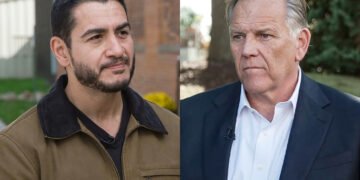
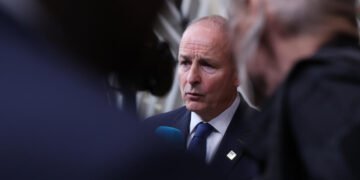
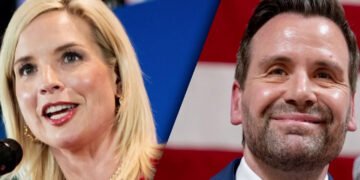
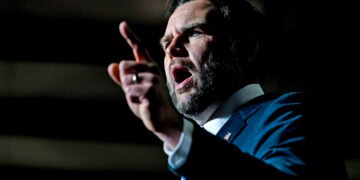
























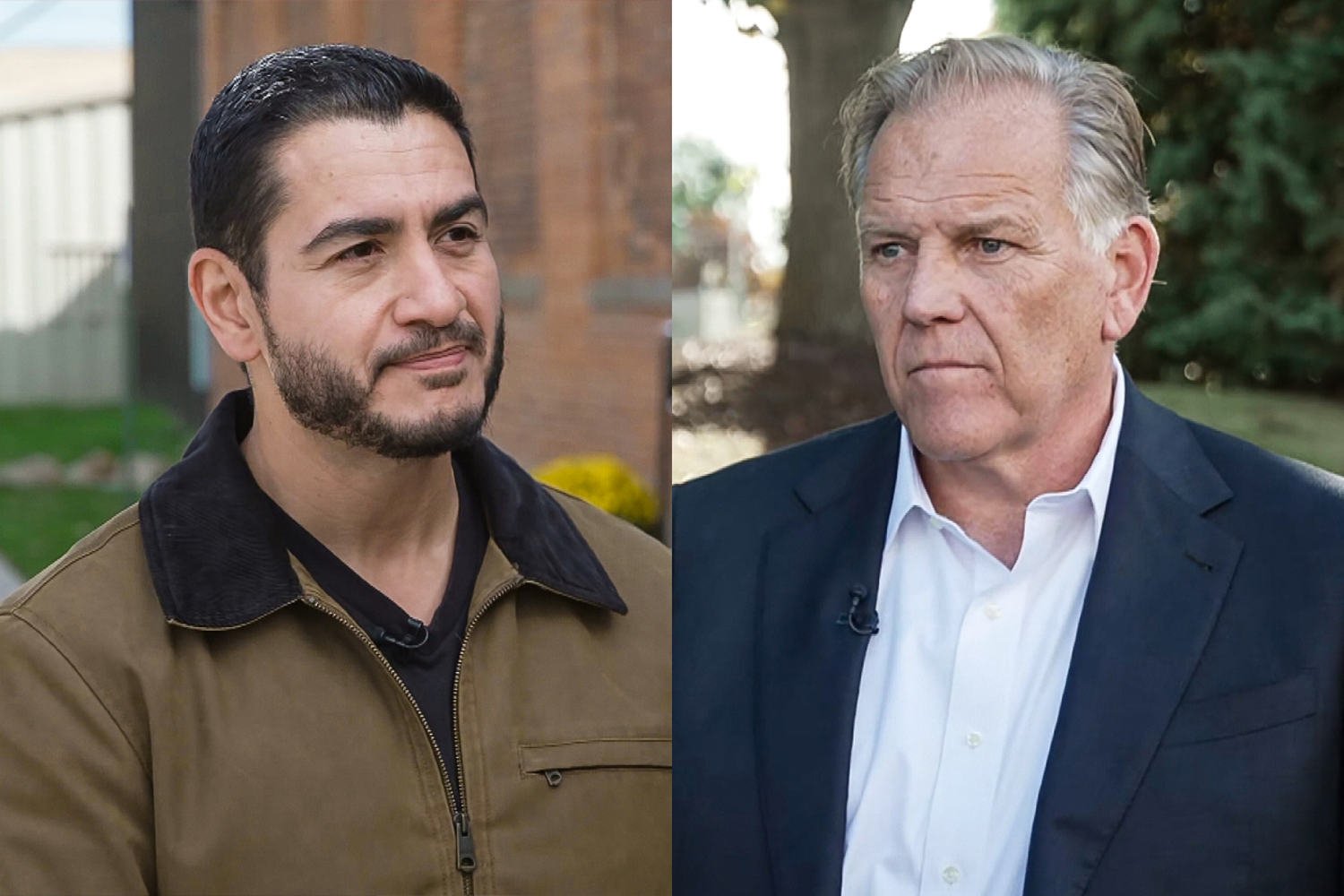
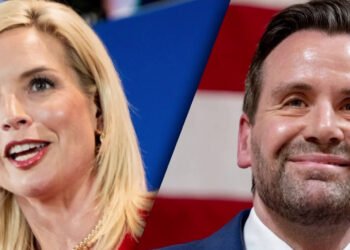
Michigan’s U.S. Senate race entered its final stretch Wednesday as Democratic nominee Abdul El-Sayed and former Republican Representative Mike Rogers met for their second and last debate in Detroit. With Election Day less than two weeks away, the two candidates clashed repeatedly over the war with Iran, artificial intelligence, tariffs and questions about El-Sayed’s background. Polls show the race to replace retiring Democratic Senator Gary Peters remains extremely close.
Iran War and Trump Dominate the Exchange
El-Sayed made his opposition to the war with Iran a central theme throughout the debate. He linked rising gas and grocery prices directly to the conflict. “We need a War Powers resolution rather than a senator who is going to stand hip to hip with Donald Trump on this war that made no sense when it started and certainly makes no sense now,” El-Sayed said.
Stay connected to every major update — subscribe and follow us on the PhoenixQ website and across our social media platforms.
Rogers has tried to create some distance from Trump on the war in recent weeks. He released an advertisement calling for the conflict to wind down. However, he also said Trump had good reason to launch the war initially, citing Iran’s nuclear program. In an NBC News interview last week, Rogers said “I don’t think so” when asked whether Trump made a mistake by starting the war.
El-Sayed repeatedly tied Rogers to Trump throughout the night. Rogers fired back at one point, saying the bingo game El-Sayed promoted for home viewers “ought to be how many times can he put the word Trump in any answer.” El-Sayed had encouraged supporters watching at home to play a “MAGA bingo” game based on Rogers’ talking points.
Muslim Brotherhood Accusations Spark Heated Confrontation
The debate’s most intense moment came when Rogers again raised claims linking El-Sayed to the Muslim Brotherhood. Rogers has made this a recurring theme in the final weeks of the campaign. On Wednesday, he claimed El-Sayed once asked the leader of the Muslim Brotherhood in Egypt “to defund the police there, too.”
El-Sayed flatly rejected the accusations. “He keeps raising this question about this association with an organization I’ve never been a part of, because of my mom, who’s a nurse in Missouri,” he said. El-Sayed has consistently denied any connection to the group. Last week, he told NBC News, “I have no ties, we have no ties.”
The exchange escalated when Rogers attempted to interrupt El-Sayed mid-response. El-Sayed pointed his finger at Rogers and said firmly, “I’m talking. I am talking. I’m talking. Excuse me.” He then accused Rogers of questioning his loyalty to the Constitution. “To bring into question my commitment to the Constitution is really beneath you. I am proud of America. I’m proud to be an American,” El-Sayed said.
Rogers responded by saying El-Sayed could “pray any way you want” but accused him of trying to play the victim. “This is about an ideology,” Rogers said. In an earlier debate, Rogers had questioned El-Sayed’s mother, Fatten Elkomy, over her work at a charity the U.S. government later linked to terrorist financing, leading to its closure. Elkomy was never accused of any wrongdoing.
Tariffs, Healthcare and Artificial Intelligence
On trade policy, Rogers moved further from Trump’s position. Earlier this month, he called for an end to the trade war with Canada. On Wednesday, he said some tariffs had produced “positive” results for Michigan, but added that “maybe these Canadian tariffs were not well thought through.” He framed himself as someone who could push back on harmful policies from inside the Senate.
“You might want to send the guy back who can actually get the meeting to get these things worked out,” Rogers said. “If it’s good for Michigan, I’m going to be for it. If it’s bad for Michigan, I’m going to be against it.”
El-Sayed challenged the logic of electing a Republican to check a Republican president. “Donald Trump’s going to help him get into the United States Senate, and he’s going to turn around and stand up to Trump?” he said. “Because you know we’ve got a real history of Republican senators standing up to Donald Trump right now. I don’t see it happening.”
Both candidates also addressed artificial intelligence. Rogers said he supports an antitrust exemption for leading AI companies, limited to safety coordination. He also suggested he might back a so-called “kill switch” for dangerous AI programs. El-Sayed, who recently released an updated AI policy platform, called for a pause on frontier AI research. He warned that AI executives themselves believe their technology could eliminate up to 50 percent of white-collar jobs within five to ten years. “AI should not be able to fire you, shouldn’t be able to fire a weapon, shouldn’t be able to deny you health insurance,” he said.
Rapid-Fire Questions Close the Debate
Moderators kept firm control over the debate’s pace and covered a wide range of topics, including healthcare, immigration, crime, Social Security and tariffs. The debate ended a few minutes before the scheduled hour.
In a rapid-fire closing round, El-Sayed said he supports expanding the Supreme Court, though “fairly.” When asked about universal background checks for firearm purchases, Rogers said his position “depends.” After moderators and El-Sayed pressed him for a yes or no answer, Rogers said he was “in the middle.”
Overall, Wednesday’s debate was notably calmer than the candidates’ first meeting earlier this month. El-Sayed was less aggressive this time around. He also made a point of looking directly into the camera throughout his responses. Rogers, meanwhile, directed most of his attention toward the moderators rather than the lens. With polls showing a tight race, both candidates will continue campaigning ahead of Election Day.