English
















































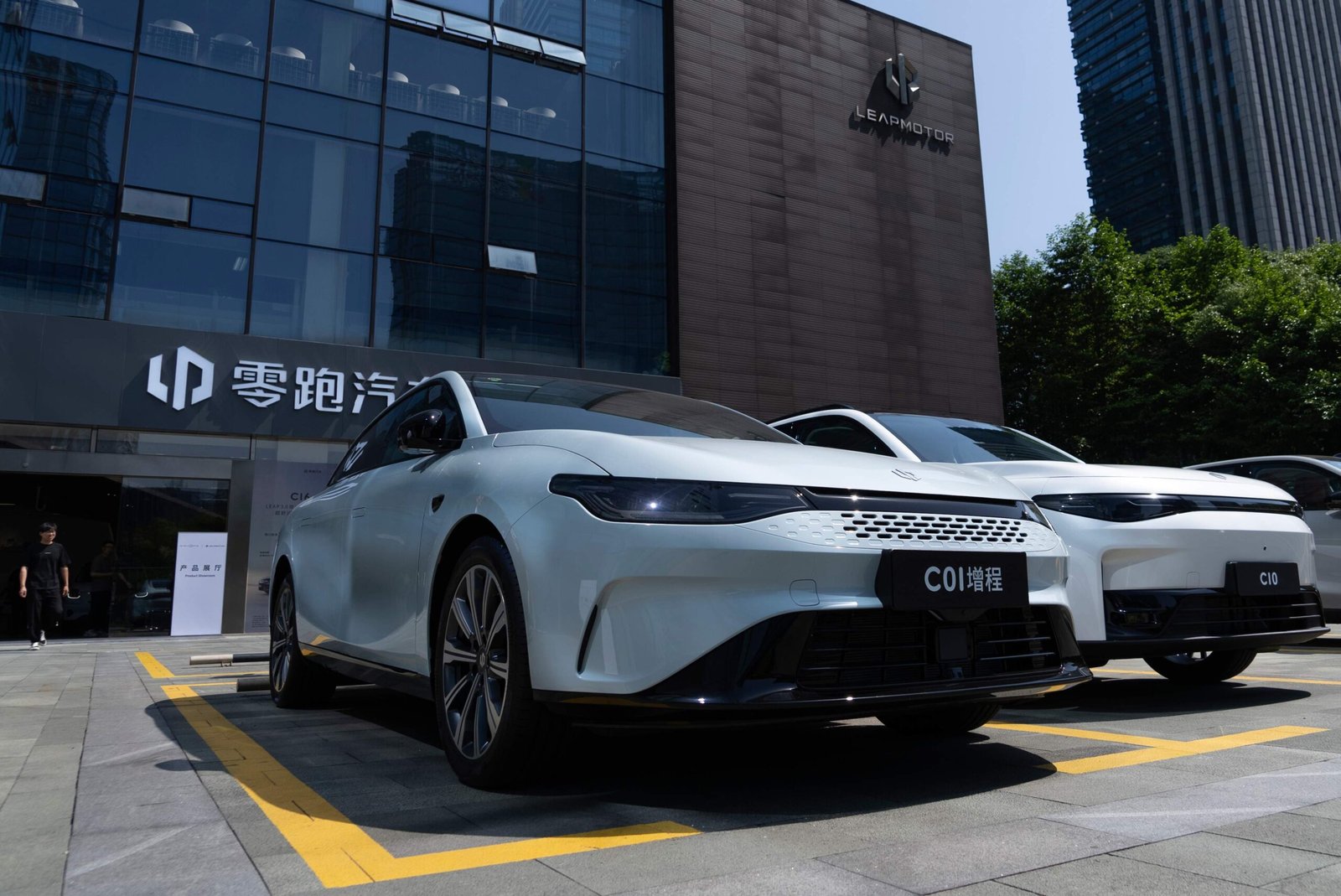
Canada’s auto industry is raising serious concerns about a potential trade opening with China, warning that any deal could flood the market with Chinese “knock-down kits” — pre-manufactured car parts shipped from China and assembled abroad. Industry leaders say this model threatens hundreds of thousands of Canadian jobs.
What Are Knock-Down Kits?
A knock-down kit, sometimes called a kit car, is central to China’s auto export strategy. Manufacturers produce parts cheaply in China, pack them into boxes, and ship them overseas for final assembly. McMaster University economist Colin Mang described the concept simply: “It’s like those toy models that you build at home. It comes in a box, and all the parts are there and then you get to assemble it.”
Stay connected to every major update — subscribe and follow us on the PhoenixQ website and across our social media platforms.
While assembly does create some local jobs, experts note it is a far smaller operation than traditional vehicle manufacturing. Most of Canada’s auto sector, particularly in Southern Ontario, focuses on parts production rather than final assembly. A kit car model would therefore employ far fewer workers overall.
Industry Warns of Serious Job Losses
Brian Kingston, president and CEO of the Canadian Vehicle Manufacturers’ Association, represents Ford, General Motors and Stellantis in Canada. He warned that opening the market to Chinese vehicles could be devastating. “This will destroy Canada’s auto industry,” he said. “It will destroy our manufacturing base if we open our market to China.”
Kingston also pointed to Europe as a cautionary example. Germany and other European nations allowed Chinese automakers into their markets. As a result, the European automotive sector has shed 104,000 jobs over the past two years, with Germany alone losing more than 40,000 jobs in just six months. Kingston argued that Chinese manufacturers gain their price advantage through lower labour standards, weak environmental laws and coal-fired electricity — advantages they would lose if forced to build local supply chains.
Canada’s auto sector directly employs 125,000 people and indirectly supports 427,000 jobs, according to Statistics Canada. In 2024, the industry contributed $16.8 billion to Canada’s GDP.
Government Pledges Conditions, but Experts Are Skeptical
Prime Minister Mark Carney met with Chinese President Xi Jinping recently, prompting speculation about deeper trade ties. However, Carney stated in Cambodia that Canada would not accept any deal involving only final-stage assembly. Any manufacturing agreement with China would need to include “significant value added” in Canada, he said. Carney also stressed the importance of using Canadian critical minerals in vehicles built domestically.
Despite those assurances, experts question whether Canada can actually enforce such conditions. Elizabeth Donkervoort, senior advisor for China programs at the Asia Pacific Foundation of Canada, noted there is no public evidence of a Chinese automaker successfully building a local supply chain outside China. Thailand tried and failed to achieve meaningful localization from Chinese companies, she said. “Canada really doesn’t have a model for how they’re going to enforce this,” Donkervoort added.
Meanwhile, Kingston argued that diversifying away from the United States is not a realistic option for Canada’s auto sector. After decades of deeply integrated cross-border supply chains, he said a renewed trade deal with Washington remains the industry’s best path forward.