English













































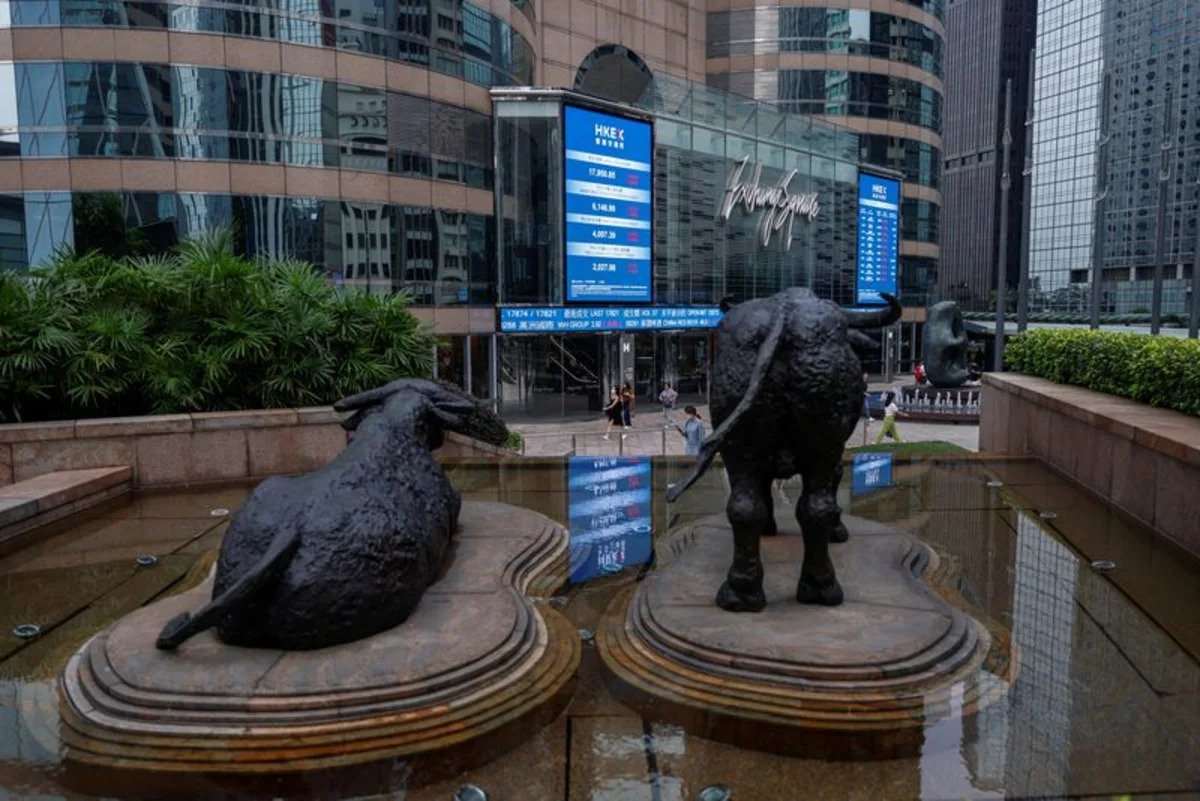
Asian stock markets opened the week on a cautious note Monday, as growing concerns about the sustainability of artificial intelligence investment weighed heavily on the technology sector. Investors also kept a close eye on upcoming earnings reports from major companies, including Apple, AMD and Palantir.
AI Spending Fears Rattle Markets
Worries about negative cash flow and the enormous scale of AI capital expenditure pushed up the cost of insuring against corporate defaults last week. Meanwhile, gold fell to a one-year low, with analysts suggesting stressed investors sold holdings to cover margin calls.
Stay connected to every major update — subscribe and follow us on the PhoenixQ website and across our social media platforms.
Goldman Sachs analysts project that hyperscaler capital expenditure will nearly double to $800 billion this year. They also forecast a further rise to $1.2 trillion by 2027. However, Goldman’s chief US equity strategist Ben Snider cautioned that the pace of growth may be slowing. “Earnings growth is strong, but it is no longer accelerating,” Snider wrote in a note. He added that AI capital expenditure growth appears to be peaking.
Adding to investor unease, Binance came back online Sunday after hackers stole billions from the platform the previous week. The return of the world’s largest cryptocurrency exchange triggered fresh withdrawals from users. In addition, the upcoming US midterm elections introduced further uncertainty, as a Democratic win in either chamber of Congress could create political obstacles for data centre expansion.
Regional Market Performance
Japan’s Nikkei dropped 0.5% on Monday, while South Korea’s market fell 0.8%, extending a 16% decline from the previous month. The MSCI Asia-Pacific index excluding Japan eased 0.4%. In Europe, EUROSTOXX 50 futures edged 0.1% higher, while DAX futures held flat.
On Wall Street, S&P 500 futures gained 0.4% and Nasdaq futures climbed 0.6%. The Nasdaq had lost nearly 7% in October, marking its worst monthly performance since the Liberation Day tariff shock in April 2025.
Bond Markets and Rate Expectations
The equity retreat offered some relief to sovereign bonds. Investors began questioning whether a prolonged stock market selloff might discourage the Federal Reserve from raising interest rates in December. Futures markets currently price in a 72% chance of a quarter-point rate hike. However, total expected tightening has fallen to around 55 basis points, down from more than 70 basis points a month ago.
Ten-year Treasury yields edged up to 4.952%, still well below October’s peak of 5.3645%. Two-year yields stood at 4.612%. Several central banks also meet this week, with markets expecting rate hikes from the Reserve Bank of Australia, the Bank of England and Sweden’s Riksbank. Norway’s Norges Bank is expected to hold rates steady.
Commodities and Currency Markets
Oil prices slipped after Iranian and Qatari officials held a third consecutive day of talks aimed at ending the US-Israeli conflict with Iran. Brent crude fell 1.5% to $111.72 a barrel, while US crude eased 1.7% to $102.37. Gold recovered 0.6% to $3,898 an ounce after losing 6.8% in October. Currency markets were largely quiet, with the euro flat at $1.1156 and the dollar little changed at 157.62 yen.