English







































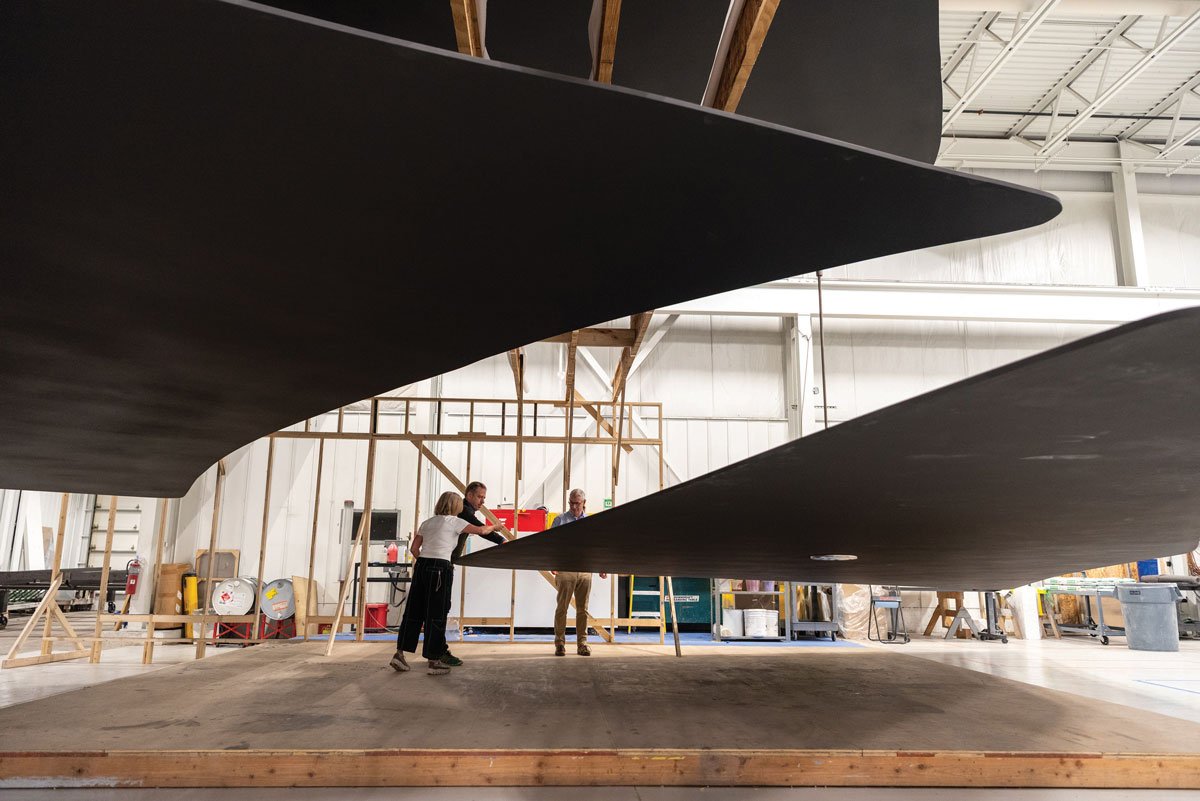
Alexander Calder found more than a temporary escape when he returned to rural France in 1953. He found the quiet he needed to transform his work. A new exhibition at Hauser & Wirth in Paris explores that pivotal period, bringing together mobiles and gouaches from one of the most significant chapters in Calder’s late career.
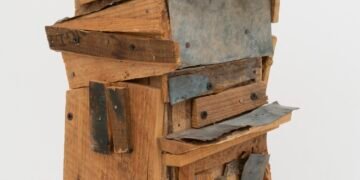
The show, titled “Calder: François Premier,” runs until December 19. It focuses on Calder’s time in France between 1953 and 1954, after a 20-year absence from the country. Among the highlights are two mobiles that have not been publicly seen in over 70 years: Les Granettes (1953) and The Putney Mobile (1954).
Stay connected to every major update — subscribe and follow us on the PhoenixQ website and across our social media platforms.
A Return That Reshaped His Practice
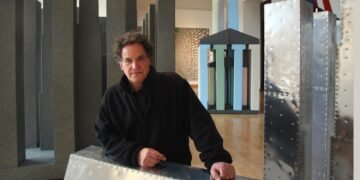
Calder’s grandson and Calder Foundation president, Alexander S. C. Rower, describes the return to France as a turning point. “Calder’s return to France in 1953 is essential in understanding his late period,” Rower says in a film screened at the gallery. “He was really emboldened and really inspired by being back.”
Rower notes that Calder began drawing directly on metal during this period. He fabricated and welded works at full scale in a way he had never done before. “It was an extraordinary moment, with fantastic works of tremendous vocabulary,” Rower said.
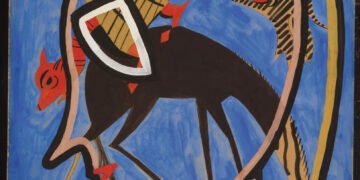
The exhibition also features bold abstract and figurative gouaches made at two locations. The first is Les Granettes, a small hamlet near Aix-en-Provence, where the 1953 mobile was created and named. The second is Saché, a hamlet in the Loire Valley that houses a 17th-century home now used as an artist residency. Some of the gouaches include striking imagery such as pyramids, planet-like orbs and camels.
How Calder Came to the French Countryside
The backstory begins during World War II. Calder wrote to the US State Department and urged officials to allow European artists to enter America as refugees. He helped bring in artists including Fernand Léger and André Masson. Calder even housed Masson and his young family in his Connecticut barn-studio.
After the war, Masson encouraged Calder to visit Aix-en-Provence. By 1953, Calder had packed up with his wife Louisa and their two daughters and joined their friends in southern France. Later that year, the family discovered Saché in central France, where French-American journalist Jean Davidson was living. Calder bought a house on Davidson’s land in exchange for three mobiles. From that point on, Saché became the family’s second home.
Quietude, Not Inspiration
Rower is careful to draw a distinction. France did not inspire Calder’s subjects. Instead, it calmed him. “He was using being there to quiet his nervous system,” Rower explained. By 1953, Calder was already famous and managing many commissions. The simplicity of rural French life gave him the stillness he needed.
Calder himself spoke of returning to something “medieval.” He valued local bakers, cheesemakers and craftspeople. He felt a genuine connection to people who lived simply and worked with their hands. Meanwhile, the wide open skies of Saché gave him space to imagine larger sculptures. By 1962, he partnered with a major French industrial ironworks to execute his biggest pieces.
Rower remembers visiting Calder in France as a child. He recalls watching his grandfather talk warmly with the workers who helped build his sculptures. Calder gave gouaches to the welders and other craftsmen. Over time, those works reached the art market, often sold by the workers’ grandchildren. “Calder would have loved that,” Rower said. “It’s just as it should be.”