English






















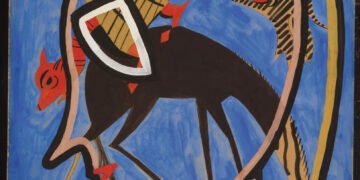

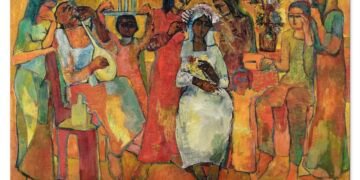




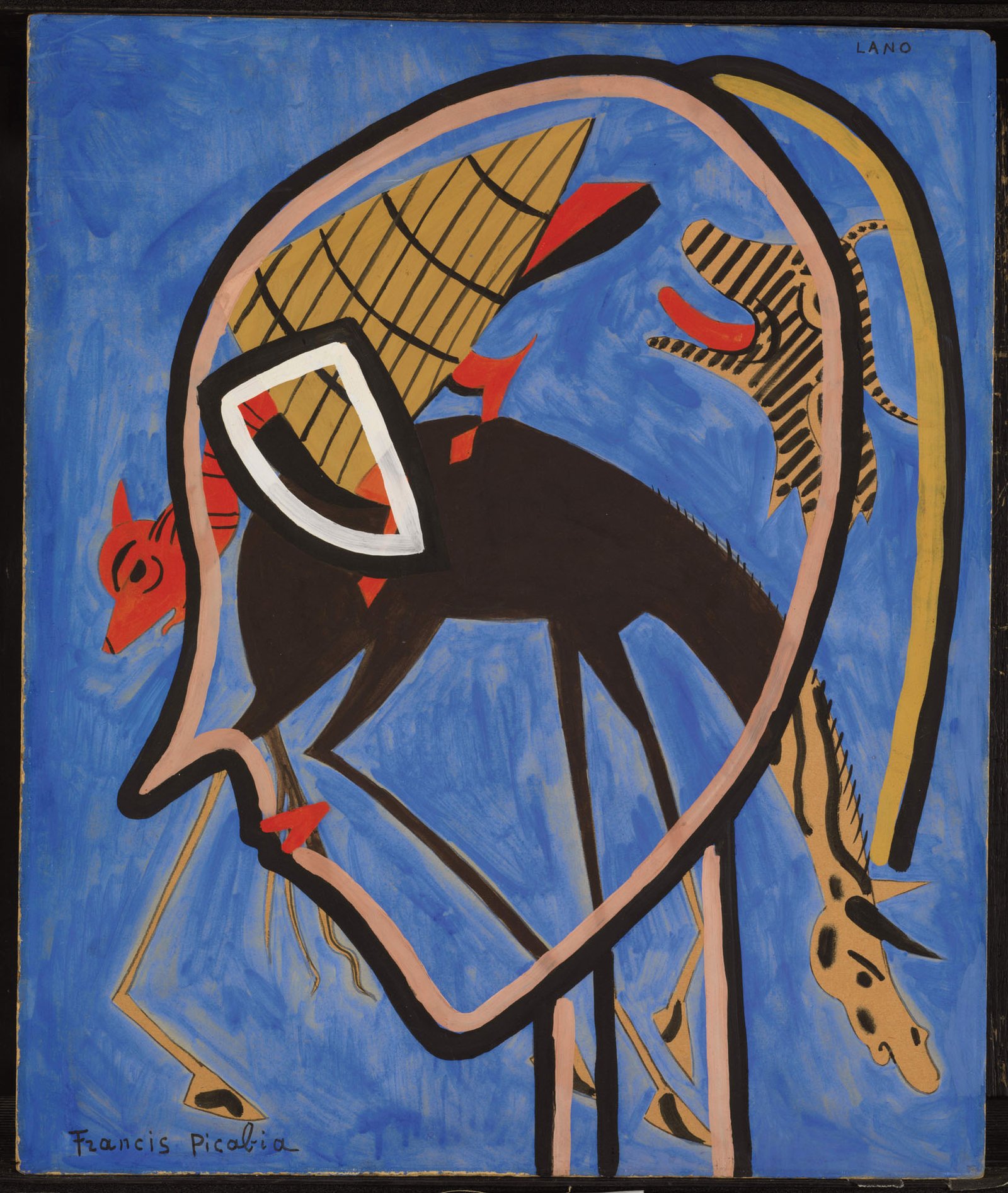
A major retrospective dedicated to Francis Picabia has opened at the Palazzo Reale in Milan, offering a bold and unconventional look at one of modern art’s most restless and elusive figures. Titled “Picabia. Open the Gates of Night,” the exhibition explores the Franco-Spanish painter and poet through an intimate, character-driven lens rather than a strictly chronological or movement-based approach.
A Retrospective Unlike Any Other
The show’s curator is Anne Berest, Picabia’s great-granddaughter. In her opening remarks, she described knowing the artist as being like spending the night with him. True to that spirit, the galleries are deliberately low-lit, evoking a dreamlike nocturnal atmosphere. Themes range from ecstatic dance and late-night encounters to narcotic states and moments of sudden revelation.
Stay connected to every major update — subscribe and follow us on the PhoenixQ website and across our social media platforms.
The exhibition’s theatrical design reinforces this mood. Sparkling lights, funhouse mirrors, and a peep show displaying some of Picabia’s more explicit drawings all contribute to an immersive, almost carnival-like environment. Berest has framed the show as an experience for a new generation, reimagining the museum as a space for sensation and personal discovery.
A Painter Who Refused to Stand Still
Picabia (1879–1953) moved freely between Impressionism, Fauvism, Cubism, Dada, and several other movements throughout his career. His circle of friends included Marcel Duchamp, Guillaume Apollinaire, Alfred Stieglitz, Erik Satie, and Gertrude Stein. He believed strongly in constant artistic reinvention. Two of his most quoted aphorisms capture this philosophy well. “A conviction is a disease,” he said, and also: “If you want to have clean ideas, change them as often as you change your shirts.”
The walls of the Palazzo Reale reflect this restlessness. Representational compositions hang alongside geometric abstractions, mechanical diagrams, and syncretic works built from appropriated imagery. The variety is striking and, at times, deliberately disorienting.
Spanish Roots and Personal Obsessions
Although Picabia grew up in France, his father was Spanish. Childhood visits to Seville left a lasting impression. He witnessed Holy Week processions, flamenco dancers, and bullfighting. As an adult, he channeled this self-exoticizing nostalgia into paintings on Spanish subjects. One gallery features loose pencil and watercolor studies of Sevillian women, their dark hair piled under lace mantillas. Nearby, works trace the recurring motif of polka dots — a pattern common on flamenco dresses — across both figurative and abstract pieces.
The exhibition also examines Picabia’s lifelong libertinism. A gallery titled “Love Parade” links his many romantic pursuits to the early loss of his mother when he was seven years old. In their 2017 book Gabriële, Berest and her sister Claire note that Picabia was raised by his father, grandfather, and uncle. The family’s nickname, “les Quatre sans femme” (“the Four without a Woman”), could also be heard as “les quatre cents femmes” — “the Four Hundred Women” — perhaps hinting at the many lovers he would pursue throughout his life.
His erotic drive shaped much of his output. Works such as Woman with the Bull (1940–41), collaged from found pin-up images, reflect this openly. His “Transparencies” series (1927–33), in which image planes overlap like double-exposed photographs, also emerged during a period when, as the exhibition notes, Picabia “lived through multiple loves simultaneously.”
Atmosphere Over Argument
The exhibition’s biographical approach is both its strength and its limitation. By escaping chronology, as Berest describes it, the show offers lyric intuition over historical argument. However, this means that origin stories for key bodies of work — including the “Transparencies” — are scattered across different galleries without clear context.
Despite this, the show captures something essential about Picabia himself. As another of his aphorisms declares: “Everything for today, nothing for yesterday, nothing for tomorrow.” The retrospective, for better or worse, takes him at his word.