English











































The Norton Simon Museum in Pasadena, California, has filed a countersuit against the Jewish Federation Los Angeles over ownership of a Nazi-looted Lucas Cranach diptych. The legal dispute centers on Adam and Eve, a work painted around 1530 that sits in the museum’s permanent collection. The Jewish Federation had sued the museum, claiming rightful ownership of the piece under a new California law that allows residents to revisit previously unsuccessful attempts to recover Nazi-looted art.
Norton Simon Pushes Back in Cranach Ownership Dispute
The museum filed its countersuit on Wednesday, according to Courthouse News Service. In its complaint, the Norton Simon argues that an earlier federal ruling in its favor should take precedence. The museum’s filing states that “the finality of the prior von Saher judgment is beyond dispute … this court found on the merits that the museum was the sole owner of the Cranachs.”
Stay connected to every major update — subscribe and follow us on the PhoenixQ website and across our social media platforms.
The Jewish Federation’s lawsuit relies on the new California legislation designed to give claimants another legal avenue. However, the Norton Simon contends that the prior court decision already settled the matter. The museum insists that allowing the new claim to proceed would undermine the finality of the earlier ruling.
Met Selects Danh Võ for 2027 Façade Commission
Meanwhile, the Metropolitan Museum of Art announced a major public art appointment. The museum selected Vietnamese-born artist Danh Võ for its 2027 Genesis Façade Commission, according to ArtAsiaPacific. This marks the fourth presentation on the museum’s landmark 5th Avenue Beaux-Arts façade.
Võ plans to exhibit four sculptures as part of the commission. “A façade is the place where the museum meets the street, and it is also an expression of its values over time,” he said in a statement. In addition, the Met chose Norwegian Congolese artist Sandra Mujinga to create a site-specific installation for its 2027 Great Hall Commission.
Arts Organizations Face Closures and Delays
In Indonesia, the Biennale Jogja Foundation announced it will close after 16 years of overseeing the Biennale Jogja in Yogyakarta. The foundation cited “a political regime” marked by “chaotic economic and political policies, increasing censorship, and violence against activists and protesters” as the reasons for its decision.
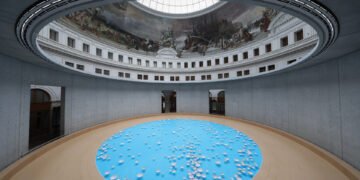
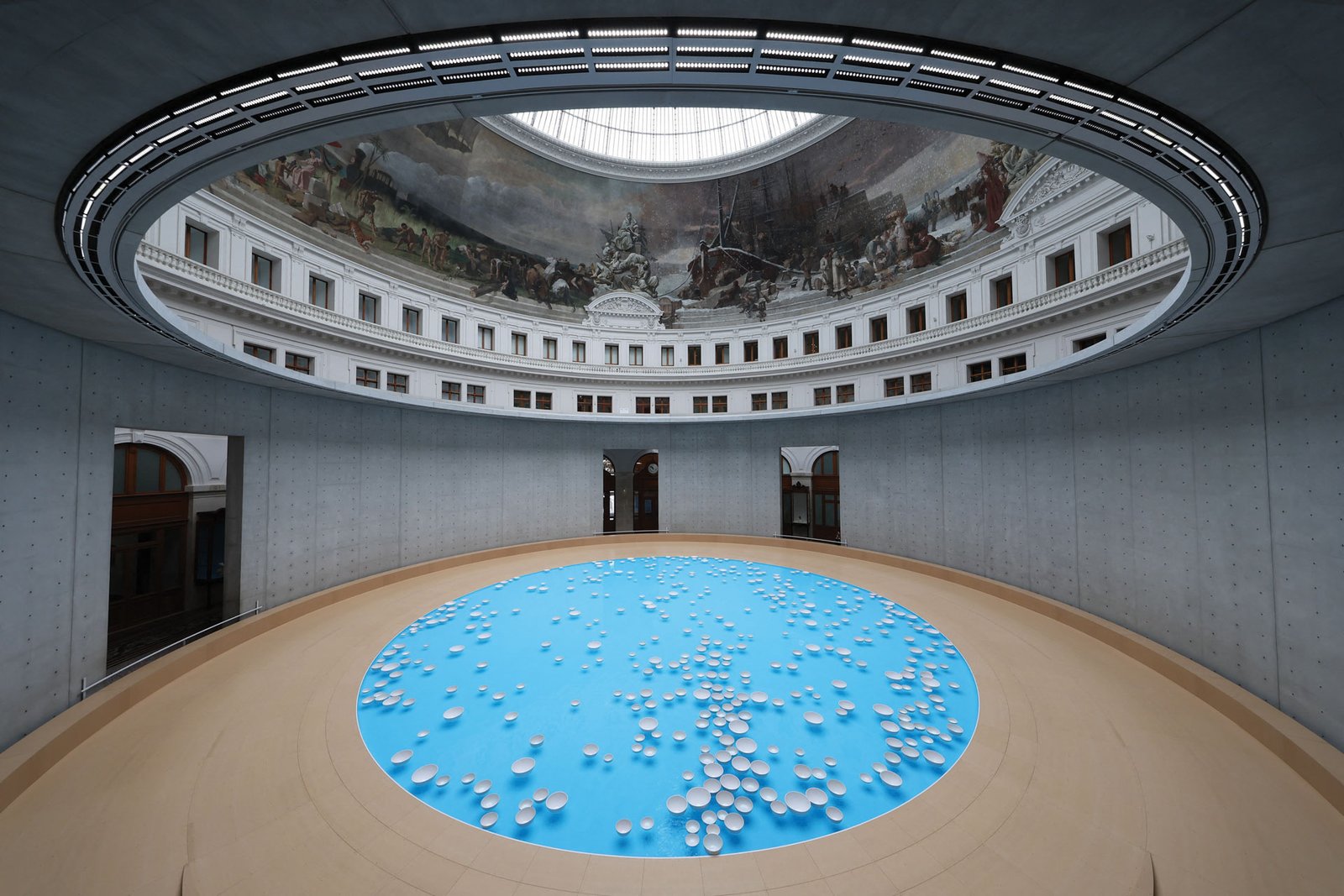
Similarly, the Centre Pompidou Paraná in southern Brazil faces further delays. A local government shift pushed the expected opening date back again, with the venue now set to open in 2029, according to The Art Newspaper.
Also in the news, Australia returned a 14,000-year-old carved stone slab to Jordan. The artifact, found in Wadi Al Hammah, had been held at the National Gallery of Australia since 1985.
On the auction front, Carmen Thyssen-Bornemisza, the Spanish Baroness whose family collection fills the Thyssen-Bornemisza Museum in Madrid, will bring a 1944 Edward Hopper painting of a sailboat at sea to Sotheby’s New York on November 18. The work carries a high estimate of $30 million. Furthermore, Rubaiya Qatar, a new quadrennial running November 21 to April 30 in Doha, revealed its full lineup of more than 120 participating artists.
William Kentridge on Art, Humor and Social Disaster
Artist William Kentridge spoke to Ocula as his latest film premiered at London’s Goodman Gallery. The stop-animation work, titled A Nicely Built City (Never Resists Destruction), explores Johannesburg’s industrial transformation and the return of wilderness as the city’s center collapses. An exhibition of artworks accompanies the film.
Kentridge addressed the role of humor alongside heavy political subject matter. “I don’t think there’s a contradiction between the serious and the light, and how the one illuminates the other,” he said. “Tragedy isn’t a good way of dealing with social disaster. Comedy may be closer, but the category of the absurd, which can move between the two, is central.”
He also shared thoughts on Anselm Kiefer’s “fantastic woodcuts,” the “poetic and politically powerful” art of Alfredo Jaar, and his own studio process during the interview.