English
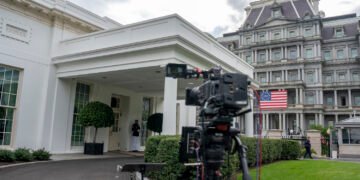





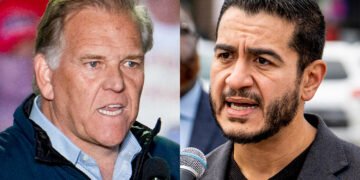
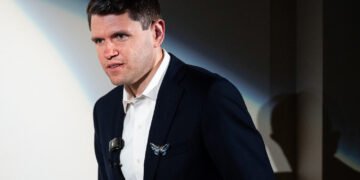











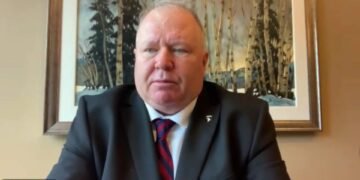















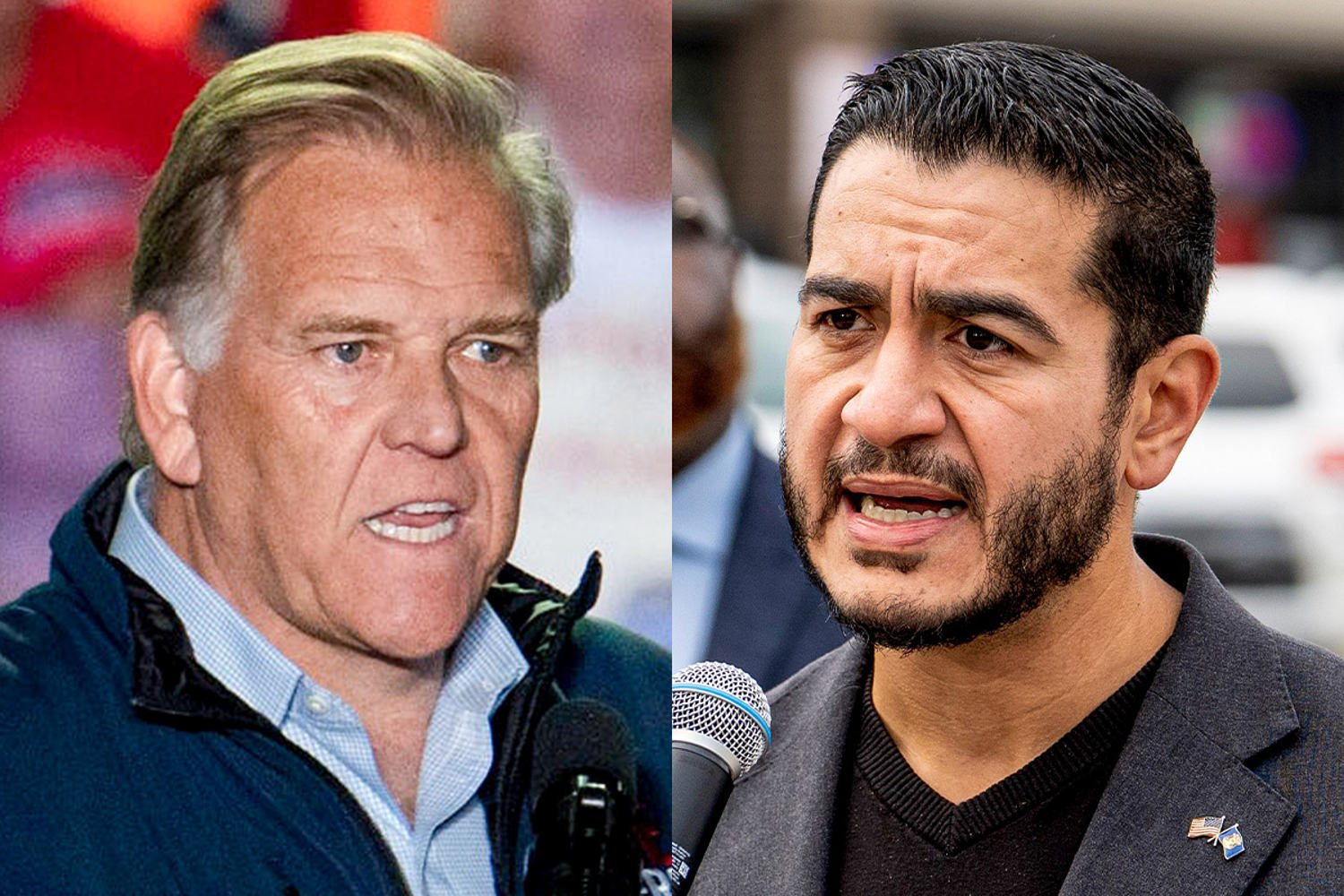
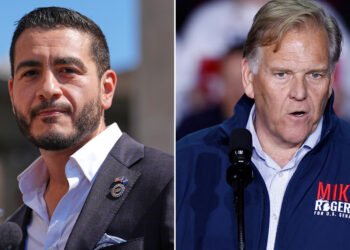
Michigan’s open U.S. Senate seat took center stage Thursday night in Grand Rapids, as Democrat Abdul El-Sayed and Republican Mike Rogers faced off in their first debate. The two candidates clashed sharply over the war in Iran, gas prices, tariffs and immigration, in an exchange that frequently turned personal and combative.
Candidates Trade Attacks on Policy and Character
El-Sayed worked to portray Rogers as a political opportunist who has shifted his positions to suit the moment. Rogers, a former congressman, fired back by calling El-Sayed a “con man” whose policy promises would require significant tax increases to fund.
Stay connected to every major update — subscribe and follow us on the PhoenixQ website and across our social media platforms.
The debate, hosted by NBC affiliate WOOD-TV in Grand Rapids, grew so heated at times that moderator Rick Albin intervened. “I’d like to be a part of the debate, too,” Albin said at one point, urging both candidates to ease their attacks.
Both candidates also traded taunts over real estate. Rogers owns a home in Florida, while El-Sayed’s wife holds property in the United Arab Emirates. Each tried to use the other’s property as a political liability.
Michigan’s Senate race ranks among the most competitive in the country this cycle. The outcome could affect partisan control of the Senate. Democrat Gary Peters currently holds the seat but is not seeking re-election. Republicans have not won a Senate seat in Michigan since 1994.
Iran War and Gas Prices Dominate Early Exchange
Albin opened the debate by asking both candidates whether they would support pausing the federal gas tax, given rising prices linked to the ongoing war with Iran. Both said they would support a pause.
However, the question quickly led to a broader argument about the conflict itself. Rogers initially backed the war but recently said he wants it to end quickly. El-Sayed seized on that shift.
“I would support pausing the federal gas tax, but there is one thing that is actually causing this: It’s the war in Iran, a war that has been cheer-led by my opponent since the beginning,” El-Sayed said. “Called it a ‘win, win, win.’ I don’t know about you, but when I go to the gas tank, I don’t feel like I’m winning.”
Rogers responded by pivoting to El-Sayed’s support for Medicare for All. He argued the policy would push people off private insurance and drive up both taxes and gas prices. “It is a disaster,” Rogers said. “We cannot afford Abdul.”
Tariffs Expose Rogers’ Shift on Trade
The debate also turned to tariffs, another area where Rogers has recently moved away from his earlier position. Trump’s tariffs, which took effect last month, placed duties of 15% to 50% on $20 billion worth of U.S. goods exported to Canada. Michigan, which shares a border and deep trade ties with Canada, faces significant economic exposure.
Rogers once supported Trump’s trade push. This week, however, he released an ad calling for an end to the trade war. During the debate, he said he had personally contacted the White House about resolving the dispute.
“I have actually called the White House this week, talked to the secretary of commerce about getting the deal done,” Rogers said. “There are tariffs that I think are too high and not helpful for us. We ought to get rid of those.”
El-Sayed rejected that explanation. He cited a study estimating the tariffs cost Michigan households $5,600 per year. “The reason he’s flip-flopping has nothing to do with policy, has nothing to do with your costs,” El-Sayed said. “It has everything to do with his sagging poll numbers.” He added shortly after: “Weak, cowardly, won’t stand up until his poll numbers drop.”
Immigration, Israel and the Broader Political Context
The candidates also differed sharply on immigration enforcement. El-Sayed has called for abolishing Immigration and Customs Enforcement. Rogers said a high-profile federal operation in Minneapolis earlier this year, during which agents shot and killed two U.S. citizens, was “probably not appropriate.”
“I actually did fugitive raids when I was an FBI agent in Chicago,” Rogers said. “You always want to go in quiet, get the bad guy, get out of the neighborhood for less problems.”
Meanwhile, Albin pressed El-Sayed on his criticism of Israel and his earlier refusal to say whether he views Israel or Iran as a greater threat to the United States. El-Sayed again declined to give a direct answer. “I don’t want to be pushed into war by Israel,” he said. “I want our money spent here to buy schools and healthcare and childcare here.”
Beyond the debate stage, national Republicans have worked to define El-Sayed through his progressive views, his ethnicity and his Muslim faith. Vice President JD Vance has encouraged Republicans facing less extreme Democratic opponents to highlight El-Sayed instead. On Wednesday night, Trump referred to El-Sayed on Truth Social as “Mohammed” and linked him to extremism.
Earlier Thursday, El-Sayed appeared at a lunch event in Grand Rapids with Michigan Governor Gretchen Whitmer. He mocked Trump’s repeated mispronunciation of his name. “Get it right,” El-Sayed said, “because we’re going to teach you how to say it properly with the word ‘senator’ in front of it.” He added: “They keep pointing to my name and my faith because they think that they can distract us from the issues that affect all of us — because my name and my faith are not the reason you can’t afford a tank of gas.”
El-Sayed entered the race backed by prominent progressive figures including Senator Bernie Sanders of Vermont and Representative Alexandria Ocasio-Cortez of New York. He won a competitive primary against Representative Haley Stevens, who ran as a more moderate Democrat. A second debate between the two candidates is also planned.