English










































A new memoir by punk scene veteran Legs McNeil offers a vivid firsthand account of New York’s underground music world in the 1970s. The book, Resident Punk: How I Smoked, Drank, and Stumbled My Way Through the ’70s Punk Scene and Beyond, published by BenBella Books, revisits the era that gave birth to what the world now calls punk rock. McNeil, who was a teenager when the scene first took shape, chronicles his experiences through a series of personal snapshots drawn from life at the center of it all.
The Birth of Punk Rock in New York City
Roughly fifty years ago, a new strain of rock music emerged on both sides of the Atlantic. In Britain, punk carried a sharp political edge. It challenged the class system and sometimes turned violent. In New York, however, the movement was rooted more in art than anger. Poets, painters and writers were among its earliest participants.
Stay connected to every major update — subscribe and follow us on the PhoenixQ website and across our social media platforms.
The New York scene took shape around CBGB, a former biker bar on the ground floor of a rundown hotel on the Bowery. The venue became the spiritual home of a small but influential community that began forming in late 1973 and early 1974. By 1976, what had started as a niche underground movement became the creative force behind what audiences today recognize as alternative rock.
McNeil was at the center of that world. He weighed under 100 pounds as a teenager and wore a black leather jacket. Despite his slight frame, people assumed he was tough. He was not, he readily admits. He later co-authored Please Kill Me, a widely praised 1996 oral history of the punk era created with Gillian McCain. That book remains essential reading for anyone interested in the period.
How “Punk” Got Its Name
Before the music had a label, McNeil and his friend John Holmstrom were working on a magazine. Holmstrom originally wanted to call it Teenage News. McNeil rejected the idea immediately. He thought the name sounded like a Scholastic publication and wanted nothing to do with it.
McNeil came up with the word “punk” himself. He chose it because people had called him that his entire life. The two launched Punk magazine in 1975, with Lou Reed on the cover of the first issue. Their goal was to create something in the spirit of Mad magazine. Holmstrom had studied at the School of Visual Arts under Will Eisner and Harvey Kurtzman, and both men shaped his creative vision.
Ironically, none of the musicians featured in the magazine wanted the label. Johnny Ramone reportedly asked Holmstrom to cross out the word “punk” in every copy. The Ramones considered themselves a straightforward rock and roll band. Nevertheless, the term stuck. McNeil believes the media simply needed a word to attach to the movement. The magazine’s founders thought the name was funny. Most people, however, did not get the joke.
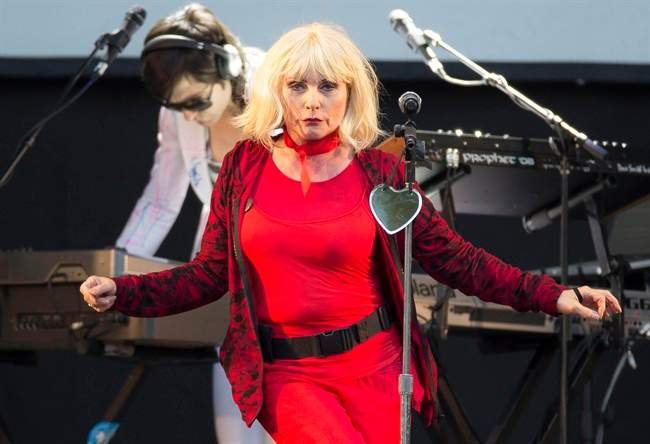
To promote the launch, McNeil and Holmstrom plastered posters across New York City in November 1975. The posters read “Watch Out! Punk Is Coming!” Debbie Harry later recalled thinking it was just another bad band with a worse name. When the magazine appeared, she realized it was something else entirely.
Life in 1970s New York
McNeil lived in a place he called the Punk Dump, an apartment on 30th Street near the entrance to the Lincoln Tunnel. The city around him was in a state of near collapse. Landlords burned out their own buildings on the Lower East Side because rental income no longer covered mortgage costs. Drug dealers quickly moved into the vacant shells. New York City itself was financially broke. Garbage piled up in the streets.
McNeil describes the city as resembling a giant movie set. He compares it to Dresden after the Second World War. Despite the decay, he and his circle found the chaos thrilling. He spent his evenings drinking and socializing with figures like Joey Ramone. He survived financially through the help of girlfriends, some of whom earned as much as $700 a week.
McNeil also explains the origin of his nickname. He was born with one leg longer than the other. Before surgery to correct it, he constantly slouched to keep his balance. That posture, he says, made him look like trouble. It earned him the name “Legs” and, eventually, the label that would define a generation of music.
Punk’s Deeper Roots and Lasting Legacy
McNeil is clear about punk’s true predecessors. He points to the Velvet Underground as the ultimate punk band. He credits Lou Reed, John Cale, Sterling Morrison and Nico with inventing multiple musical forms before anyone else. He also highlights Iggy and the Stooges, the MC5 and Patti Smith as essential forerunners. The Ramones played their first show in 1974. Television and the New York Dolls were also part of the early wave.
Despite its cultural impact, McNeil is direct about one thing. Punk never sold in large numbers. It never produced mainstream commercial success. However, it mattered deeply to the right people. Its influence shaped decades of music that followed.
Resident Punk covers McNeil’s encounters with the Ramones, Lou Reed, Patti Smith, Andy Warhol, KISS, music critic Lester Bangs and even Diana Ross. The book offers a candid, often funny and consistently insightful look at the conditions that made alternative music possible.