English














































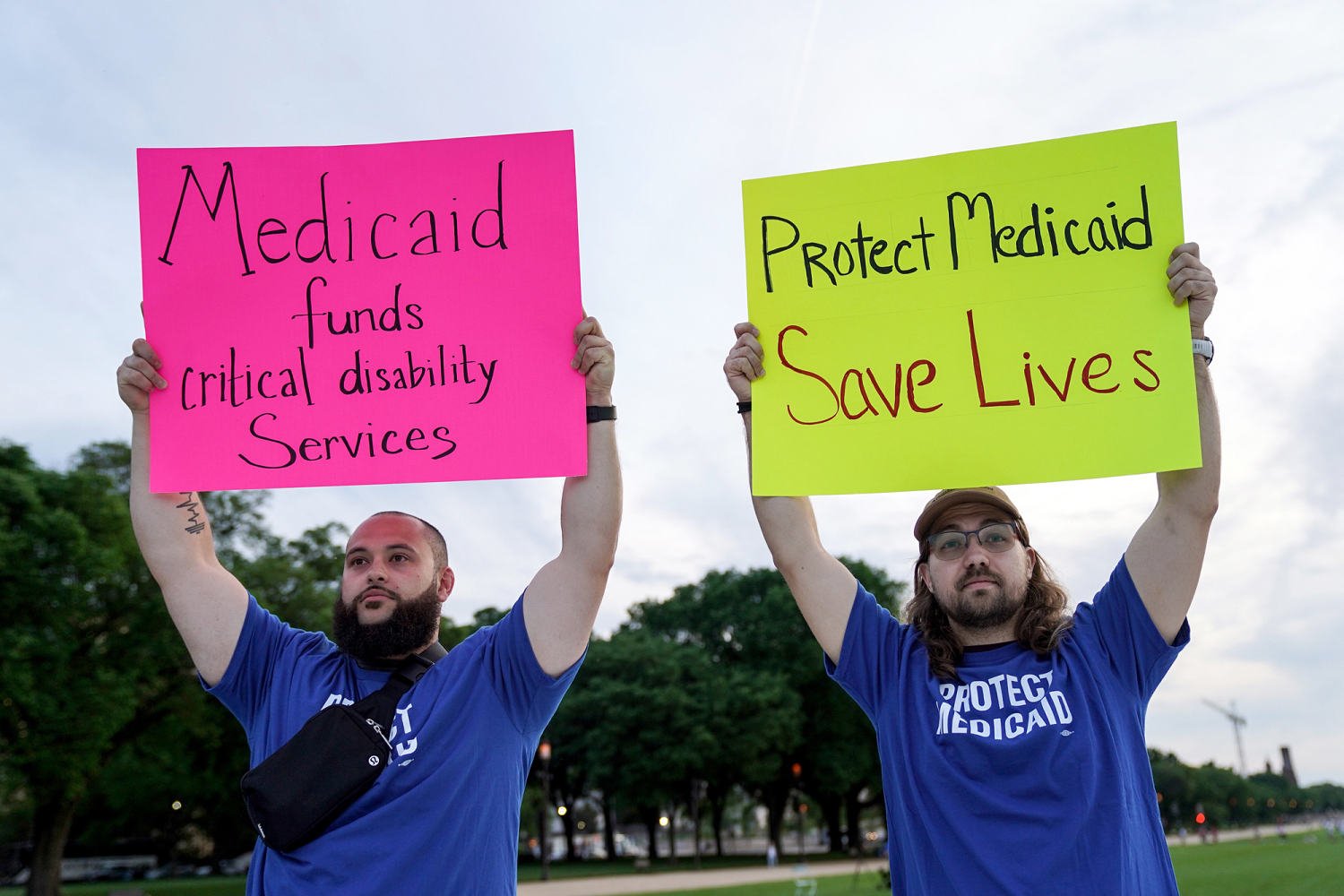
A new $2 million public awareness campaign launched this week with a single goal: help millions of Americans keep their Medicaid coverage as sweeping federal work requirements take effect on January 1. The campaign, called “Keep Your Care,” targets roughly 10 million Medicaid recipients who face losing healthcare access under the new rules. Organizers say the next 100 days are critical.
What the New Medicaid Work Requirements Mean
Starting in the new year, most eligible adult Medicaid recipients must complete at least 80 hours per month of work or community service. They must also report their compliance regularly. Health advocates warn that many people who qualify for the program could lose coverage simply because of administrative errors or missed paperwork deadlines.
Stay connected to every major update — subscribe and follow us on the PhoenixQ website and across our social media platforms.
Congress passed the requirements as part of what President Donald Trump signed into law as the “big, beautiful bill.” Republicans argued the rules target waste, fraud, and abuse within the program. Senate Majority Leader John Thune defended the legislation last year, saying it does not cut Medicaid but instead strengthens it for those who need it most.
“What’s being said out there by the Democrats is totally inaccurate,” Thune said in an interview shortly before the Senate voted to pass the bill. “What we’re talking about here is getting rid of waste, fraud, and abuse, strengthening and improving the program for the people who need it the most.”
However, Virginia Health Secretary Marvin Figueroa described the situation differently. He told NBC News the new rules amount to “fighting government for something that you’re entitled to.” He added that coverage losses were a predictable outcome of the legislation. “The discussion was about losing coverage,” he said, “and I think we’re going to see that across the board.”
A Virginia Family Faces Uncertainty
For Melanie and Greg Stephens of Mechanicsville, Virginia, the stakes are deeply personal. The couple received a letter on August 31 outlining the upcoming changes. Melanie described her immediate reaction as a panic attack.
“When I received the letter about all the changes coming up, I had a panic attack because I was like, ‘Oh my gosh, what does this mean?'” she said.
The Stephens are full-time caregivers for their 22-year-old daughter Rachel, who uses a wheelchair and requires round-the-clock medical management. Because of their caregiving role, they qualify for an exemption from the monthly work requirement. However, they must still prove that exemption every six months.
Rachel’s health has deteriorated significantly since COVID. Her care includes medications five times per day and tube feeding. Greg Stephens, a physician, quit his job last year to care for her full-time. His wife had already left work years earlier for the same reason. With no income on paper, the family applied for Medicaid after exhausting every other insurance option.
“We spent months calling other insurance companies and other agents and trying to find another way, and there was no other way,” Melanie Stephens said during an interview at the family home.
Greg Stephens said his concern is not about meeting the requirements themselves. Instead, he worries about what happens once their paperwork leaves their hands. “Once it leaves us and goes to a Medicaid worker to process, that’s where we are concerned they’re going to miss a deadline or fall through the cracks,” he said. “And we have no control over that.”
The family said the only alternative to home care for Rachel would be an institution. “There’s no one that could possibly care for her medically, or emotionally or cognitively,” they said. “She would have no will to live.”
The “Keep Your Care” Campaign
The “Keep Your Care” campaign launched Wednesday and shared its plans exclusively with NBC News. Two healthcare advocacy organizations, Caring Across Generations and the Healthcare Education Project, founded it alongside the Service Employees International Union. Together, they committed $2 million to the effort.
The campaign will focus on seven states: Georgia, North Carolina, Illinois, Michigan, California, Virginia, and New York. All seven expanded Medicaid under the Affordable Care Act, and millions of residents in those states now face potential coverage loss.
The group plans to work directly with communities and also push state and local governments on how they implement the new rules. Its website will provide state-specific guidance, explain exemptions, outline reporting requirements, and track key deadlines.
A Broader Warning from Advocates
Greg Stephens admitted that, before becoming a Medicaid recipient himself, he held negative assumptions about people who relied on the program. His experience changed that view entirely. He now believes the new requirements go too far.
“There’s a lot of people that are getting health care through Medicaid expansion, like ourselves, that absolutely need this exclusion to be able to do what we do,” he said.
While the Stephens acknowledged that some Medicaid recipients may be able to work, they argued the new rules place an unfair burden on families who genuinely cannot. For them and millions of others, the next 100 days will determine whether they can hold on to the coverage they depend on.