English









































The Canada-U.S. trade dispute has moved to the center of Quebec’s provincial election campaign. Party leaders are offering sharply different plans to protect jobs and businesses from the growing impact of American tariffs.
The issue gained new urgency after Ottawa imposed counter-tariffs against the United States. Party leaders across Quebec responded quickly, each presenting their own approach to shielding the province’s economy.
Stay connected to every major update — subscribe and follow us on the PhoenixQ website and across our social media platforms.
CAQ Unveils Economic Protection Plan
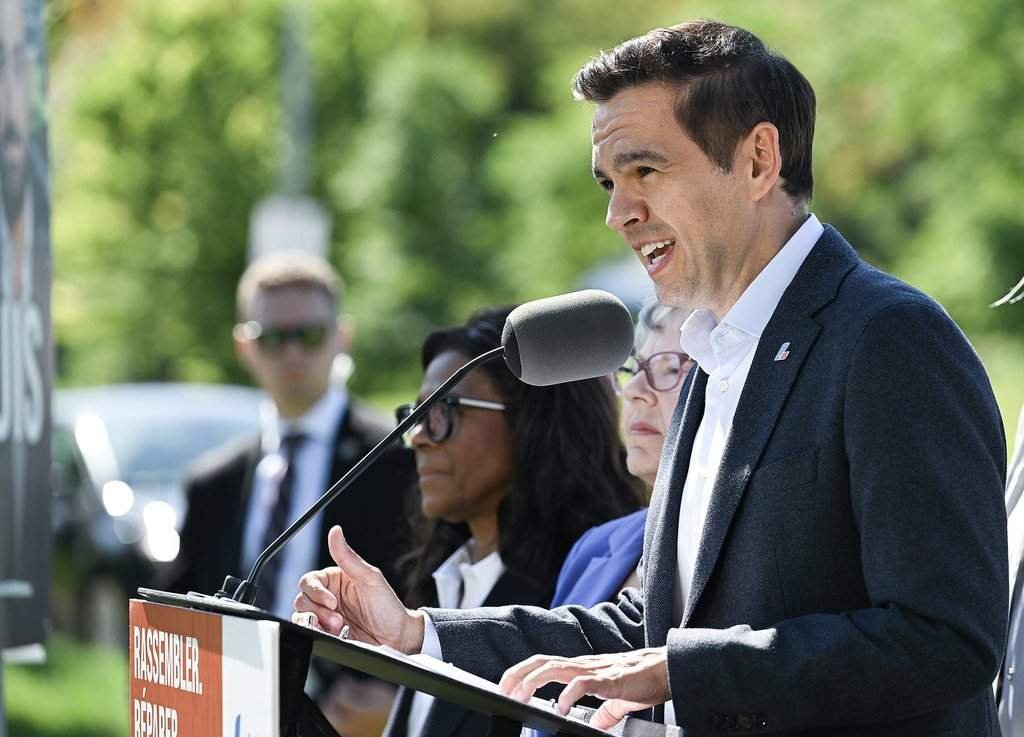
Coalition Avenir Québec Leader Christine Fréchette announced a package of measures aimed at defending Quebec businesses and workers. She called on municipalities, organizations and consumers to prioritize locally made products. “I urge municipalities, organisms as well as citizens, consumers, to buy more Quebec products,” she said.
Fréchette also proposed changes to Quebec’s public procurement rules. Under her plan, U.S. companies would no longer qualify to bid on certain provincial contracts. This would create more opportunities for Quebec and Canadian firms. “We are heading for hard times and Quebec will not back down in the face of Trump,” she added.
However, Liberal Leader Charles Milliard dismissed the CAQ’s proposals as insufficient. He argued that Fréchette had simply adopted ideas he had already put forward. “Most of the ideas that she announced this morning were actually ideas that I proposed last week except that they’re less ambitious,” Milliard said.
Parti Québécois Challenges Government’s Approach
Parti Québécois Leader Paul St-Pierre Plamondon also criticized the government’s handling of the trade dispute. His party currently leads in recent polling. St-Pierre Plamondon argued the PQ is better equipped to defend Quebec’s economic interests as tensions with Washington intensify.
He pointed to his party’s economic expertise as a key advantage. “Who has the best team and the best intellectual understanding of what’s going on to defend Quebec interests with regards to the tariffs,” he said.
In addition, St-Pierre Plamondon raised concerns about Ottawa’s decision-making process. He argued that Quebec businesses had not received adequate consultation before the federal government moved to impose counter-tariffs. “If Quebec’s interests are sacrificed and are not taken into consideration in the measures that they put forward, that’s a problem for us. And that’s a problem for our economy,” he said.
Business Groups Cautiously Back Ottawa
Business organizations have largely supported the federal government’s decision to retaliate against U.S. tariffs. However, they also warned that ongoing uncertainty is creating real challenges for companies across the province.
Véronique Proulx, president of the Fédération des chambres de commerce du Québec, said Ottawa has taken appropriate steps so far. She noted, though, that some affected businesses may still need further support. “There’s not a lot of certainty for companies at this point but we still think the federal government is in a good position,” Proulx said. She added that the federal government is “doing a lot of the right things to defend our interests.”
As the election campaign continues, the Canada-U.S. trade dispute shows no sign of fading as a central issue. Party leaders are set to face off in a series of debates in the coming days and weeks. Those exchanges will give voters a clearer picture of how each party plans to respond to the economic pressures building along the border.