English




























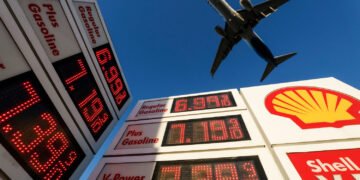



















Global crude oil prices surged close to $97 per barrel this week, with the international benchmark Brent crude briefly topping that level on Thursday morning before settling at $95.52 by the end of the day. That closing price still represents a 20% increase since August 4. While rising crude prices are drawing attention, energy analysts are directing much of their focus toward diesel, which has climbed to its highest level of 2024.
Why Diesel Prices Matter So Much
Diesel powers an enormous share of the global economy. Ships, trains, farm equipment, and freight trucks all depend on it. Critically, agricultural machinery around the world runs on diesel, meaning that today’s elevated fuel costs could translate directly into higher grocery prices this autumn.
Stay connected to every major update — subscribe and follow us on the PhoenixQ website and across our social media platforms.
The ripple effects extend well beyond the pump. Investors have grown increasingly concerned that sustained energy price pressure will keep inflation elevated, pushing U.S. Treasury yields higher throughout the week. Bond yields did dip slightly on Thursday as markets assessed the likelihood of a near-term interest rate increase. The average 30-year fixed mortgage rate edged down marginally, from 6.91% on Wednesday to 6.88% on Thursday, though analysts consider that movement too small to offer meaningful relief to consumers.
Two Conflicts Driving the Energy Crisis
Two separate geopolitical crises are driving the global rise in energy prices. The war in Iran has severely disrupted shipping through the Strait of Hormuz, a critical waterway that previously carried roughly 20% of the world’s daily oil supply. Recent attacks on vessels in the strait, combined with retaliatory U.S. military strikes on Iranian targets, have reduced daily ship traffic in the waterway to a minimum.
The war in Ukraine is adding further strain. Following Ukrainian drone strikes on Russian oil refineries, Moscow banned diesel exports through the end of September, citing domestic supply concerns. ING commodities analysts noted that Russia is the world’s second-largest diesel exporter, and that the combined disruptions now account for approximately 20% of global seaborne diesel trade. According to ING, only two developments could realistically ease prices: a significant recovery of oil and gas flows through the Persian Gulf, or a resumption of Russian diesel exports.
Conflicting Signals on Persian Gulf Recovery
Estimates of how much Persian Gulf oil export capacity has recovered vary. Goldman Sachs Research suggested last week that exports had returned to roughly two-thirds of pre-war levels. ING put that figure closer to 50% on Thursday. Neither estimate offered much reassurance to energy markets.
President Donald Trump addressed the situation on Wednesday, saying the latest round of U.S. strikes on Iran would not last “too long,” while also warning that American forces remained ready to strike again “any time we want.” He added that U.S. forces were “bringing lots of boats out” of the Strait of Hormuz daily. Despite those comments, oil price pressures showed little sign of easing. Wholesale gasoline prices rose 1% in early Thursday trading, and natural gas prices moved in the same direction.
Federal Reserve Watches Inflation Closely
Federal Reserve Governor Christopher Waller offered a cautiously optimistic outlook on Thursday. Speaking at an event hosted by Reuters, Waller said he expects upcoming consumer and wholesale inflation readings to be “reasonable,” meaning not excessively high. He noted that energy prices have not yet spread broadly into other goods and services.
However, Waller left the door open to action. He said that if August inflation data “comes in hot, I would consider a rate hike.” He closed his remarks with a lighthearted reference, telling the audience: “I’m going to paraphrase John Lennon here. Give disinflation a chance.” For now, markets and consumers alike are watching diesel prices, inflation data, and developments in both the Persian Gulf and Ukraine for any sign that the energy price surge may be nearing its peak.