English













































Ukraine has carried out what it describes as the world’s first battlefield evacuation of a wounded soldier using an aerial drone. The operation, conducted by the 92nd Separate Assault Brigade, marks a significant milestone in military drone technology. It also comes at a critical moment, as Kyiv faces growing strain in its relationship with Washington over the withdrawal of American support.
A Mission That Had Never Been Attempted Before
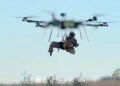
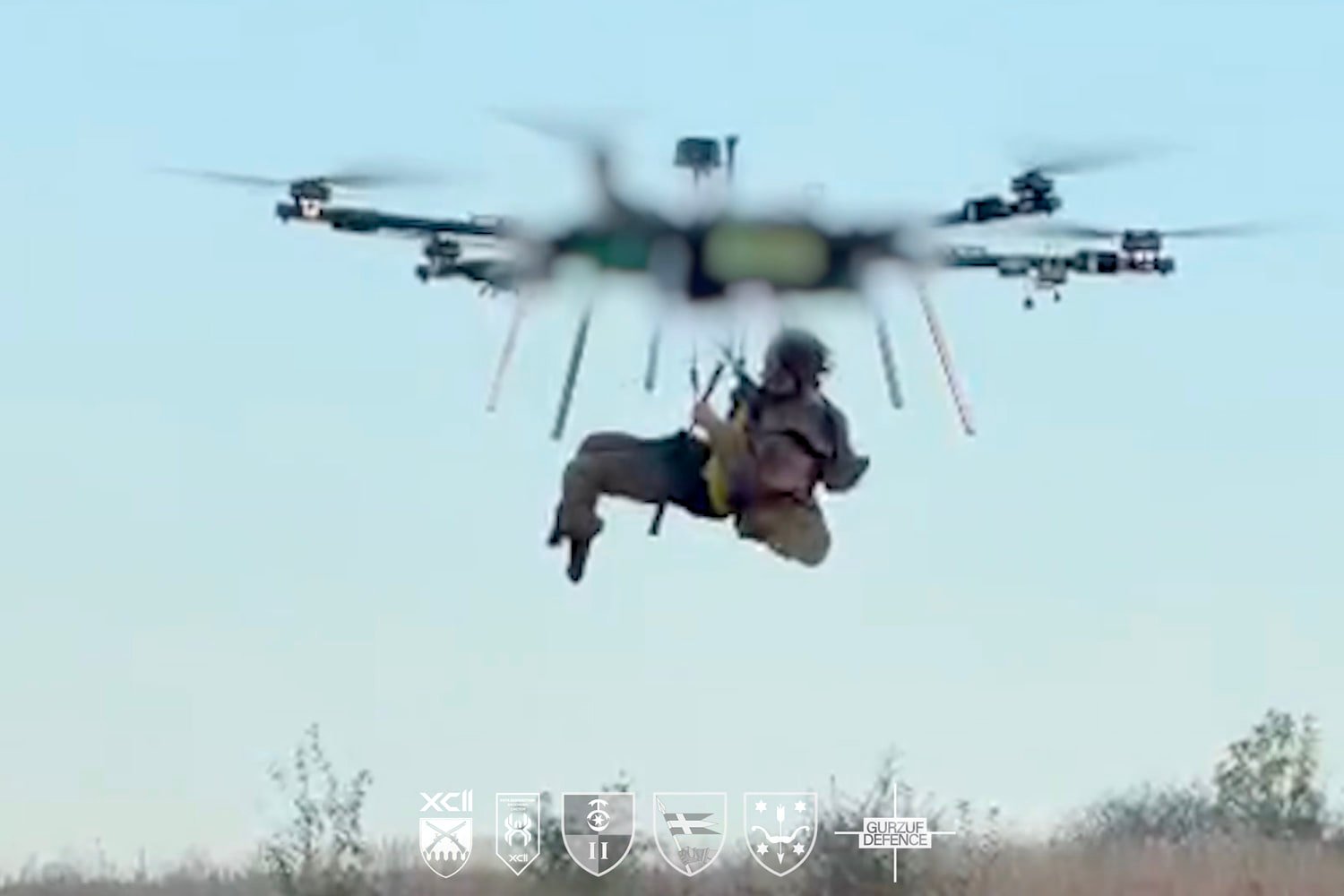
The brigade shared a video of the operation on Monday. In the footage, a soldier straps himself into a large drone and flies at low altitude over territory that appears blurred for security reasons. The drone then carefully lowers him to the ground, where an operator greets him with the words, “Welcome back to the ground.”
Stay connected to every major update — subscribe and follow us on the PhoenixQ website and across our social media platforms.
The soldier, whose identity remains undisclosed, had been wounded at his position on the frontline. Conventional ground evacuation was not possible. “Due to intense enemy drone activity and the presence of landmines, evacuation using conventional unmanned ground vehicles was impossible,” the brigade explained.
Specialists within the unit then decided to attempt something entirely new. “At that point, the specialists in our unit took it upon themselves to attempt something that had never been done before: evacuating a serviceman using an aerial drone,” the brigade added. The team had to verify that the drone could carry a human being without flipping over or swaying dangerously during flight.
The aircraft used was a heavy-lift hexacopter. A Ukrainian manufacturer originally designed it as a bomber. In the video, the drone appears roughly twice the size of the soldier it carried. The rescued soldier is currently undergoing treatment and rehabilitation, according to the brigade.
Soldier Called a Hero for Agreeing to the Rescue
The squad leader and programmer involved in the mission goes by the call sign Napalm. He praised the wounded soldier as a “hero” for agreeing to board the drone. Napalm noted that the soldier made his decision after seeing and hearing the machine that had arrived to rescue him.
Ukraine’s Ground Forces also responded to the mission with a broader statement. Officials said drone units are already conducting operations “that were recently considered science fiction.” The brigade added that the mission “proves once again that Ukrainian service members, working in tandem with Ukrainian manufacturers, are setting global trends in the conduct of warfare.”
The war between Ukraine and Russia has increasingly become a technological arms race. Both sides rely heavily on drones to reduce human casualties. However, neither side publicly reports current figures on those killed, wounded or missing. Ukraine, in particular, has faced a serious shortage of manpower and has worked to accelerate military recruitment.
Ukraine’s Expanding Drone Capabilities
Ukraine has made major advances in drone technology throughout the conflict. These advances have allowed Ukrainian forces to disrupt Russian logistics in occupied territories. Furthermore, Ukrainian drones have struck targets deep inside Russia, including oil refineries, commercial warehouses and data centers.
Despite these gains, Kyiv now faces external pressure on its drone operations. The United States has urged Ukraine to stop striking Russian oil infrastructure. This followed President Donald Trump signing a diesel agreement with the Kremlin earlier this month. Ukraine has also reported gaps in intelligence sharing and restrictions on access to Elon Musk’s Starlink service, which plays a critical role in drone missions, battlefield communications and air defense.
Government Approves Drones for Medical Logistics
The battlefield evacuation follows a related government announcement. Prime Minister Serhii Koretskyi recently confirmed that the Ukrainian government approved an “experimental project” to deploy drones for medical logistics across the country.
Under the plan, drone flights will require coordination with the military. Drones will also receive a special status and must be identifiable while airborne. Koretskyi explained the urgency behind the initiative. “During the war, moving medical cargo by road can cost critical time, especially for transplants,” he said.
According to Koretskyi, drones will transport medicines, medical products, blood samples and donor organs between hospitals. The service will also reach remote areas that are difficult to access by road. Together, the battlefield rescue and the new medical logistics program signal a broader shift in how Ukraine is integrating drone technology into both combat and civilian operations.