English













































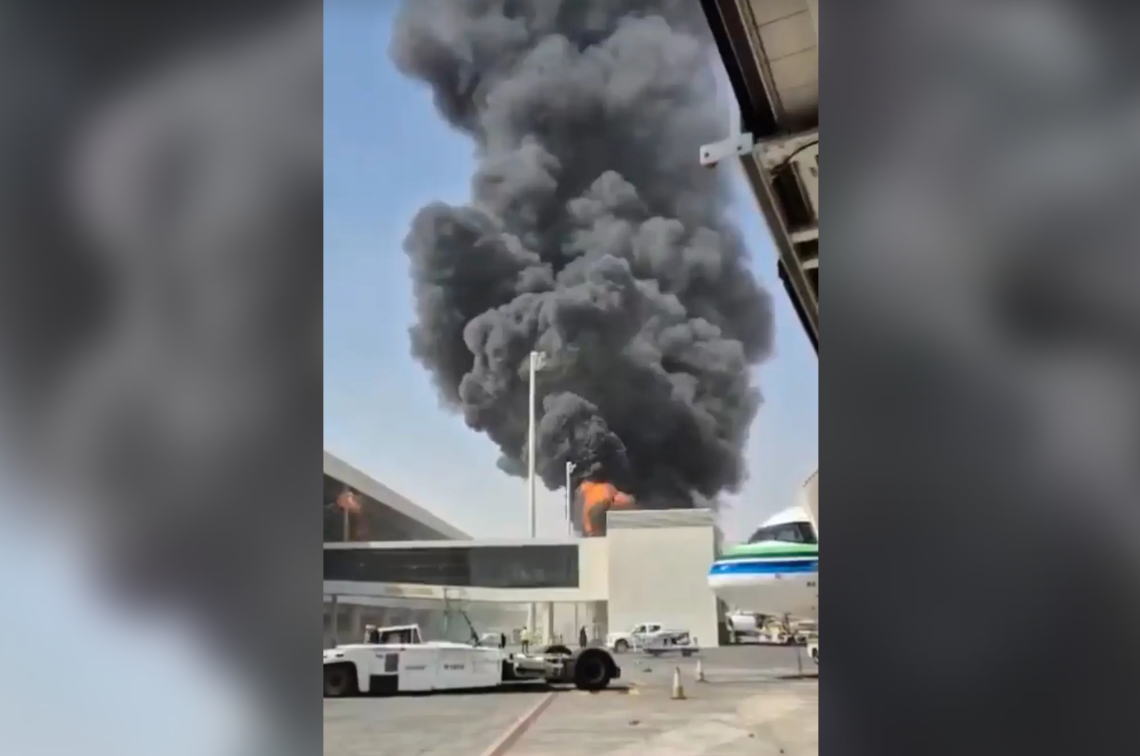
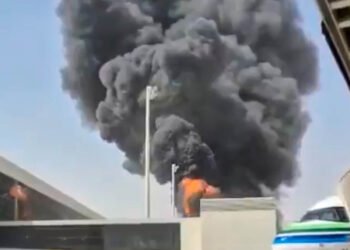
A missile attack on King Khalid International Airport in Riyadh killed 12 people and wounded more than 300 others on Saturday, Saudi authorities confirmed. The strike hit a complex housing terminals 3 and 4, which handle domestic flights. Among the dead were four Saudi citizens, two Bangladeshi nationals, and one each from Palestine, the United States, Egypt, Jordan, Syria and Sudan. Officials said some of the injured were in critical condition.
Strike Grounds Flights and Triggers Security Lockdown
Saudi civil aviation authorities suspended airport operations immediately after the attack. An official notice to aviators set the suspension through midnight. Security forces blocked all entrances to the airport complex, and lights around the facility were dimmed. Flight-tracking service Flightradar24 confirmed that aircraft were diverted to other airports.
Stay connected to every major update — subscribe and follow us on the PhoenixQ website and across our social media platforms.
At least 291 flights at Riyadh airport had been canceled in the 24 hours before the latest strike, according to FlightAware. Airlines including Air India, FlyDubai, Lufthansa Group and Pakistan International Airlines had already suspended services to and from Riyadh and other Saudi airports for varying periods. The United States, Britain, Germany, Australia and Canada all warned their citizens to avoid the airport.
The Houthi rebel movement, based in neighboring Yemen, claimed earlier attacks on the same airport earlier in the week. Those strikes killed three Saudis, including a pilot. The Houthis have not yet issued a statement claiming Saturday’s attack. However, they accused Saudi Arabia of striking Sanaa International Airport in the Houthi-held Yemeni capital on the same day.
Trump Weighs U.S. Intervention
U.S. President Donald Trump said his administration was considering whether to join Saudi military strikes against the Houthis. “We may. We’re going to look at it,” Trump said. “We just found out about the recent attack. So we’ll make a decision. We move very quickly.”
U.S. officials have said American assistance to Saudi Arabia already includes intelligence sharing, target identification and planning support for the ongoing offensive against the Houthis. Meanwhile, regional officials told the AP last month that Saudi Arabia has been running low on missile interceptors. Riyadh has asked France, Britain, Pakistan and Egypt to deploy air defense support to the region. One official noted that U.S. interceptor stocks have also diminished during the broader conflict with Iran.
Escalating Attacks Across Saudi Arabia
The surge in Houthi attacks began shortly after a Saudi-led coalition launched a major military offensive against the group. Since then, strikes have targeted multiple Saudi airports, military facilities and oil infrastructure. Saudi Arabia is the world’s top oil exporter, and the attacks have rattled both regional markets and global energy observers.
Despite the escalating violence, the Saudi energy ministry continued promoting a major international energy conference scheduled to open in Riyadh on Sunday, just hours after Saturday’s strike.
Fighting in Yemen has also intensified on the ground. The Saudi-led coalition is providing air support for Yemeni government forces trying to reverse recent Houthi territorial gains along the Red Sea coast. Those gains gave the Houthis improved surveillance over a key shipping corridor that serves as a critical alternative to the Strait of Hormuz, where Iran has previously attacked vessels.
The Houthis told the AP they are targeting only Saudi shipping as part of a blockade, in retaliation for a blockade imposed on them. However, concerns about broader attacks remain. The group previously targeted international shipping after the war in Gaza began, citing solidarity with Palestinians. A U.S. bombing campaign significantly reduced those attacks at the time.
Aviation Safety Warnings Grow
The Houthis this week issued what they called a final warning to global airlines about operating in Saudi airspace. They described the kingdom’s airspace as an active theater of military operations. The European Union Aviation Safety Agency responded by expanding its guidance on Saudi airspace. It noted the Houthis’ demonstrated ability to strike targets deep inside Saudi Arabia, including Riyadh, with a growing focus on aviation infrastructure.
The agency also warned that missile and drone attacks, combined with interception efforts, create an increased risk of misidentifying civilian aircraft.
Two regional officials, speaking anonymously because they were not authorized to brief the media, said Houthi attacks on the Riyadh airport on Thursday damaged three planes. Saudi national carrier Saudia confirmed that one of its aircraft suffered damage while on the ground, with no passengers on board at the time.
On Saturday, Saudi Arabia’s foreign minister spoke by phone with his Omani counterpart. Both sides stressed the importance of supporting diplomatic solutions to reduce tensions in the region. Oman, which sits across the Strait of Hormuz from Iran, has previously served as a regional mediator. Saudi authorities also warned the public this week that sharing or publishing information about missile and drone interceptions, or images of impact sites, could result in legal consequences.