English






































Senior U.S. military officials are divided over whether President Donald Trump should order strikes against Iranian-backed Houthi rebels in Yemen, as Saudi Arabia presses Washington for direct military support. The internal disagreement comes as the Houthis claim to have shot down a Saudi F-15 fighter jet and push rapidly toward Marib province, home to Yemen’s largest oil and gas fields.
Military Leaders Clash Over Houthi Strike Decision
Some Pentagon leaders are arguing strongly against opening a new military front in the region. They point to dwindling U.S. supplies of defensive and long-range weapons. They also note that the Houthis are not currently attacking American ships.
Stay connected to every major update — subscribe and follow us on the PhoenixQ website and across our social media platforms.
However, other military leaders are pushing for strikes. They argue the U.S. should help Saudi Arabia retaliate for Houthi attacks on Saudi territory and for the alleged downing of the F-15. These officials privately warn that failing to act would amount to a betrayal of a key regional ally.
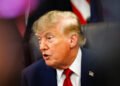
Trump ordered strikes to begin around 5 p.m. Eastern Time on Sunday. However, the military received word shortly after 2 p.m. that the order was canceled. One U.S. official confirmed that Trump has not ruled out military action in the future.
A senior U.S. military commander in the region specifically warned that action against the Houthis could create serious risks for American troops in the Middle East. Those risks include potential threats to a U.S. naval blockade and ongoing security operations in the Strait of Hormuz. At the same time, that commander acknowledged that U.S. forces could carry out both the Iran mission and strikes against the Houthis while managing some of those risks.
Saudi Pressure and Trump’s Shifting Position
Trump showed little interest in acting until Thursday, when Saudi Crown Prince Mohammed bin Salman called him directly. During that call, the crown prince told Trump that Saudi Arabia cannot succeed against the Houthis alone. A series of escalating events also pushed the issue forward, including Houthi attacks on Saudi infrastructure and threats to seize control of Yemen’s oil industry.
After the call, Trump directed the military to prepare fresh strike options. Chairman of the Joint Chiefs Dan Caine quickly called an emergency meeting at 6 p.m. in the Pentagon’s high-security conference room, known as the Tank. Caine canceled a planned trip to Copenhagen to meet with NATO defense chiefs in order to attend.
Since Thursday, military officials have presented Trump with multiple options for degrading Houthi capabilities and halting the rebels’ advances. Officials confirmed the Pentagon has enough assets in the region to act if ordered.
The U.S. has already been providing Saudi Arabia with intelligence sharing, military planning support, advisers embedded with Saudi forces, and some logistical assistance. Nevertheless, Saudi Arabia has repeatedly asked for more, including direct strikes against the Houthis.
Escalating Violence Across the Region
Violence intensified over the weekend. The Houthis said they launched missiles and drones on Saturday targeting sites in Riyadh and an Aramco facility in Yanbu, a major oil export hub on the Red Sea. Saudi coalition forces said they successfully intercepted a ballistic missile aimed at Riyadh. A coalition spokesperson also accused the Houthis of targeting civilians and civilian infrastructure in the capital.
Meanwhile, Houthi fighters rapidly advanced to seize control of the Bab el Mandeb Strait on the Red Sea, a critical oil shipping chokepoint. That advance poses a serious challenge for Saudi Arabia, which relies heavily on that route. The Strait of Hormuz has been largely closed during the ongoing war with Iran, making the Bab el Mandeb even more strategically important.
Saudi Arabia also closed the East-West pipeline in response to the deteriorating security situation.
Broader Context and Diplomatic Tensions
The internal U.S. divide reflects a wider bind for Trump. He started the war with Iran but has struggled to end it, and the U.S. now faces a shortage of key weapons. Over the weekend, Trump told Fox News he is weighing whether to escalate the conflict with Iran, a position he has raised repeatedly in recent months.
Tensions between the U.S. and its Middle Eastern allies are not new. In May, Saudi Arabia reacted with surprise when Trump announced a plan to help ships navigate the Strait of Hormuz. In response, Riyadh suspended U.S. military access to its bases and airspace. Trump quickly reversed that decision.
The Houthis originally took control of Yemen during a bloody civil war in 2014, fighting against a Saudi-backed coalition. A fragile U.N.-brokered truce between the Houthis and the Yemeni government followed in 2022. Trump later announced a ceasefire with the Houthis after weeks of U.S. strikes against the group. Under that agreement, the U.S. halted military operations and the Houthis stopped attacking American vessels.
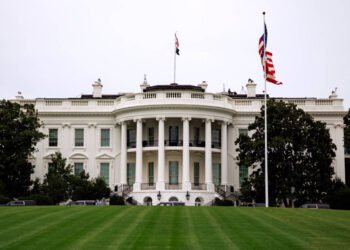
Trump recently indicated his administration has held discussions with the Houthis, though he offered few details. “The Houthis called us, and they don’t want to fight with us,” he said earlier this month. “They would much prefer not having us involved.” The White House, the Saudi Embassy in Washington, and the Pentagon all declined to comment on the current situation.