English





















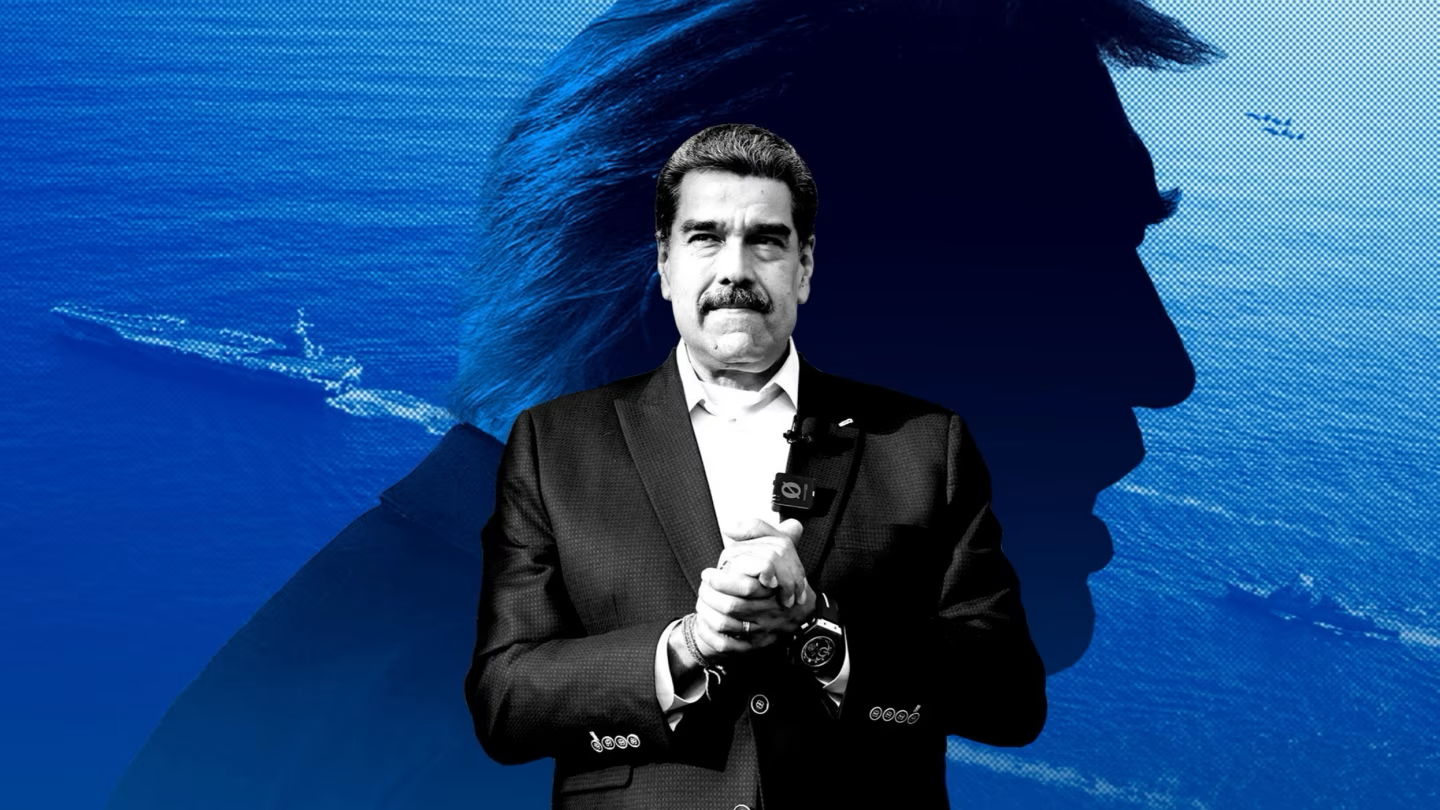
Venezuelan President Nicolás Maduro continues to project an unusually carefree image even as US Pressure on Venezuela increases on multiple fronts. The United States has moved major military assets into the Caribbean and recently seized an oil tanker near Venezuela’s coast. Washington claims these actions target drug traffickers, but analysts say the broader goal may be to force Maduro from power.
Maduro dances through rising tension
Maduro behaves as if the threat does not exist. During recent rallies, he danced to electronic music that sampled his calls for “peace.” Crowds copied his moves, flashing peace signs while speculation grew that U.S. forces might strike Venezuelan territory. Despite the rising tension, he joked in broken English from the stage, telling supporters that “every day is a party.”
The U.S. has offered a $50 million reward for information leading to his arrest, claiming he leads the Cartel of the Suns. Maduro rejects the accusations and says Washington aims to destabilize his government.
A leader shaped by crisis
Despite his theatrical public persona, Maduro has repeatedly survived major crises since taking office in 2013. He outlasted predictions of collapse, a drone assassination attempt in 2018, and an operation by foreign mercenaries who tried to capture him. He also defeated a campaign led by then-President Donald Trump to recognize opposition leader Juan Guaidó as Venezuela’s legitimate president.
Today’s pressure campaign is widely linked to Secretary of State Marco Rubio, a longtime critic of the Venezuelan leader.
Growing paranoia inside the regime
Behind Maduro’s public confidence lies deep fear, according to members of the ruling United Socialist Party. They say he now changes sleeping locations and cellphones frequently. He avoids appearing with senior officials, instead appearing with his wife and lower-level allies. “Stay connected to every major update — subscribe and follow us on the PhoenixQ website and across our social media platforms.”
Former tourism minister Andrés Izarra believes Maduro fears a direct U.S. strike. He also suggests Maduro sees leaving office as more dangerous than staying, given U.S. charges, an ICC investigation, and accusations of torture and political imprisonment.
Maduro also worries that negotiating with Washington could trigger an internal betrayal, since loyalists may believe he seeks safety only for himself and his family.
A calculated gamble
Former advisers say Maduro’s relaxed persona is genuine, yet beneath it lies a leader with sharp instincts honed by years of turmoil. As US Pressure on Venezuela grows, Maduro appears convinced that remaining in Caracas gives him the best chance of survival. Observers say it may be his biggest gamble yet, with no safe exit available.