English





























“By:Arash Parsa-Analyst and Researcher”
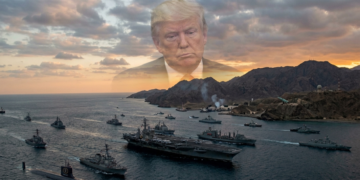
Trump and the Future of Iran have become the primary concern for political analysts and global energy markets alike. At the onset of hostilities, Washington focused solely on a targeted military operation to contain Tehran’s regional influence. However, the IRGC’s closure of the Strait of Hormuz fundamentally altered the rules of the game. This move placed a direct threat on the vital arteries of the global economy. Consequently, the level of confrontation escalated from a border tension to a full-scale international crisis. Despite heavy blows to its command structure, Iran’s missile activities persist. This military resilience has placed the entire Middle East at risk of a regional war. Observers believe that decisions made in the White House over the coming weeks will determine the fate of Iran for decades to face.
Potential for Ground Invasion and Expansion into Arab States
Should Donald Trump opt for a ground invasion, the dimensions of the catastrophe will spill far beyond Iran’s borders. Arab nations in the Persian Gulf will inevitably be drawn into the heart of this conflict. Iran has threatened to seize Bahrain in the event of a ground assault. Such a scenario could rapidly spiral out of control for all stakeholders involved. On the other hand, the financial cost of this battle for the United States is reported to be staggering. This conflict costs American taxpayers millions of dollars daily. Nevertheless, Trump has signaled that he will not retreat until a definitive result is achieved. He seeks an outcome that goes far beyond a simple agreement or a tactical withdrawal.
“Stay informed with the latest news, analyses, and reports on PhoenixQ .”
Internal Economic Crisis and the Rise of Alternatives
Internally, the Iranian leadership is grappling with an unprecedented economic crisis. Government officials have explicitly expressed fears of a short-term economic collapse. In this volatile atmosphere, the Iranian opposition, led by Reza Pahlavi, plays a significant role. The son of the late Shah of Iran has positioned himself as the only credible option for a transitional period. His stances on many strategic issues align closely with the general policies of the United States. This alignment has bolstered his position in the power dynamics concerning the future of Iran’s political landscape. Many domestic protesters also look toward structural changes supported by the international community. Simultaneous economic and military pressure has placed Tehran’s political system in its weakest historical state.
Israel’s Strategic Role in the Middle Eastern Powder Keg
Israel has always identified Iran as the primary existential threat to its national security. In recent clashes, Tel Aviv has been directly and indirectly involved in weakening Iran’s military capabilities. Should the war expand, Israel will become one of the primary actors on the battlefield. Intelligence cooperation between Washington and Tel Aviv has doubled the precision of military strikes against nuclear infrastructure. The region now resembles a powder keg ready to ignite. Any misstep could serve as the spark for a global total war. Trump and the Future of Iran have become inextricably linked to sustainable security in Jerusalem and Riyadh. Final decisions in Washington will undoubtedly redraw the political map of the Middle East.
The War’s Aftermath: A Fundamental Shift in Power
Ultimately, it must be accepted that returning to pre-war conditions is nearly impossible. If Trump continues the military advance, his objective will likely be nothing less than structural political change. Moderate forces within Iran are also attempting to find a way to save the country. However, pressure from hardliners and foreign threats has severely restricted the room for domestic diplomacy. The result of this crisis will be more than a simple retreat from regional positions. Fundamental changes are on the horizon, and the world is closely monitoring these developments. Iran’s future depends on the balance between U.S. military power and domestic resilience. The Middle East stands at the threshold of either a new birth or a massive collapse.