English








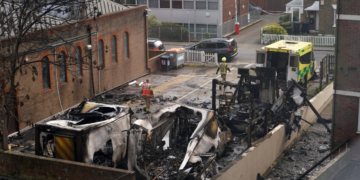



























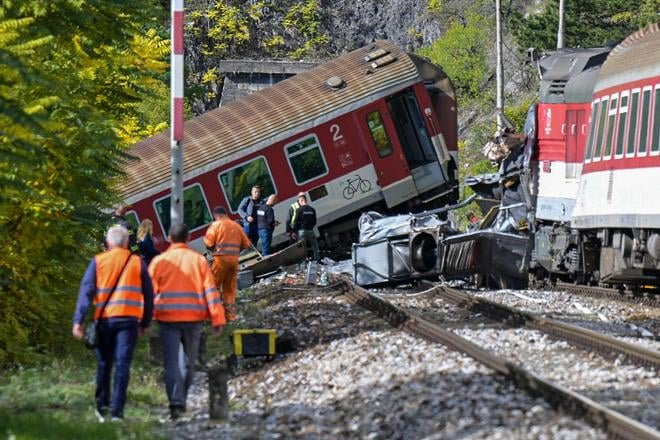
A Slovakia train collision on Monday injured dozens of passengers, including two in critical condition, according to local officials. The crash occurred near the eastern town of Rožňava shortly after 10 a.m. local time (0800 GMT), Slovak Railways confirmed. The collision, which involved two fast passenger trains, has raised new concerns about railway safety in the region. Authorities quickly launched an investigation to determine what went wrong.
Emergency services rush to the scene
Immediately after the Slovakia train collision, police and rescue teams arrived to evacuate passengers from the wreckage. Interior Minister Matúš Šutaj Eštok said around 80 passengers were onboard when the crash happened.
“Two people remain in critical condition, while most others sustained only minor injuries,” Eštok told reporters. Medical teams transported the injured to nearby hospitals for urgent care. Images from the site showed one train engine’s front completely crumpled, while the second train derailed after impact. The debris scattered across the track highlighted the force of the collision.
Officials suggest human error
Authorities have already opened a formal investigation into the cause of the accident. According to Minister Eštok, preliminary evidence points toward human error as a possible factor. However, investigators will also review mechanical systems, train signals, and communication logs to confirm whether any technical failures contributed.
Meanwhile, the Slovak government promised full transparency and pledged to improve railway monitoring systems. “Safety reforms must follow this tragedy,” Eštok emphasized.
Rail traffic disruption and local reaction
The accident forced the temporary suspension of train services between Košice and Rožňava. Many travelers faced long delays as officials worked to clear the damaged carriages from the tracks. Residents near the crash site described hearing a loud metallic bang followed by the sound of breaking glass. “It felt like an earthquake,” said one witness. “People started running toward the tracks to help.” By late afternoon, railway engineers managed to remove part of the wreckage, allowing limited service to resume on nearby routes.
Safety concerns rise
The Slovakia train collision has reignited public debate about safety standards on Europe’s smaller rail networks. Transport analysts noted that outdated signaling systems and staff shortages could increase risks. The Slovak Transport Ministry said it would cooperate fully with investigators to prevent future accidents. For now, survivors and families of the injured continue to receive medical and psychological support.
For more global transport safety updates, visit PhoenixQ World News.