English

















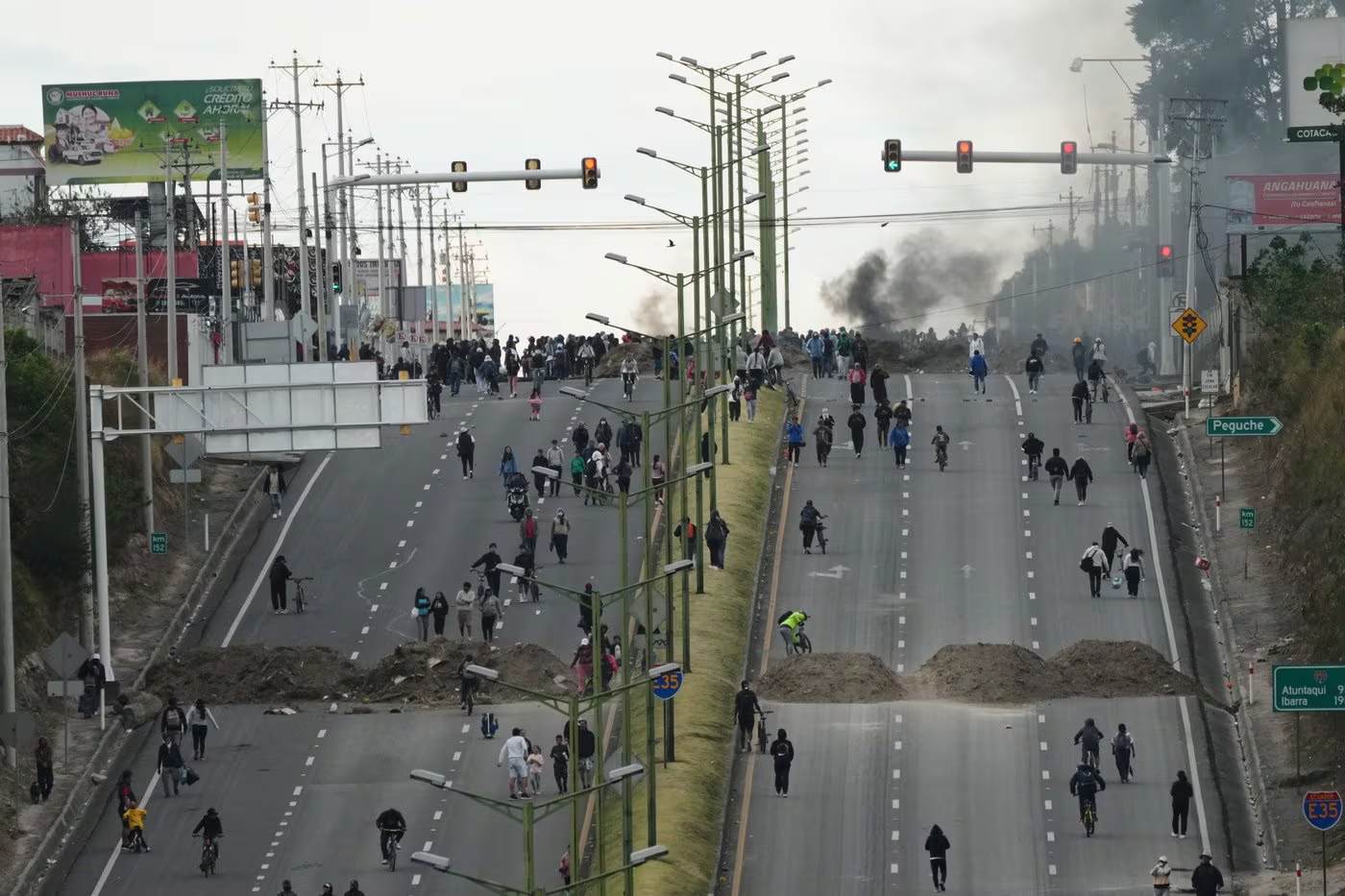
Quito, Ecuador — The Ecuador protest convoy attack has intensified a nationwide crisis, leaving one dead and several soldiers injured during violent demonstrations. On Sunday, about 350 protesters ambushed a convoy carrying President Daniel Noboa and foreign diplomats in Imbabura province.
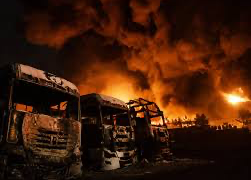
According to presidential spokesperson Carolina Jaramillo, attackers hurled fireworks, molotov cocktails, and rocks at vehicles delivering humanitarian aid. Roughly 50 soldiers guarded the convoy and attempted to repel the assault. Noboa later posted photos of shattered car windows, accusing opponents of resisting Ecuador’s progress through violence.
Diplomats caught in violence
The presidency confirmed that dignitaries on board included Vatican envoy Andrés Carrascosa, European Union Ambassador Jekaterina Dorodnova, and Italian Ambassador Giovanni Davoli. Italy’s embassy stated its ambassador was unharmed, calling the incident a “terrorist act” against Ecuador’s president.
Officials said the convoy represented a humanitarian mission, not a political one. However, the presidency blamed “terrorist groups” embedded within the demonstrations for organizing the attack.
Protests turn deadly
Demonstrations, now in their eighth day, erupted after the government ended a diesel subsidy. Leaders argued the move would reduce spending, curb smuggling, and redirect funds toward social programs. However, protests have grown violent, with roadblocks and clashes across Imbabura.
Over the weekend, another convoy came under attack, killing at least one person and injuring nine soldiers. Officials also reported the kidnapping of 17 military personnel. The presidency accused Indigenous protest leaders of instigating unrest, linking violence to CONAIE head Marlon Vargas.
Indigenous groups reject accusations
The powerful Indigenous confederation CONAIE denied government claims and accused security forces of killing an Indigenous man on Sunday. It demanded an end to repression and condemned unchecked mining and drilling on ancestral land. Vargas called the government’s accusations baseless and framed the protests as a defense of Indigenous rights.
Jaramillo countered by blaming Vargas for inciting unrest. “His calls for seizing oil wells and violent protests led to these tragic outcomes,” she said.
Legal investigation launched
The Ecuadorian Prosecutor’s Office opened a probe into the weekend violence. Its Specialized Unit for the Investigation of the Unlawful Use of Force will oversee the process under international protocols to ensure objectivity.
The Ecuador protest convoy attack underscores growing instability as the government struggles to balance economic reforms with mounting social unrest.
For more on regional unrest, read our Latin America conflict coverage.