English






























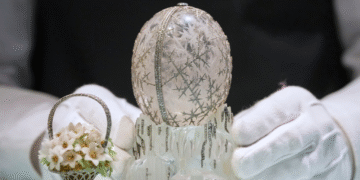








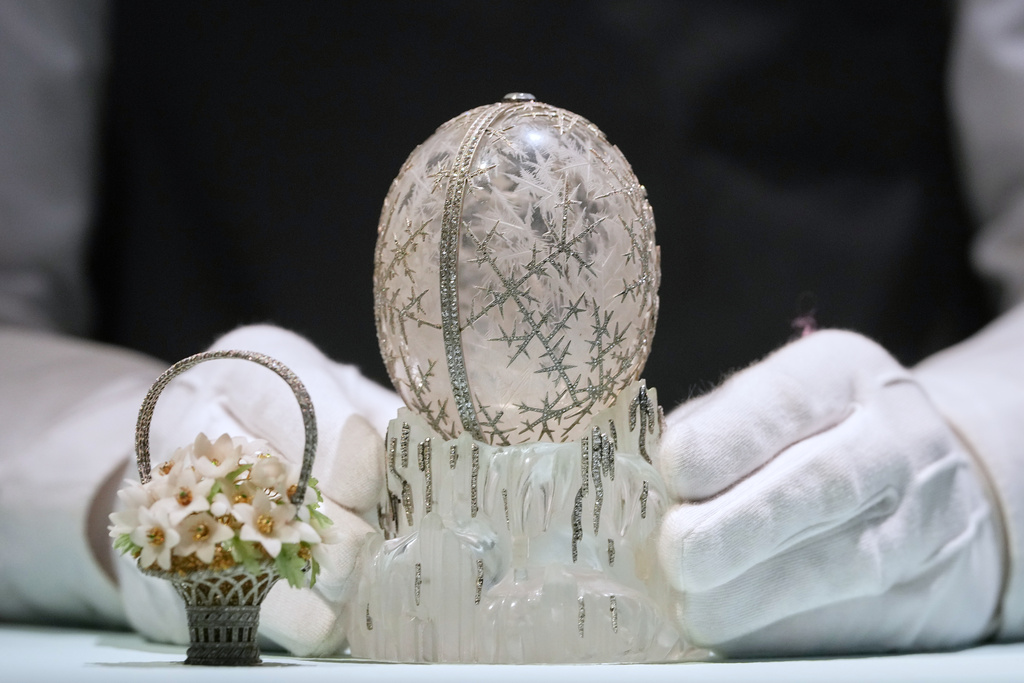
Crystal Fabergé egg record sale stunned the art world on Tuesday as a rare imperial treasure sold in London for US$30.2 million. Christie’s confirmed that the Winter Egg, once crafted for Russia’s ruling Romanov family, set a new global record for any Fabergé creation.
A Masterpiece With Royal Roots
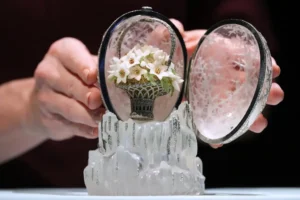
The Crystal Fabergé egg record sale drew intense global interest because only seven imperial eggs remain in private hands. The 4-inch Winter Egg features carved rock crystal, a platinum snowflake motif, and 4,500 diamonds. Inside, a delicate basket of tiny quartz flowers symbolizes the arrival of spring.
Christie’s compared the egg to the Mona Lisa because of its unmatched craftsmanship and cultural prestige. Its design came from Alma Pihl, one of Fabergé’s few female designers, who created only two imperial eggs. Britain’s royal family owns her second work.
“Follow PhoenixQ to keep up with every important update.”
Imperial Tradition and Historic Journey
Peter Carl Fabergé crafted over 50 imperial eggs between 1885 and 1917. Czar Alexander III began the tradition of gifting his wife an ornate egg every Easter. Nicholas II later expanded the custom to include both his wife and mother.
Nicholas II ordered the Winter Egg in 1913 for his mother, Dowager Empress Maria Feodorovna. The Romanovs ruled Russia for 300 years until the 1917 revolution removed them from power. The new Communist regime executed Nicholas and his family in 1918.
A Priceless Object With a Turbulent Past
The egg’s strange journey added to its mystique. A London dealer bought it in the 1920s for only 450 pounds after Soviet authorities sold off valuable art to raise money. It then disappeared from public view for two decades. Christie’s rediscovered and auctioned it in 1994 for more than 7 million Swiss francs. It sold again in 2002 for US$9.6 million.
Each sale set a new world record for a Fabergé object, and Tuesday’s auction continued that pattern. Christie’s Russian art head Margo Oganesian called the Winter Egg “the Mona Lisa of decorative arts,” praising its exceptional detail and historical importance.
Forty-three imperial Fabergé eggs survive today, and most belong to major museums.