English















































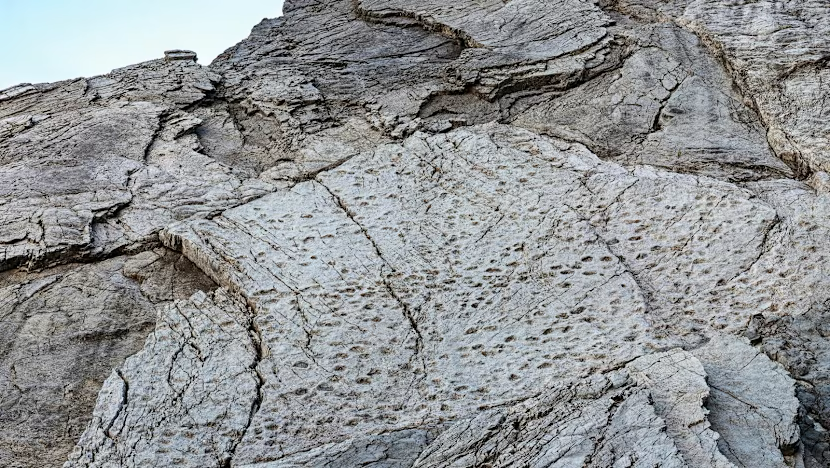
The Italy dinosaur footprints discovery has drawn global scientific attention. Researchers are studying thousands of prehistoric tracks found in northern Italy. The footprints date back roughly 210 million years. They belong to the Triassic period, one of Earth’s earliest dinosaur eras.
Scientists found the tracks in September on a steep Alpine rock face. The site sits about 2,000 metres above sea level. Despite the altitude, the area once formed a warm coastal lagoon. Dinosaurs likely walked along muddy shorelines near shallow waters.
Remarkable preservation and scale
The footprints stretch across nearly five kilometres. They appear in the Valle di Fraele near Bormio. This location will host events during the 2026 Winter Olympics. Experts call the site one of the world’s most important Triassic trackways.
Many prints measure around 40 centimetres across. They appear in parallel rows, suggesting group movement. Several tracks show clear toe and claw impressions. This level of detail astonished paleontologists.
Clues to dinosaur behavior
Researchers link the tracks to prosauropods. These plant-eating dinosaurs had long necks and sharp claws. Their footprints suggest herd travel across tidal flats. Some markings indicate pauses along the route. “Stay connected with PhoenixQ and never miss a key moment.”
Scientists also identified handprints among the tracks. These prints differ in size and shape from claw marks. They suggest resting or crouching behavior. Such details offer rare insight into dinosaur daily life.
From seabed to mountain wall
Experts explain how the tracks survived for millennia. Soft mud captured the footprints during low tides. Later sediments sealed and protected them. Over time, the mud hardened into rock.
Tectonic forces then reshaped the landscape. Africa’s northward movement closed the ancient Tethys Ocean. This process folded seabed rocks into the Alps. As a result, horizontal tracks now appear vertically on cliffs.
Scientific importance and future research
Cristiano Dal Sasso of Milan’s Natural History Museum praised the find. He called it one of Italy’s largest and oldest footprint sites. Fabio Massimo Petti highlighted the anatomical clarity of the prints. Even claw impressions remain visible. The museum confirmed this marks Lombardy’s first dinosaur footprint discovery. It also represents the only known site north of the Insubric Line. Trails do not reach the remote area. Therefore, researchers will rely on drones and remote sensing.
Scientists believe the tracks may represent a new ichnospecies. This classification focuses on behavior, not anatomy. Further studies will determine their exact status. For now, the Italy dinosaur footprints discovery reshapes understanding of early dinosaurs in Europe.