English














































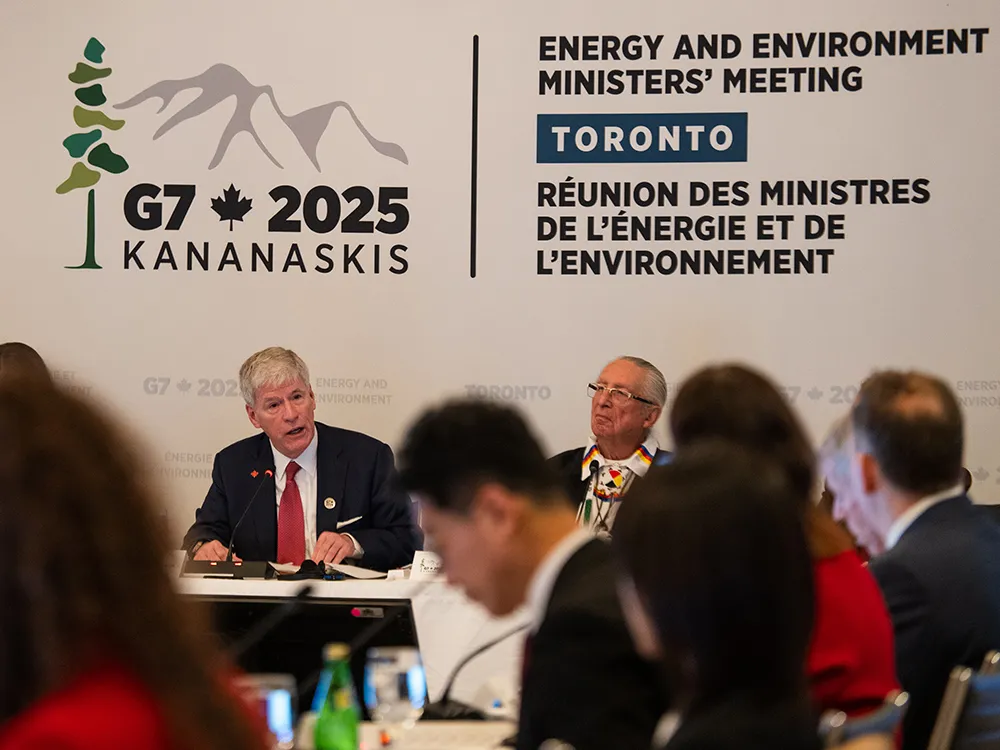
Canada G7 Critical Minerals Alliance launched its first 25 projects on Friday, marking a strategic step to challenge China’s global control over the sector. The initiatives include new investments in graphite and rare earth production aimed at strengthening supply chain security.
Energy and Natural Resources Minister Tim Hodgson said the alliance’s first projects prove the G7’s determination to reduce market dependence and protect national interests. “Every delay is a concession of economic and national security interests. We will no longer accept that,” Hodgson declared.
Investments in Graphite and Rare Earth Refining
The government announced several key projects, including offtake agreements for Nouveau Monde Graphite’s Matawinie Mine near Montreal. The agreements, supported by Panasonic, Traxys, and the federal government, will secure future graphite supply for electric vehicles and batteries.
Canada will also support Norway’s Vianode in constructing a synthetic graphite plant in St. Thomas, Ontario. Export Development Canada could provide up to $500 million in financing. The company recently signed a multibillion-dollar supply deal with General Motors.
In addition, Ucore Rare Metals in Kingston, Ontario, will receive up to $36 million in conditional federal funding to expand its refining of samarium and gadolinium, key materials for nuclear and medical technologies.
G7 Responds to China’s Tightening Grip
According to the International Energy Agency, China controls about 70% of global critical mineral refining, with a 91% dominance in rare earth processing. Its recent export restrictions have intensified pressure on the G7 to diversify supplies.
Before this week’s Toronto meetings, Beijing agreed to pause some export controls for one year under a deal with Washington. However, U.S. Energy Secretary Chris Wright said this only underscores the urgency for G7 nations to “mine and process their own minerals.”
Canada Positions Itself as a Key Player
Experts say Canada’s new leadership role within the alliance could place it at the heart of the global critical minerals strategy. University of Ottawa professor Wolfgang Alschner noted, however, that “the announcements remain project focused rather than policy focused.”
Demand for critical minerals essential to green energy is projected to surge. The Canadian Climate Institute estimates $30 billion in investments will be needed by 2040 to meet domestic demand alone.
Canada’s move under the G7 Critical Minerals Alliance signals a long-term shift toward self-sufficiency, cleaner energy, and reduced reliance on China’s supply chain.
For more updates on Canada’s green energy and trade strategy, visit PhoenixQ Energy Section.