English















































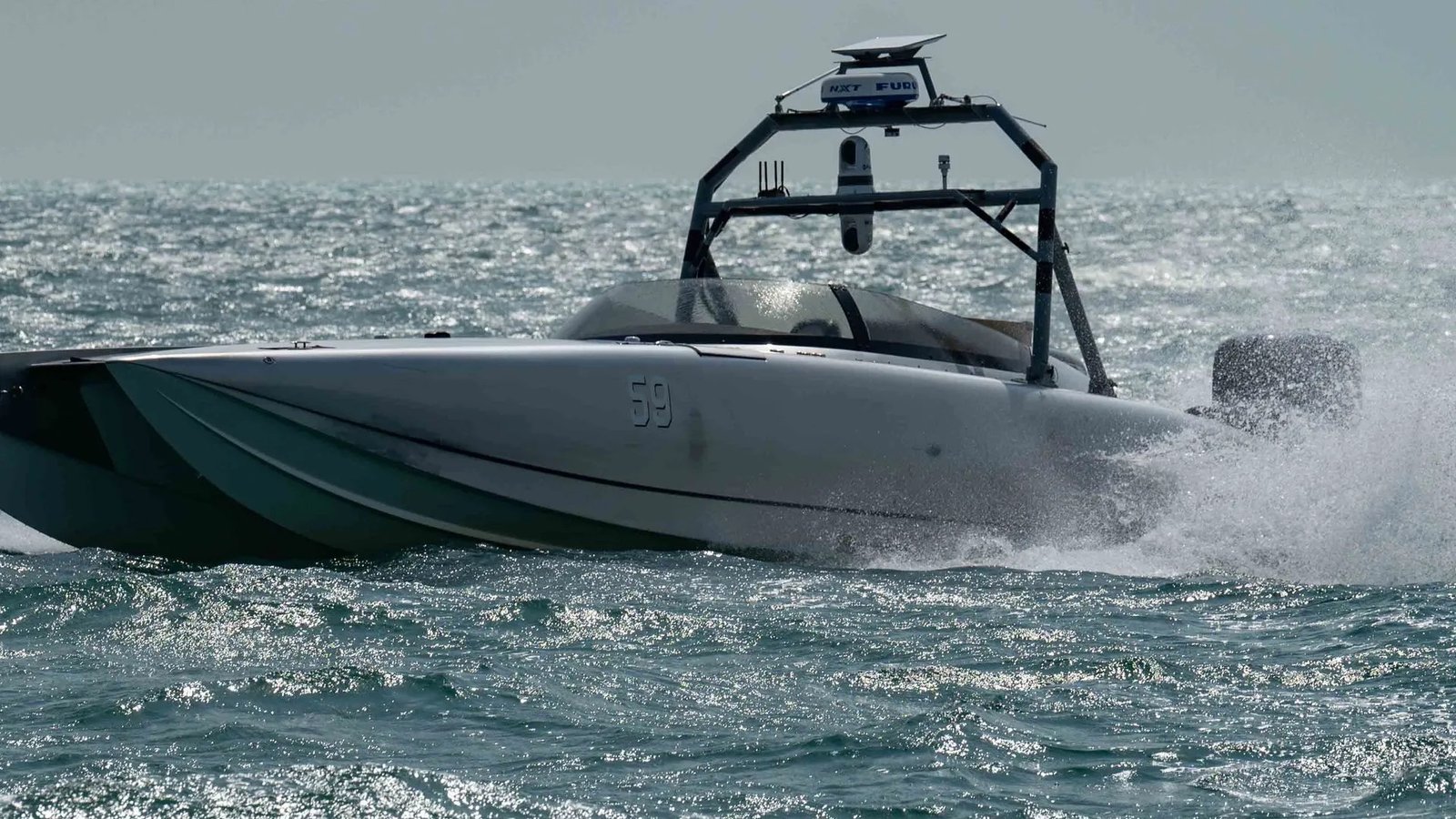
U.S. Navy Drone Boat failures during recent California tests exposed major risks in the Pentagon’s drive for autonomous warships. In one incident, a software glitch caused a Saronic vessel to stall. Moments later, a BlackSea drone smashed into its starboard side, vaulted over the deck, and plunged into the sea.
Crashes Undermine Key Program
Officials revealed that another BlackSea vessel caused a separate accident weeks earlier. While being towed, it suddenly accelerated, capsizing a support boat and throwing its captain into the water. Fortunately, the captain was rescued without injury. Sources said both mishaps involved a mix of software failures and human error, including poor coordination between onboard systems and external control software.
Pentagon Pauses Key Contract
After these U.S. Navy drone boat failures, the Pentagon’s Defense Innovation Unit paused a $20 million contract with L3Harris, which supplies control software for some vessels. L3Harris defended its product, while the Pentagon called the tests part of an “iterative approach” between industry and operators.
Growing Strategic Pressure
Military leaders want swarms of autonomous maritime drones to counter China in the Taiwan Strait. The war in Ukraine highlighted the power of cheap kamikaze sea drones, which cost around $250,000 and crippled Russia’s Black Sea Fleet. In contrast, the U.S. seeks swarms of advanced boats costing millions each, capable of operating without human input.
Navy’s Internal Struggles
The Navy’s Program Executive Office Unmanned and Small Combatants (PEO USC), responsible for acquiring U.S. Navy Drone Boat, faces turmoil. Rear Admiral Kevin Smith was dismissed after an Inspector General complaint. The unit is now under review and could face restructuring or closure. Pentagon officials have also questioned whether the Navy’s current approach is cost-effective.
Future of Naval Autonomy
Despite setbacks, the Pentagon continues to push its $1 billion Replicator program, aimed at deploying thousands of autonomous systems. The Navy has already invested $160 million in BlackSea’s craft, while Saronic remains a rising competitor. Analysts warn that the Navy must adapt its tactics and overcome cultural resistance to adopt autonomy at scale.