English













































Introduction
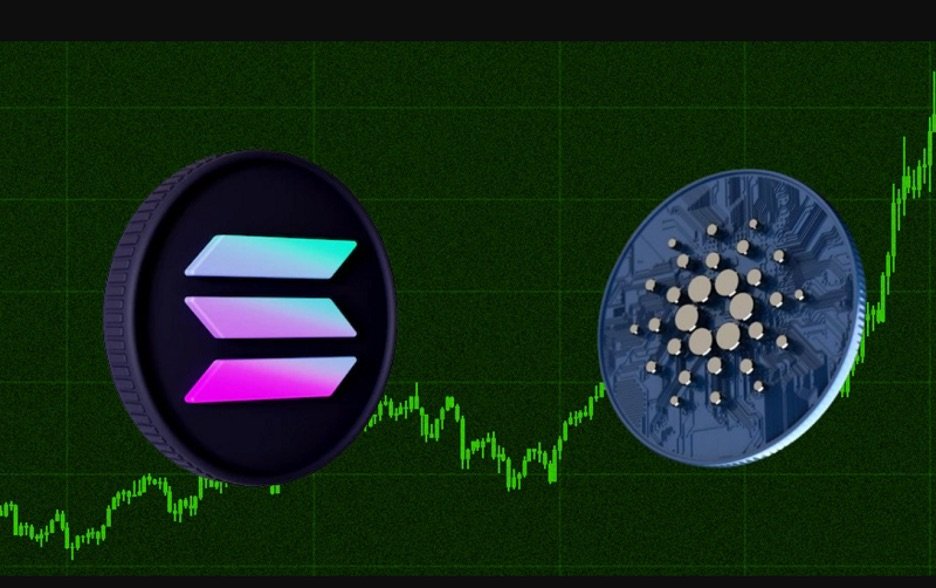
In the ever-evolving world of blockchain technology, projects like Cardano (ADA) and Solana (SOL) are playing pivotal roles in shaping the future of decentralized finance (DeFi), Web3 applications, and global digital infrastructure. Though both are powerful in their own ways, they follow very different paths. This report explores their origins, technologies, strengths, and future potential — helping you decide which blockchain might stand the test of time.
Origins and Background
🔹 Solana (Launched in 2017)
-
Founded by Anatoly Yakovenko, a former Qualcomm engineer.
-
Introduced a novel mechanism called Proof of History (PoH) to increase blockchain transaction speed.
-
Developed with the help of a skilled team from major tech companies under the banner of Solana Labs.
🔹 Cardano (Founded in 2015)
-
Created by Charles Hoskinson, one of Ethereum’s co-founders, after disagreements on its future direction.
-
Named after the Italian mathematician Gerolamo Cardano; its token ADA is named after Ada Lovelace, the world’s first female computer programmer.
-
Built on a research-first philosophy with strong emphasis on peer-reviewed academic studies and mathematical proofs.
Technical Comparison
1. Consensus Mechanism: PoS vs. PoH
-
Cardano uses Proof of Stake (PoS) — energy-efficient, secure, and well-established.
-
Solana combines Proof of History (PoH) with PoS — allowing rapid processing by time-stamping transactions independently.
📌 Verdict: Solana leads in innovation and speed, but Cardano offers stronger academic foundations and long-term security.
2. Speed and Performance
-
Solana claims theoretical throughput of up to 65,000 transactions per second (TPS) — ideal for gaming and real-time apps.
-
Cardano is slower but working on Hydra, a scaling solution to boost TPS in the future.
📌 Verdict: Solana currently dominates in performance and real-time responsiveness.
3. Security and Network Stability
-
Cardano has never experienced a major outage, thanks to rigorous scientific development.
-
Solana has suffered multiple outages and downtime events, highlighting concerns around network reliability.
📌 Verdict: Cardano is more secure and stable at this stage.
4. Vision and Global Strategy
-
Cardano focuses on emerging economies, especially in Africa, providing solutions for digital identity, education, and finance (e.g., school systems in Ethiopia).
-
Solana aims to be the fastest foundation for Web3 apps, powering everything from NFTs to decentralized social media.
📌 Verdict: Both are future-focused, but with different goals — Cardano is social-impact driven, while Solana prioritizes tech and market speed.
5. Ecosystem and Use Cases
-
Solana boasts a vibrant ecosystem with thriving NFT marketplaces (e.g., Magic Eden), blockchain games, and DeFi platforms.
-
Cardano is growing steadily with platforms like Minswap and SundaeSwap, but adoption is slower.
📌 Verdict: Solana currently leads in real-world applications and developer activity.
Final Thoughts: Which Blockchain Has More Potential?
Cardano stands out for its precision, stability, and scientific discipline. Its approach may be slower, but it’s deliberately built to last — an ideal choice for those seeking a secure and sustainable project with global development ambitions.
Solana, on the other hand, is bold and fast — an innovative playground for developers building the next generation of interactive Web3 experiences. Despite facing technical hiccups, Solana continues to evolve, attracting a vibrant user base and growing ecosystem.
✅ One Final Note:
Both projects were recently included in the Grayscale Digital Large Cap Fund (GDLC) — a major institutional investment fund holding top-tier cryptocurrencies like Bitcoin, Ethereum, Ripple, Cardano, and Solana. This inclusion signals strong confidence in both blockchains as key players in the future of digital finance.